
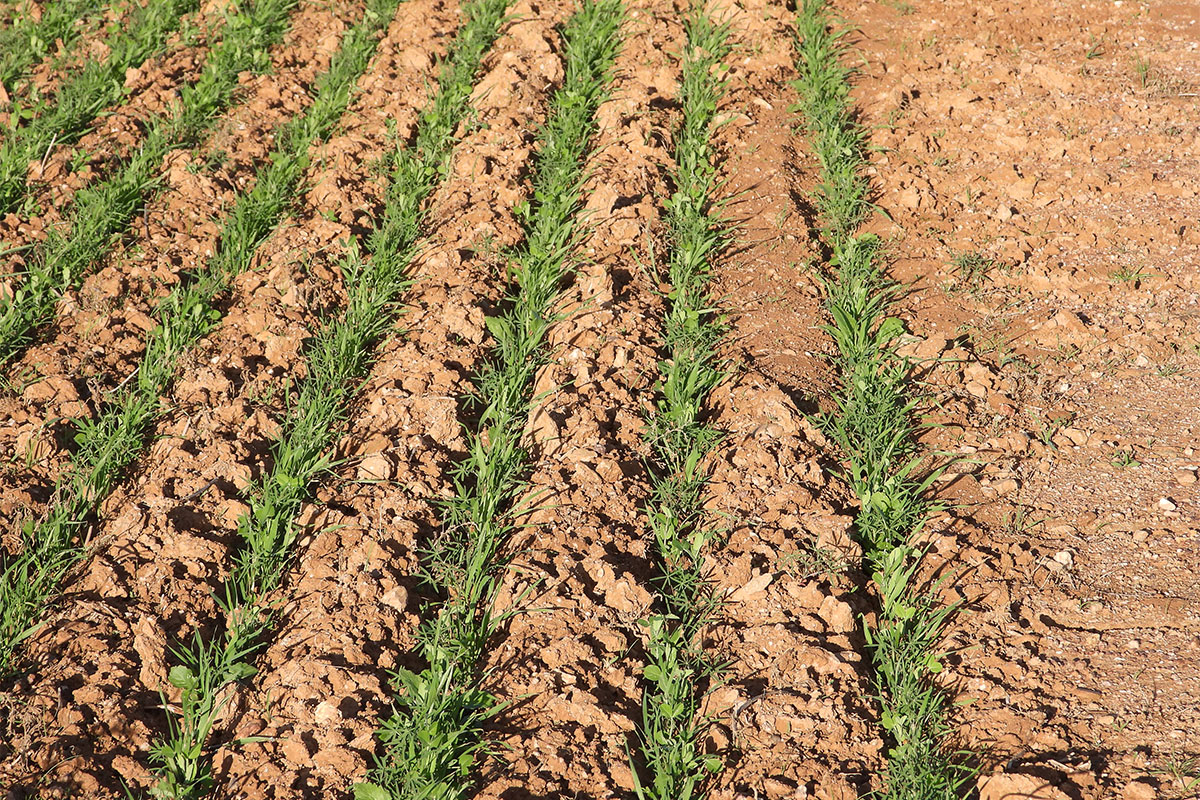
Profitability in South Africa’s winter cropping systems is under increasing pressure. According to the Agricultural Research Council (ARC), traditional systems such as wheat–fallow–wheat have become less viable due to worsening soil water restrictions and increased disease occurrence. This has also led to soil degradation, erosion, and increased acidity.
The ARC’s 2025 guidelines for the production of small grains in the winter rainfall area states that increased profitability can only be achieved by maximising the yield potential of the crop–soil–climate combination and strictly managing input costs.
The ARC emphasises that achieving higher productivity depends on getting the fundamentals right. This includes correct soil preparation, appropriate cultivar selection, fertilisation planning, correct calibration of planters, optimal planting time, and an effective spraying programme for weed control.
Taking this into consideration and drawing on insights from agronomists, here are eight costly mistakes farmers should avoid when planting winter crops.
- Planting outside optimal soil temperature windows
Winter crops are highly sensitive to soil temperature at planting. According to the Department of Agriculture, Forestry and Fisheries’ production guidelines for wheat, germination occurs within a soil temperature range of 5°C to 25°C, with germination rates dropping sharply below 5°C.
Extreme soil temperatures can delay emergence, reduce seedling density, and weaken plants, making them more susceptible to diseases and environmental stress.
Prof Johann Strauss, senior scientist for sustainable cropping systems research at the Western Cape Department of Agriculture, says every crop has a certain optimal temperature range for germination.
“Planting in soil that is too hot or too cold for the specific crop can have a detrimental effect on the eventual plant stance and crop yields,” he explains.
“A crop like canola can enter secondary dormancy if the soil is too warm and there is insufficient moisture to trigger the germination process.”
- Poor weed management before planting
Weeds are one of the most underestimated threats to winter crop production. They establish extensive root systems before they appear above the soil, allowing them to compete aggressively with crops for soil moisture and nutrients even before planting.
Early-season competition can significantly reduce germination and early growth, ultimately limiting yield potential. Research indicates that wheat yield can be reduced by up to 33% in the presence of unmanaged weeds.
The situation is further complicated by the increasing prevalence of herbicide-resistant weeds. Different weeds require specific herbicides at precise dosages, and applying the wrong product or dose can exacerbate resistance and provide little control. Therefore, it is critical to properly identify weeds before control measures are taken.
Strauss says weeds compete directly with crops: “If they are not properly managed during the previous growing season, they bolster the weed seedbank in the soil, and when the crop and weeds germinate at the same time, they can outcompete the crop, limiting yields. A pre-seeding herbicide burndown can therefore help to limit the weed competition into the season once the crop is planted and germinates.
“The first flush of weeds following early rainfall also draws moisture and nutrients from the soil, which can impact the crop later in the season.”
- Using the wrong cultivar for the region
Cultivar selection is a fundamental decision that can determine the success or failure of a winter crop. Climate variability has increased the likelihood of mismatches between cultivar traits and regional environmental conditions, such as rainfall patterns, temperature ranges, and disease pressure.
Traits like pre-harvest sprouting tolerance, growth duration, and disease resistance vary significantly between cultivars and interact strongly with environmental conditions, affecting yield and grain quality.
According to Strauss, choosing cultivars with the wrong growing season length can limit crop yield potential.
“If you choose a long-growing cultivar and you have a short growing season, it will not have enough time to reach its potential. The opposite is also true: choosing a short grower in a high-potential area limits [the crop’s] potential. Make sure you get the cultivar information available for the crop you are planting and choose wisely.”
- Insufficient soil testing
Soil testing is a critical step in winter crop production. It determines nutrient levels, identifies pH imbalances, and guides fertilisation strategies, ensuring crops have access to the resources they need to achieve maximum yield potential.
Without testing, fertiliser applications become guesswork, leading to inefficient use of inputs and lost profitability.
Strauss says it is important to know the nutrient status of your soils.
“Liebig’s Law of the Minimum, developed by [German scientist] Justus von Liebig in 1840, states that plant growth is controlled not by the total amount of resources available but by the scarcest limiting factor. One must correct the imbalances to optimise yield potential,” he explains.
“Different strategies are followed for when each field is sampled. Make sure every field is sampled at least every three to four years.”
- Poor fertiliser planning
Poor fertiliser planning is a key contributor to yield gaps in South Africa’s winter crops. Planning must include all macro- and micronutrients, as well as timing and placement strategies. Over-fertilisation leads to unnecessary costs, while under-fertilisation reduces yield potential.
Independent agricultural consultant Roelie Steyn says that when using chemical fertiliser, farmers must always bear in mind that they are working with a salt, which can cause seed burn and poor germination.
“The soil conditions will influence this reaction, as will row width and the seed furrow opening. Soil texture class is also important,” he says.
“The International Plant Nutrition Institute [in the US] developed a model whereby the risk of seed burn can be calculated for some crops when planted with a certain fertiliser.
“[Diagrams 1, 2, and 3] demonstrate the effect of seed burn when MAP [monoammonium phosphate) is applied in the furrow with the seeds. In this demonstration, a tolerated seed loss of 10% was taken into account, and the furrow width was 50mm. The crops were hard red spring wheat, barley, and canola, all cultivated in the winter rainfall area,” he explains.

From this, Steyn says the following conclusions can be drawn:
- Crops differ in their ability to withstand or tolerate fertiliser in the furrow.
- Crops respond according to the row width of the planter.
- Plants are sensitive to soil texture and moisture at planting.
- Barley tolerates higher application rates than wheat or canola, while canola is particularly sensitive to application rate.
Steyn also says that the three biggest mistakes with fertilisers at planting are:
- Applying a single rate of the same product across different crops.
- Failing to adjust fertiliser rate and placement according to soil moisture conditions.
- Using NPK (nitrogen, phosphorus, potassium) blends, which increase the risk of seed burn due to their higher salt index.
Strauss adds that planting doesn’t follow a recipe: “Soil nutrient status will dictate the planting fertiliser combination and how much top-dressing fertiliser you may need during the season. The type of crop being planted will also play a role in the fertiliser strategy.”
- Ignoring moisture conservation
In rainfed winter systems, water availability is the primary yield driver. Residue management can improve soil moisture retention, while practices such as no-till and residue retention can significantly improve water-use efficiency.
Steyn says seedbed management is the starting point for success: “Yield is the end result of all elements, but efficacy is where it all begins. Good planning, a focused feeling for the logical aspects of seed density, and evaluating your choices and preferences from time to time can save money.”
For the presentation [see table below], Steyn says he made the following assumptions:
- Wheat or barley seed with a thousand kernel mass (TKM) of 36g, meaning 1 000 seeds weigh 36g.
- This was used to calculate the number of seeds planted per metre of row at different seeding rates and row widths.
This was done to emphasise the effect of root space in the furrow and the crop’s possible drought resistance.
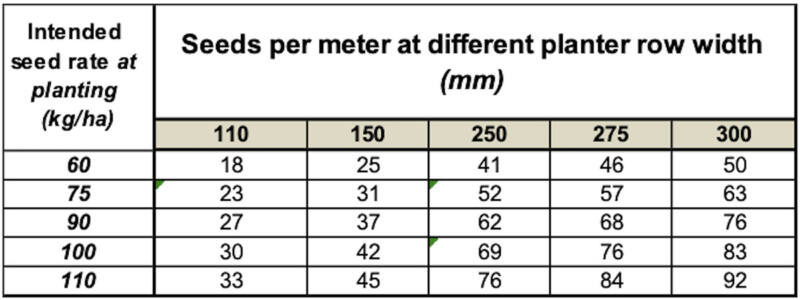
He adds that it is clear that, with narrower row widths, there are fewer seeds per metre of row.
“That means there will be less competition between roots in the loosened furrow of the narrow [row spacing]. The higher the TKM, the fewer seeds in the furrow per metre and vice versa. It is highly recommended to include TKM in your planning of seed rates for each specific planter and row width.”
According to Strauss, moisture conservation is very important.
“Keep soil disturbance to a minimum and keep residue cover for as long as possible. It will help with storing early rainfall and help carry the crop through low rainfall seasons,” he explains.
“Constant ploughing breaks the soil structure and prevents quick water infiltration. Residue helps to prevent crusting by breaking the impact of the raindrops on worked soil. Cover also slows down evaporation.”
- Late planting due to machinery delays
Optimal planting timing is a key driver of winter crop success. Delays caused by machinery unavailability, poor calibration, or operational inefficiencies can shorten the effective growing season, causing crops to miss optimal rainfall windows and temperature conditions.
Even small delays can result in reduced plant density, slower growth, and increased susceptibility to pests, diseases, and environmental stress.
Dr Jim Rankin, secretary of the South African Agricultural Machinery Association, emphasises that farmers must plan their equipment needs well in advance.
“Farmers need to prepare, plan, and make sure they have the equipment for when they need it during planting,” he says.
“The [machinery] industry works closely with farmers. If a farmer wants a particular tractor, combine harvester, or planter, they should talk to machinery suppliers.
“Some equipment is built to specification. You can’t walk into a showroom and drive out with exactly what you need.
“As an industry, we also plan ahead. With a six-month lead time on production, our farmers can get the specific equipment they need when they need it,” Rankin adds.
- Underestimating disease risk
Pre-harvest sprouting and other diseases increasingly threaten winter crop production. These risks are influenced by the interaction between environmental conditions and genetic traits. Disease can significantly reduce yield, compromise grain quality, and reduce market value.
Unlike static risks, disease incidence is dynamic and highly sensitive to seasonal rainfall, temperature patterns, and humidity levels.
For example, pre-harvest sprouting is more likely in cultivars poorly adapted to the local climate or when wet conditions occur near maturity.
Early identification of diseases through scouting and monitoring is therefore essential for timely intervention.
“Constant field scouting will help to identify risks early and ensure timely preventative measures. Choosing resistant cultivars can also help limit disease risk.
“Know the types of diseases that are prevalent in your production area, and make sure to understand the climatic effects that could contribute to the proliferation of a specific disease,”
Additional source: Grain SA
Email Professor Johann Strauss at [email protected], and Roelie Steyn at [email protected].