
Van der Westhuizen, who founded independent irrigation consultancy MuddyBoots in 2024, says this uncertainty has created doubt among growers and some harvest problems.
“It has been a challenging season in the Western Cape. The winter rains stopped early, which meant irrigation needed to start earlier due to drier soils and lower water tables,” she recounts.
“The advantage was that there was generally very good new fine root development seen in the profile holes earlier in the season, due to higher soil temperatures and better oxygen levels in the soil.
“From November [2025], the weekly maximum temperatures and evapotranspiration were higher than the previously recorded weekly values, looking at 10 years of historic data at a specific farm in the Warm Bokkeveld.
“The result was a higher weekly irrigation demand coupled with drier soils and lower dam levels. Water supplies were under severe pressure on several farms until the rains in the beginning of February.”
Relief and damage
“Unfortunately, while these rains brought relief to some farms through improved soil moisture and dam levels, they also caused a lot of damage to grapes and stone fruit that were close to harvest, with devastating hail and wind in some regions,” Van der Westhuizen adds.
“Surprisingly, with the early heat, there was minimal sunburn observed at my clients’ farms up until the March heatwave. Apart from their irrigation [practices], this may have been due to the fruit’s acclimatisation to higher temperatures earlier in the season and the moderate night temperatures in some regions.”

She has a unique view of the drought’s impact. Her consultancy and training work spans the pome and stone fruit sectors, as well as table grape, citrus and wine grape farms in the Western Cape.
“My farm visits are typically monthly, with a strong focus on upskilling growers to help them make more informed irrigation scheduling decisions using available tools. These typically include soil moisture probes, soil profile holes, and weather station data.
“Different regions have different challenges in terms of soils, water quality, crop specifics, and local climate. Each of these requires specialised strategies to optimise the crop and minimise risk.”
Why profile holes still matter
While new agronomic tools such as soil moisture probes, satellite imagery, and artificial intelligence-based smartphone scans help make farming smarter, they don’t always reveal the whole picture.
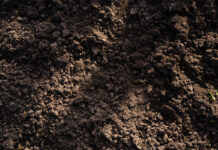
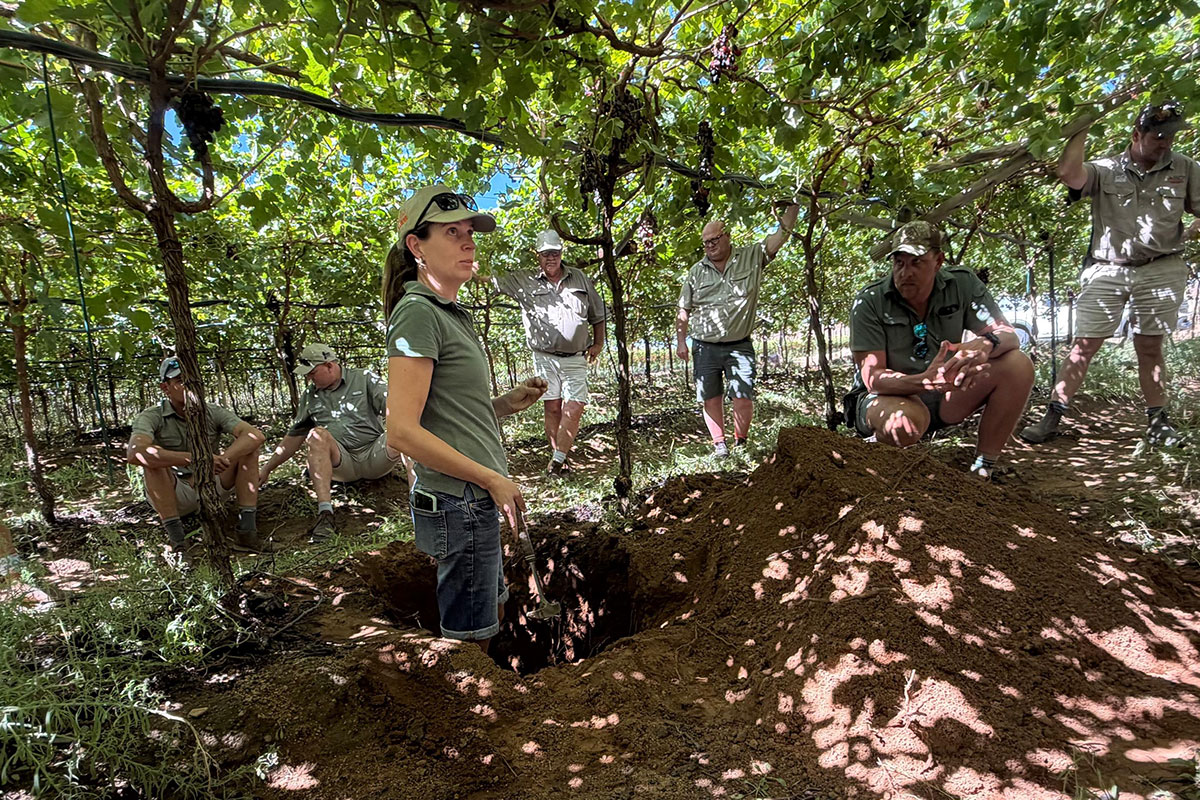
“A probe only measures a few centimetres of soil around it in a single position within an orchard, although it does log hourly data for temporal variation. Profile holes and the use of a soil auger are important for monitoring spatial variation of soil moisture to a depth of between 60cm and 80cm,” explains Van der Westhuizen.
“Seeing is believing, and profile holes also allow you to observe root distribution, density and depth. When in doubt, dig a hole!”
She adds that weather stations, which provide weather forecasts, are also important supporting tools.
Balance is key: neither too dry nor too wet
Trees are not only under stress during drought conditions; wet conditions can be equally harmful, warns Van der Westhuizen.
“The importance of managing oxygen in the soil through effective irrigation scheduling is often overlooked,” she says.
“We all know the negative effects of water stress on crops, such as smaller fruit and sunburn risk. However, the impact of too much water in the soil is often overlooked. This can limit oxygen availability for roots and soil micro-organisms.
“Irrigation practices are often overcomplicated because there are many variables to consider, and it is a decision that changes daily.
“My recommendation is to first get the basics right and then build in complexity over time. Make sure you have enough data to build a water budget, develop deeper root systems through accurate post-harvest irrigation strategies, and apply mulch where possible.”
She concludes by repeating her mantra, which is now more relevant than ever: “When in doubt, dig a hole!”
For more information email Karen van der Westhuizen at [email protected].