
When temperatures climb and the wind picks up, even well-managed fields, vineyards and orchards can start showing signs of stress. The instinct is often to “just add more water”, but during hot spells it’s less about volume and more about timing and technique, says Christo van der Westhuizen, agronomist at Netafim Southern and East Africa.
Different crops reach heat-stress thresholds at different temperatures, but all become more vulnerable when soil moisture drops, making well-timed irrigation essential. He explains that soil, depending on its type, depth and texture, has a limited water-holding capacity, almost like a glass. Once that ‘glass’ is full, any extra water simply runs off or drains too deeply to be useful.
Worse still, over-irrigating can saturate the soil pores that normally hold air. Roots need that oxygen to function properly, so waterlogged conditions can slow root respiration, reduce nutrient uptake, and leave plants more prone to stress and disease.
“The tricky part is that the symptoms of this type of damage are almost exactly the same as when plants don’t receive enough water,” he says.
Have a plan
For Van der Westhuizen, the best way to deal with hot weather and heatwaves is to have a detailed irrigation plan for each block that considers the crop being produced, its age, and stage of development, expected crop load, and soil characteristics such as texture and water-holding capacity.
The plan should then be adjusted weekly based on weather forecasts to account for environmental conditions that can influence evaporation and soil moisture levels, such as high temperatures, wind and any expected rainfall.

agronomist at Netafim
Southern and East Africa, says that digging profile holes can help farmers assess soil moisture levels.
Simultaneously, soil moisture levels should be continuously monitored to confirm how much of the applied water ends up in the root zone of the crop.
Each week, the implemented adapted plan is used to guide the plan for the next week and is saved to track and compare water use over time.
“Through record-keeping you will be able to identify trends as well irregularities that need to be addressed,” says Van der Westhuizen.
An alternative approach is to rely on real-time field observations rather than a preset plan. This method is less scientific and far more reactive.
It also requires much more footwork, as soil moisture must be checked regularly – either with soil-moisture meters or by digging profile holes down to just below the root zone.
Irrigation is then applied according to what these checks reveal.
“Many farmers along the Orange River, for instance, have a dedicated day during which they dig profile holes to assess soil moisture levels. They are mostly reliant on flood irrigation,” he says.
Volumes and timing
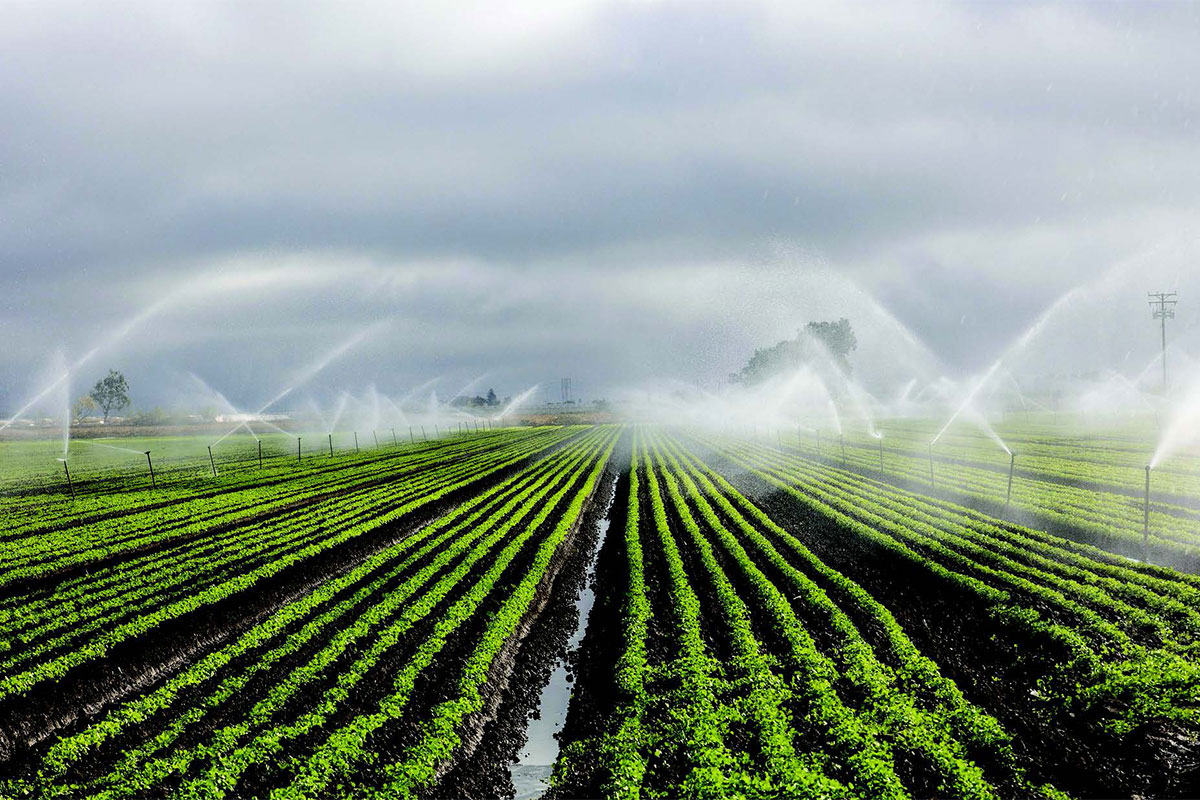
While some fruit farmers use micro-sprinklers in some parts of South Africa for their cooling effect, Van der Westhuizen points out that this benefit only lasts as long as the sprinklers are running.
“The effect usually dissipates within a few minutes after switching the sprinklers off.”
For this reason, he recommends rather using micro-sprinklers during the cooler hours of the day – early morning or late afternoon when evaporation is lower – than mid-day, during hot days.
“If you use micro-sprinklers to irrigate at midday during hot weather, a lot of the water will evaporate, resulting in less water being delivered to the root zone,” he says.
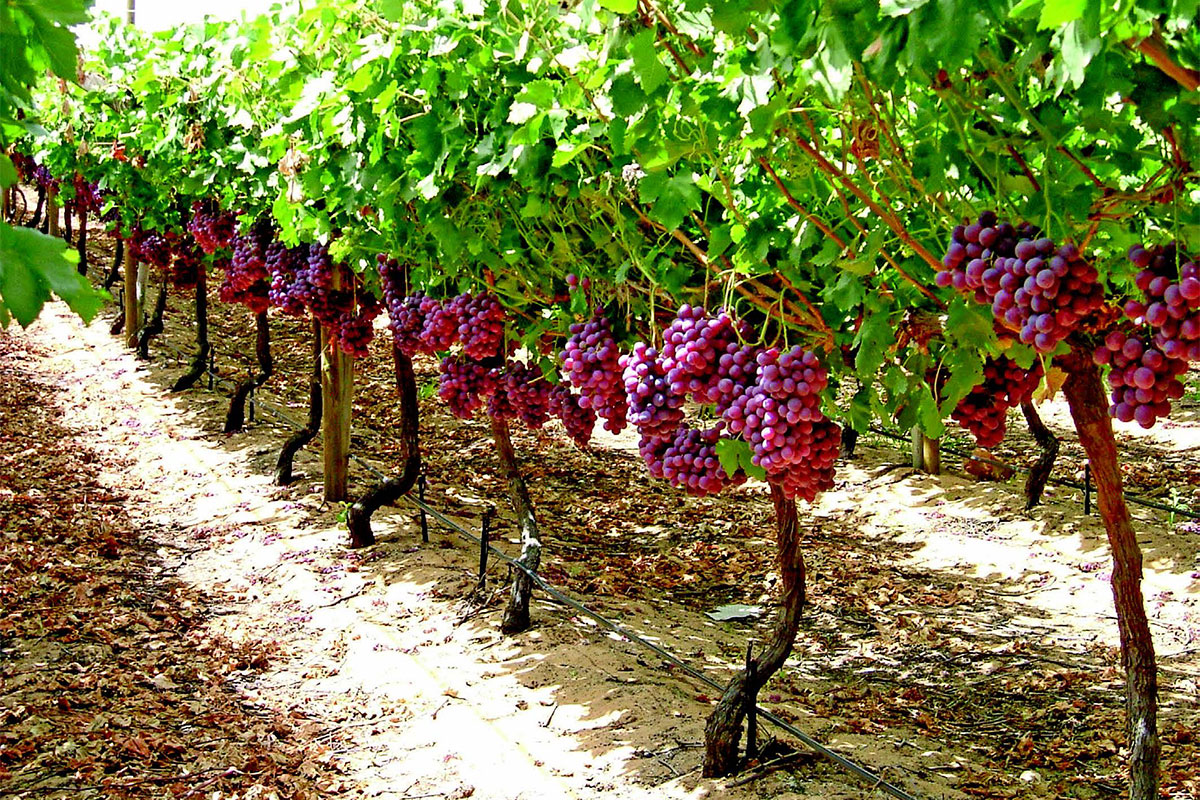
Drip irrigation, on the other hand, can be used at any time because of its low evaporation levels, even during hot conditions.
“The advantage of this is that you can keep the soil’s ‘glass’ consistently topped up, instead of constantly fighting evaporation losses.”
Debate exists over whether it is better to irrigate deeply and infrequently, or more frequently during hot spells. Van der Westhuizen believes frequency is more important.
“It does not help to try and give more water when the ‘glass’ is already full. All you are doing then is pushing oxygen out of the soil. So, instead, focus on keeping the profile balanced between moisture and oxygen.”
Maintaining sufficient soil moisture during peak heat, however, can be challenging. Even the most well-designed irrigation systems have limits. When the crop’s water demand exceeds what the system can supply, you’ll fall behind no matter how long you run it.
“The most important step is to understand exactly how much water the crop needs,” says Van der Westhuizen. “From there, you must decide how you want to irrigate. A holistic approach is essential when determining the correct frequency and run-time of an irrigation system. No two orchards are identical, so their irrigation schedules will never look the same.”
Planning and maintenance
Efficient irrigation nevertheless starts with careful planning of the system itself, according to Van der Westhuizen.
Ideally, the system should be designed to accommodate differences in soil and crop types to prevent under- or over-irrigation, as would occur when blanket applications were made.
How? By matching the system’s design – spacing, emitter type, flow rates and coverage – to the specific needs of each block, while also taking into account slope, soil texture and rooting depth.
“A well-designed system ensures water is delivered evenly where it’s needed most, reducing waste and stress on the crop,” says Van der Westhuizen.
The system also needs regular maintenance to ensure it continues to perform as intended.
Blocked emitters, clogged filters, leaks, and incorrect pressure settings can all reduce efficiency, sometimes without obvious signs until crops start showing stress.
“Farmers should schedule routine checks, especially before and during hot weather, to catch small issues before they become major problems. Even minor issues can have a big impact during heatwaves,” notes Van der Westhuizen.
“A quick walk through the system each week can save water, prevent crop stress, and ultimately protect your yields.”
The latest irrigation systems, however, come with technology that alert farmers to problems – or even shut the system down – if pressure falls outside a preprogrammed range. This can happen for several reasons, including leaks or burst pipes, clogged filters or emitters, power fluctuations, or valve malfunctions.
Such alerts help farmers catch issues early and ensure water is delivered evenly to the crops.
“Some systems only alert you that the pressure went out of range, whereas others can pinpoint the exact block where the problem occurred, making it much easier to locate and fix,” he says.
Van der Westhuizen notes that farmers are often concerned about drippers clogging, as their smaller orifices make them more sensitive to debris and therefore more dependent on careful filtration and maintenance.
Micro-sprinklers must be checked regularly to ensure they haven’t been stepped on or bent during production activities, and their irrigation radius can be affected by wind, which may prevent water from reaching the intended areas.
Water use efficiency
Rising pressure on global water resources, together with growing awareness of the water footprint of agricultural products, will increasingly compel farmers to improve their water use efficiency.
This shift is already visible in the Western Cape, where the threat of Day Zero in 2018 drove many producers to relook at their irrigation strategies.
Van der Westhuizen explains that when water is abundant, farmers often rely on flood irrigation or use micro-sprinklers and even misters to create a cooling effect during heatwaves. As water scarcity intensifies, however, producers may be forced to shift to drip irrigation, which is generally far more efficient.
Converting 50ha from micro-sprinklers to drip irrigation has been shown to save an average of 51 269m³ of water on pome fruit, 48 978m³ on table grapes, 40 557m³ on stone fruit, 37 028m³ on wine grapes, 57 276m³ on citrus and 52 632m³ on almonds.
For more information visit netafim.co.za, or email [email protected].