
The government is relying on the state firm Zimbabwe National Water Authority (Zinwa) to spearhead much of the work after it decided in 2020 to hand the parastatal the mandate to develop irrigation infrastructure in the country. Since then, the authority has successfully worked on several irrigation development projects.
Marjorie Munyonga, head of Zinwa corporate communications and marketing, told Farmer’s Weekly that the state firm has earmarked 4 040ha for irrigation development from 2026 to 2030.
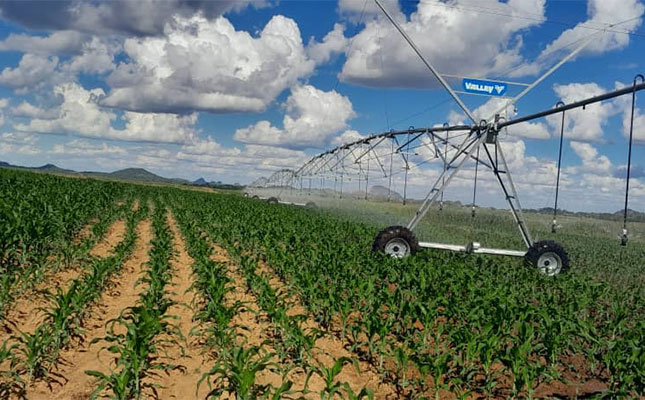
Munyonga says Zinwa is also working on Agricultural Marketing Authority projects, where US$4,6 million (about R75 million) has been earmarked to deliver 100ha of irrigated land in the coming three months. She says that Zinwa is implementing centre pivot irrigation systems because they are robust, user-friendly, and cost-effective.
State projects centred on pivot irrigation systems
Munyonga says the water authority is working on a few irrigation schemes, including the 120ha Chivhu Irrigation Scheme and the 100ha Bulawayo Kraal Irrigation Scheme in Binga.
The authority is also implementing the A1 Irrigation Productivity Booster Kits programme, where the Craigengower Project, measuring 300ha, has already been completed in Mashonaland Central. Other major irrigation projects under implementation are:
- Kanyembae, which will deliver 176ha;
- Laverstock in Manicaland, 80ha;
- Moorfields in Mashonaland Central,120ha;
- Milsonia in Midlands, 50ha;
- Yomba in Mashonaland, 300ha.
In addition to developing irrigation infrastructure, Zinwa has a mandate to supply farms with irrigation water from the country’s dams. Munyonga says water allocations commenced with the hydrological year when the rainy season ended on 31 March 2026.
Farmers sign abstraction contracts to receive irrigation water
According to the Water Act, farmers intending to use water from Zinwa managed dams are required to enter into water abstraction agreements with the authority, which allows it to reserve water allocations for farmers in the dams.
She says the agreements provide for the water volumes due to each farmer, and the time such water is due, to guide water releases from the dams. Farmers are responsible for collecting their water from the abstraction points stated in the water abstraction agreements.
Munyonga says dams currently hold sufficient water stocks to meet the anticipated irrigation demand. Asked how the authority strikes a balance between using water for irrigation and meeting other needs, like drinking water and wildlife conservation, Munyonga says water resource management is done based on the principles of equity and integrated water resources management, in which the sustenance of human life is of paramount importance.
These principles also recognise the environment as a key water user since water releases are also done for environmental needs.
Despite the work Zinwa is conducting, funding constraints in government mean the country’s target of developing 496 000ha of land cannot be met through state coffers alone. Private players are also playing their part by developing and expanding irrigation projects.

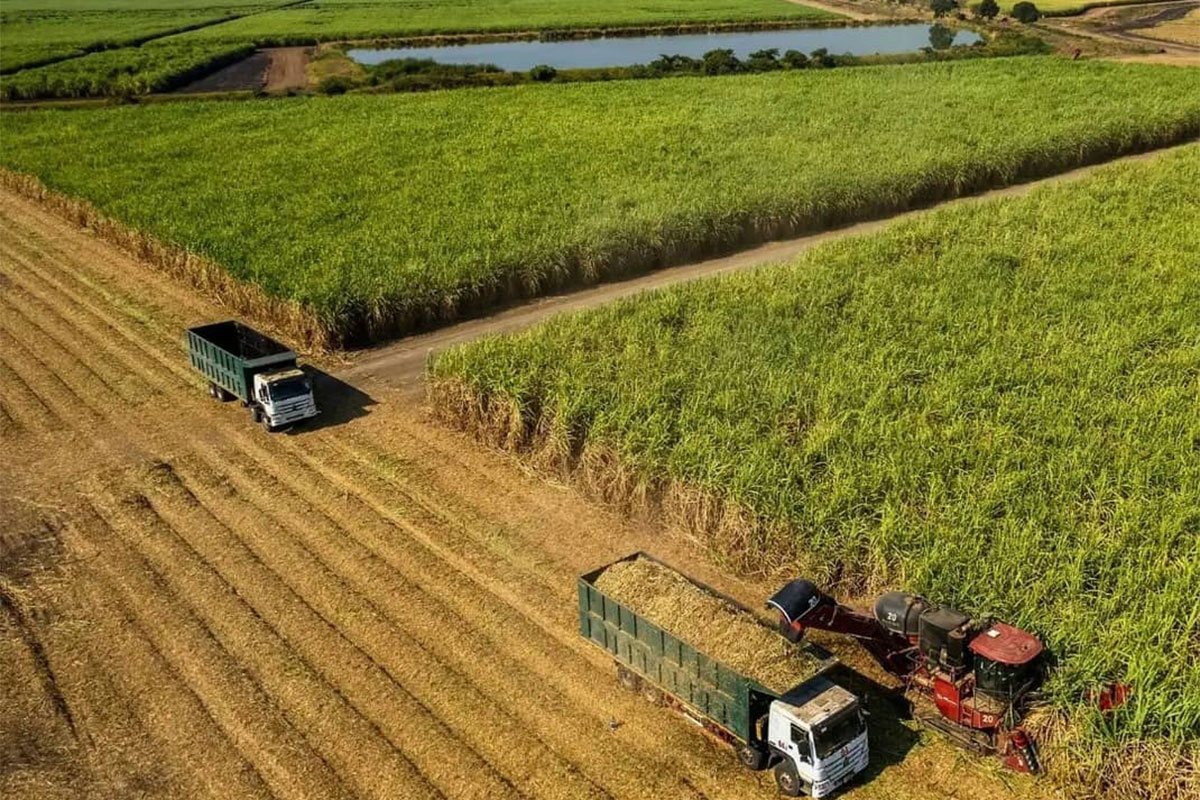
One of them is 14 500ha of land under sugar cane irrigation in Chisumbanje in Manicaland, through a collaborative agricultural joint venture between Green Fuel and the state-run Agricultural and Rural Development Authority (ARDA).
Launched in 2009, the project transformed ARDA’s Chisumbanje and Middle Sabi estates into large-scale, mechanised sugar cane farms. The sugar cane is processed in-house at Green Fuel’s ethanol plant, producing bioethanol, a renewable alternative to imported petrol, for fuel blending in Zimbabwe.
By-products include bagasse, which generates steam and electricity for the plant, and vinasse, a liquid organic fertiliser recycled back onto fields.
The joint venture is planning to expand the area under irrigation from 14 500ha to 15 000ha by the end of 2026, and up to 40 000ha in the coming years.
Green Fuel spokesperson Merit Rumema told Farmer’s Weekly that the 14 500ha of sugar cane are irrigated using furrow, centre pivot, and subsurface drip systems.
Irrigation improves crop quality and yields
Rumema says technology has delivered major water and cost savings.
“Consistent moisture has improved cane quality and yields to approximately 150t/ha under drip, which effectively raises productivity per cubic metre of water. Better fertigation, mixing fertiliser into the irrigation water, has increased nutrient use efficiency, reduced fertiliser waste, and boosted cane vigour. Overall, Green Fuel farms produce more cane and sucrose per drop of water compared with the old flood or furrow system, which is a key advantage in Zimbabwe’s dry climate,” she says.
Rumema says the joint venture’s smart irrigation project also automates tasks, which has resulted in less labour for scheduling and switchovers, since controllers and mobile networks adjust pumping with minimal manual checks. The area under irrigation expanded steadily as water infrastructure and irrigation lines were built.
“Green Fuel draws from the Save River with a pump capacity of approximately 11 800 ℓ/s and has more than 100km of canals and dozens of in-field pumps to irrigate both estates,” she adds.
Rumema says Green Fuel has installed advanced irrigation infrastructure on both estates. In total, 5 000ha is under subsurface drip irrigation, with another approximately 1 500ha added each year.
Green Fuel uses state-of-the-art land preparation to maximise irrigation efficiency. Rumema says the estates are levelled with millimetre precision using real-time kinematic global positioning system (RTK-GPS) guidance. This refers to precision farming technology that uses GPS signals to guide farm equipment like tractors, by providing location data to the equipment’s systems, helping with precise steering and operations like planting, spraying, and harvesting. The accuracy helps minimise overlap and optimise field operations.
“Bed forming and planting are also RTK guided: beds are formed to a precise 1,9m width, and seed billets are planted with GPS in twin rows, 30cm apart. This fully mechanised, sustainable approach minimises grading errors and ensures uniform germination. By automating these tasks, Green Fuel saves water and fertiliser and gains more crop per hectare. Harvesting is also done mechanically following the RTK-guided beds,” she says.
Rumema says the drip system applies water directly to the root zone and is fully automated via central controllers, allowing targeted irrigation based on weather and crop needs.
Drip irrigation is more efficient than flood systems
Rumema says drip irrigation achieves approximately 95% water-use efficiency, compared with much lower efficiency in old flood systems. In a remote area like Chisumbanje, the reliable operation of automated irrigation can be challenged by power and network issues.
Apart from government and private players, some international organisations are also involved in the development of irrigation infrastructure in Zimbabwe through funding mechanisms.
During 2024, US$1,1 million (R17,9 million) was invested to develop the156ha Pikinini Jawanda Irrigation Scheme in Masvingo province, through a partnership with the Green Climate Fund, the United Nations Development Programme, and government.
Pontoon system a game changer in irrigation
A key element is the floating pontoon system that draws water from the Manyuchi River. Unlike bank-fixed pumps, this raft-mounted system rises and falls with the river, keeping water flowing even in dry spells. This allows farmers to irrigate crops to maturity and maintain food security.
The chairperson of the Irrigation Management Committee, Shava, told Farmer’s Weekly that the project has 300 members from 12 villages and was established to address food security and mitigate the effects of climate change.
He says that in January 2025 they had their first crop, maize. “We grow maize, beans and wheat. We have plans for bananas, fish ponds, and vegetables. Now, we have 63ha covered by two pivots and the remaining 93ha covered by sprinklers. We have four electrically driven pumps.”
He says the idea of having an irrigation scheme was first mooted in the 1990s when Manyuchi Dam was constructed, but funding was a challenge. The irrigation scheme was then established in 2023. Shava says the project was co-financed by the government of Zimbabwe, the Green Climate Fund, and the United Nations Developemt Plan (UNDP).
“Land clearance, electricity installation, fertilisers, wheat, and maize seed came from government. The installation of pivots, sprinklers, pumps, pontoon infrastructure came from the other two partners,” he adds.
A UNDP statement says the irrigation scheme uses centre pivot systems to irrigate over 40% of the land, with the remainder covered by semi-portable sprinklers. These modern systems provide better water control and reduce wastage, ensuring sustainable use of available water.
Supporting infrastructure has also been put in place, including a switch room, a 1km power main line, and approximately 9 000m of irrigation pipeline. These investments have laid a solid foundation for sustainable, climate-resilient agriculture in the region, according to UNDP.
UNDP says Pikinini Jawanda stands out not only for its infrastructure, but for the commitment of its 300 farmers, each of whom put in up to 45 days of rotational labour to clear the land.
Farmers have also played a key role in the fencing scheme, securing half of the required 6,3km of fencing. Meanwhile, Shava says the irrigation scheme faces some challenges, such as energy insecurity. He says they have experienced significant power outages, which disrupt their irrigation schedules, and need a solar system.
He also says the same waters that give them life from Manyuchi Dam are home to hippos, resulting in human and wildlife conflict.
Shava says they do not have a tractor, planter, or harvester of their own. Currently, they are hiring equipment, which is expensive. Shava says they have plans to buy some of this equipment based on the hope that their land will make a profit.
Based on the same hope, Shava is upbeat about the future of the irrigation scheme. “We have a business adviser paid by government who is collaborating with us. From agriculture we get our food, money, and stock feed,” he says.