
On a livestock farm, the biggest losses rarely arrive with drama. They creep in quietly – a ewe that eats less, a calf that lags, a ram that never quite fires. These small signs are often dismissed as part of farming, yet Dr Dave Midgley, CEO of the Ruminant Veterinary Association of South Africa, warns that they mark the start of real costs.
“Healthy animals are supposed to stay healthy. If they’re getting sick, the system has already failed,” he says.
It is not said as criticism, but as diagnosis of the system, not the farmer. And it sets the tone for how he sees livestock production; not as a series of individual treatments, but as a continuous effort to prevent breakdown.
“I don’t see my role as a veterinarian as being to doctor sick animals, but to keep healthy animals healthy because healthy animals produce and reproduce much better than sick animals.”
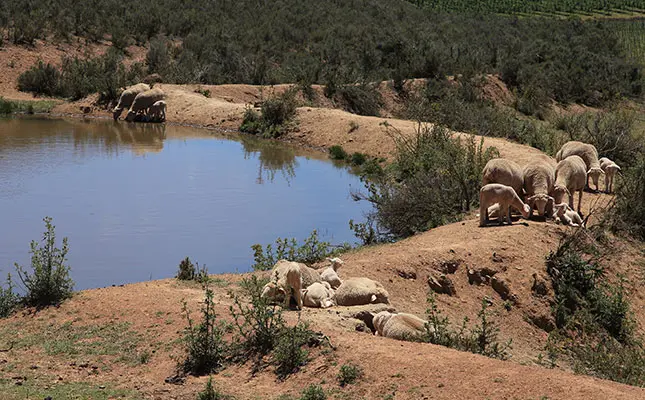
The animal that looks fine
An animal that dies on the farm is a clear and costly loss. But animals that are subclinically ill, or only partially recover, can be just as damaging by quietly eroding profitability over time. The impact is often seen first in production.
According to Midgley, disease and the stress associated with it can reduce both the quantity and quality of output.
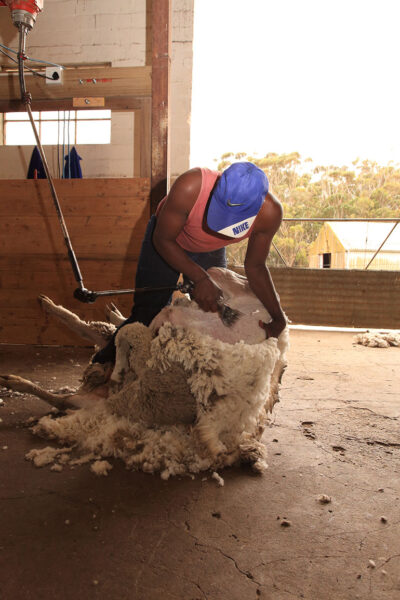
In wool sheep, illness can result in lower wool yields and increased wool break. In meat- producing animals, it can slow growth rates, increase finishing times, and reduce carcass weight and meat quality. Dairy cows and reproductive females (ewes and beef cows) may produce less, and lower-quality milk.
The longer-term effects are often less visible. Midgley explains that a cow may appear healthy after recovering from a reproductive infection, yet fail to conceive consistently thereafter.
A dairy calf that received inadequate nutrition before birth may never reach its full productive potential, regardless of its genetic merit and how well you feed it later. Likewise, a ram or bull may recover from a respiratory disease, but fever during the illness might have lowered or completely compromised fertility. The damage might only become evident the following season, through fewer lambs or calves.
“Because the losses occur gradually, they are seldom linked back to health management and are often dismissed as a bad season. The cycle may then be repeated if the cause of lower fertility remains unaddressed,” says Midgley.
Lost time
Disease does not just weaken animals, it disrupts the rhythm of the entire farm. Midgley explains that calving and lambing seasons are carefully planned around rainfall patterns, pasture availability and market opportunities, such as those over the Easter or Christmas holidays.
But disease does not respect production calendars. Heavy rain this year, for instance, created ideal conditions for parasites and parasite-borne diseases that, on some farms, pushed reproduction off schedule.
“If animals get sick during key reproductive periods, they don’t conceive properly or they resorb pregnancies,” says Midgley.
“Then everything shifts out of season. What looks like a short-term setback quietly becomes a long-term decline in productivity.”
That is where costs begin to accumulate. Late- born lambs and calves are often born out of sync with peak pasture availability, increasing reliance on supplementary feed. They also tend to grow slower, extending the time required to reach market weight and often missing peak market opportunities, while also raising labour costs.
“You end up feeding animals that are not giving you an optimal return,” he says.
Biggest disease threats
When asked which diseases pose the greatest risk, Midgley smiles and names the first as gatsakilitis, an Afrikaans word he invented for a ‘disease that affects the nerve between the brain and the purse’.
Behind the humour lies a serious warning: hesitation to spend on preventative measures is often the most dangerous condition on a farm. Vaccinations, parasite control, nutrition and biosecurity may look like costs on paper, but they are investments in stability. Skipping them can lead to outbreaks, fertility losses and production declines that far outweigh the savings.
“The goal is not to treat disease,” explains Midgley. “The goal is to prevent the system from breaking down. On well- managed farms, animal health is not visible as intervention.
“It is visible as consistency: steady growth rates, predictable fertility, and stable production cycles.”
By reframing gatsakilitis as a mindset problem rather than a punchline, Midgley makes it clear that the greatest threat is not a virus or a parasite, but the reluctance to invest in prevention.
The second major threat, he says, is genetic-environment mismatch disease. This refers to a mismatch between an animal’s genetic traits and the environment in which it is expected to perform.
Genetics influence how animals respond to environmental challenges.
Traits such as heat tolerance, disease resistance, fertility and the ability to utilise natural grazing can determine whether an animal thrives or struggles under specific production conditions. Animals with genetics that are poorly suited to their environment are more vulnerable to stress, lower productivity and poorer reproductive performance.
“Producers often focus on the best genetics available, but the best genetics are not always the most expensive genetics. They are the genetics that fit the environment and production system,” explains Midgley.
Count the cost
For many farmers, the first instinct when animals show signs of illness is to avoid calling the veterinarian. The perception is that professional help is expensive.
Yet, Midgley argues that this mindset often leads to far greater losses.
“They might complain about the veterinary bill, but our service usually makes up a fraction of the total cost of treatment and should rather be seen as an investment in safeguarding the rest of the herd.”
The real expense, according to him, lies in misdiagnosis and delay. Producers may turn to social media groups, online searches, consult artificial intelligence tools, or visit their local agricultural co-operative for a remedy.
While these sources can be useful, they cannot replace a proper diagnosis.
“The problem is that many diseases present with similar symptoms, but require very different treatments,” he explains.
Without understanding the underlying cause of a problem, producers risk treating the wrong disease, using the wrong medication, or administering an incorrect dosage. This can delay recovery, increase production losses and, in some cases, worsen the animal’s condition.
“By the time the correct diagnosis is made, valuable time has been lost, resulting in a longer recovery, higher production losses, and an escalation in treatment costs,” he says.
Shortcuts in treatment are another hidden cost. Underdosing to save money or stopping treatment too early may seem economical in the moment, but it often prolongs illness, reduces productivity, and increases the risk of resistance.
“Trying to save money by underdosing animals or stopping treatment too early frequently ends up costing far more,” cautions Midgley.
Veterinary partnerships
For Midgley, one of the most important shifts needed in livestock production is how farmers use veterinary support. Too often, veterinarians are only called when something has already gone wrong: a pneumonia outbreak, a sudden spike in abortions, or unexplained weight loss in a group of animals. Yet the real value of veterinary input, he says, lies in continuity and prevention.
“You need to have a relationship with the veterinarian and be able to talk to him or her regularly. This veterinarian needs to be familiar with the farm and visit at least three times a year: before the production season to assess reproductive animals and test the fertility of males, during the last trimester of lambing or calving, when foetal growth accelerates, and again after the lambing season to review outcomes and record what actually happened,” says Midgley.
The veterinarian will also help the producer to develop a health management guide.
“It is not a recipe that can be followed blindly, but a guide that should be adapted regularly based on environmental and production conditions, and associated risks at a specific point in time,” he says.
Many producers underestimate the value of this ongoing engagement, but Midgley counters that “the eye of the master fattens the calf”.
When visiting a farm, explains Midgley, he does not only look at individual animals in isolation, but at the broader production system.
He compares the farm’s veld condition with that of neighbouring farms, considers environmental factors such as rainfall patterns and climatic stress, evaluates water quality and feed resources.
He then links these observations to animal performance, reproduction and disease patterns.
While there, he also looks at the medicine cabinet to determine if some of the remedies have expired or been mixed incorrectly.
In some cases, this systematic approach could require some very difficult decisions.
Even sacrificing an animal for diagnostic purposes during a suspected outbreak can be justified if it helps protect the wider herd.
“It is about protecting the system, not just treating the animal.
“It is about putting all the pieces together.
“Only then can you understand why animals are performing the way they are.
“In so doing, one can also gauge what needs to change,” says Midgley.
Being one step ahead
In the end, Midgley’s message is not about eliminating disease. It is about positioning the farm so that disease never defines production.
“The moment you are reacting, you are already behind,” he points out.
He adds that the most profitable farms are not the ones without disease. They are the ones that contain it early, limit its spread, and protect the production system from long-term disruption.
In livestock production, health is never just health. It is about timing, fertility, growth and money.
For more information, email Dr Dave Midgley at [email protected].