
A farmer spends thousands of rand on vaccines, gathers the livestock, works through the herd and ticks another task off the seasonal calendar. Yet a few months later disease strikes.
When that happens, the first reaction is often to blame the vaccine. But according to Dr Noluvuyo Magadla, director of animal health at the Western Cape Department of Agriculture, the problem is seldom the product in the bottle.
“Vaccines do not protect animals – proper vaccination protocols do,” she says. It is a simple statement, but one that goes to the heart of why some vaccination programmes deliver excellent results while others fail to provide the expected protection.
She explains that many farmers still think of vaccination as a once-off event: buy the vaccine, inject the animal and move on. In reality, vaccination is a process that starts long before the needle goes in and continues long afterwards.
“Everything matters: disease risk, storage, transport, the condition of the animal, correct vaccine and dosing, and whether booster shots are given on time. A breakdown anywhere in that chain can mean the difference between protection and vulnerability.”
Getting it right pays
A sound vaccination protocol is one of the most cost-effective investments livestock farmers can make.
“The cost of prevention is almost always lower than the cost of an outbreak,” says Magadla. “When vaccination programmes are implemented properly, they reduce losses, improve productivity and support animal welfare.”
The direct costs of disease are easy to see: sick animals lose condition, fertility drops, growth slows and mortality rises. Veterinary treatment and labour costs quickly escalate.
The hidden costs are often greater. Disease outbreaks disrupt production cycles, affect market access and undo years of genetic and management progress. For any livestock operation, the financial impact can be severe.
Beyond the farm gate, vaccination programmes also support food security and consumer confidence. Increasingly, both local and international markets require proof of effective animal health management.
“Good vaccination records, traceability systems and disease surveillance are as important as the vaccines themselves,” says Magadla.
More than just a jab
Magadla defines a vaccination protocol as a planned and repeatable system that ensures the right vaccine reaches the right animal, at the right time, and under the right conditions.
That may sound straightforward, but the details are often where things go wrong.
While most producers blame faulty vaccines for failures, these are rarely the cause, according to Magadla.
The real culprit, she says, is management failures: a vaccine left in the sun while livestock are being gathered, a cooler box that does not keep temperatures low enough, animals vaccinated immediately after a stressful transport journey, or a booster shot that is forgotten during a busy season.
None of these mistakes may seem significant on its own, but each can reduce the effectiveness of a vaccination programme.
“You need to treat, store and apply a vaccine according to the directions or it will not give the desired protection to your animals,” she says.
Magadla identifies cold- chain failures as the biggest cause of vaccine failures. Most vaccines need to be kept at between 2°C and 8°C from the moment they leave the supplier until they are administered. Exposure to excessive heat or freezing temperatures can permanently damage the product.
“The journey from supplier to farm is often where vaccine potency is lost,” she says, which is why she recommends transporting vaccines in a heavy-duty cooler box with frozen ice packs and keeping them out of direct sunlight throughout the process.
Healthy animals respond better
Even when the correct vaccine is used and stored properly, success is not guaranteed.
Sick, severely stressed, malnourished, dehydrated or heavily parasitised animals often mount weaker immune responses following vaccination. For instance, it might be convenient to vaccinate livestock immediately after they have arrived from a long-distance journey, but the stress of transport, handling and adapting to a new environment can suppress immune function. In most cases it is better to allow animals time to stabilise first.
Vaccination should therefore not be viewed in isolation. It works best when animals are healthy, well-nourished and supported by good nutrition and parasite control.
“In many cases, improving general herd management can enhance vaccine effectiveness,” she says.
Small details, big consequences
In vaccination, small details often have large consequences. One of these is equipment management. Automatic syringes should be calibrated regularly, and reusable components must be cleaned and sterilised properly, leaving no chemical residues. Needles should also be changed frequently.
“A maximum of 10 to 12 animals per needle is recommended, and sooner if the needle becomes bent, blunt or contaminated,” says Magadla. “Good equipment management reduces tissue damage, abscesses, pain and disease transmission.”
The administration route is equally important. Some vaccines are given under the skin, others into the muscle, while poultry vaccines may be delivered via water, spray or eye drops.
Incorrect technique, needle size and injection site can also significantly reduce effectiveness. In cattle, for instance, vaccines should be given on the side of the neck, in front of the shoulder, to avoid damaging valuable meat cuts.
The booster shot
Ask any veterinarian about common causes of vaccine failure, and booster compliance is likely to feature near the top of the list, according to Magadla. Many vaccines require more than one dose. The first primes the immune system, while subsequent doses strengthen and extend protection.
Yet booster schedules are often forgotten due to workload, labour constraints or simple oversight.Timing is also critical in young animals.
Maternal antibodies can interfere with early vaccination, while pregnancy status may influence scheduling.
For this reason, vaccination programmes should follow veterinary guidance rather than habit.
“An effective vaccination calendar is as important as the vaccine itself,” says Magadla.
Record-keeping
Most farmers would not dream of running their finances without records, yet vaccination records are sometimes treated as an afterthought.
Magadla argues that documentation is one of the most important components of an effective vaccination programme.
“If it is not recorded, it effectively did not happen. Good records will support traceability, help identify adverse reactions, track boosters and evaluate programme performance. It is also increasingly required for market access and compliance.”
Each event should capture the date, vaccine name, batch number, expiry date, dosage, animal identity and operator.
Different animals, different approaches
Although the principles of vaccination remain broadly similar, protocols must be adapted to the species being managed.
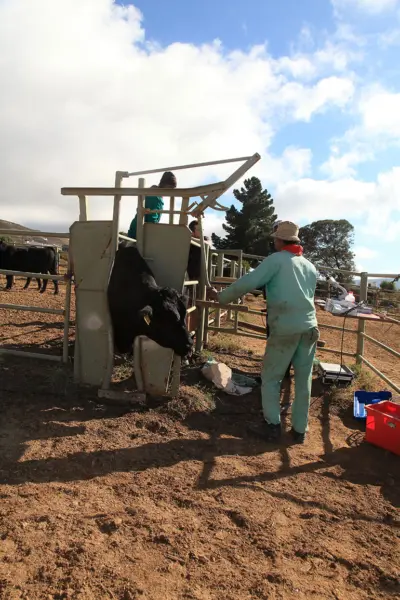
In cattle operations, vaccination programmes often involve large numbers of animals and depend heavily on good handling facilities.
Efficient planning becomes essential to maintain vaccine temperatures and ensure consistent administration throughout the process.
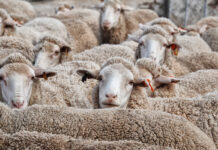
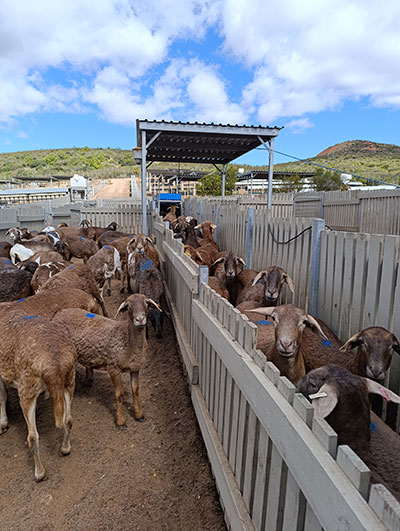
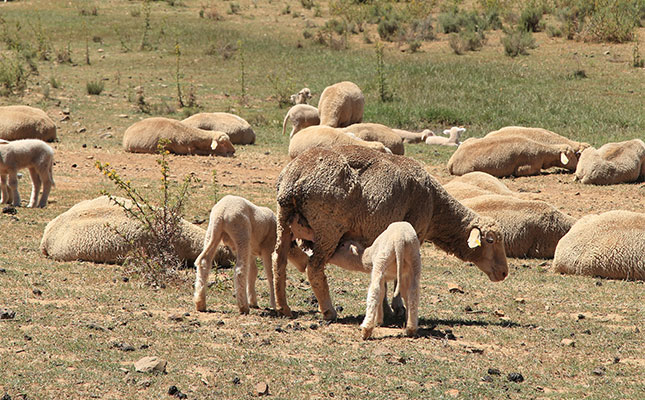
Sheep and goats present different challenges. Accurate dosing is critical, while stress management becomes particularly important because small-stock can be highly sensitive to handling pressure. Special care may also be required during pregnancy, making vaccine choice and timing especially important.
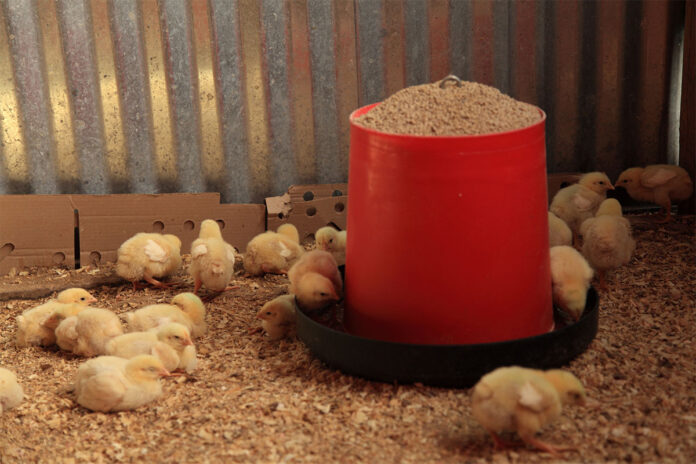
Poultry systems differ even further. Vaccines are often delivered through drinking water, sprays or eye-drop systems rather than injection.
This means water quality, administration uniformity and flock coverage become critical factors.
Commercial and communal realities
The challenges associated with vaccination often differ depending on the farming system, according to Magadla. Commercial systems often benefit from infrastructure such as crush pens, refrigeration and trained staff. But scale creates its own challenges, particularly during large vaccination drives.
Smallholder and communal systems face different constraints, including limited refrigeration, weaker animal identification systems and difficulty maintaining booster schedules. But success is not determined by the production system alone.
“The most important determinant of success is not the production system itself, but the quality of implementation,” she says.
“A well-organised communal vaccination campaign with strong farmer participation, proper vaccine handling and good coverage can outperform a poorly managed commercial programme. In both systems, success ultimately depends on planning, discipline and attention to detail.”
Not a silver bullet
One of the biggest misconceptions in livestock health is that vaccination alone can compensate for weaknesses elsewhere on the farm, but Magadla makes it clear that it cannot.
“For many diseases, such as foot-and-mouth disease, vaccination should form part of a broader disease-prevention strategy that includes biosecurity, movement controls, nutrition, parasite management and surveillance,” she explains.
A farm with poor biosecurity remains vulnerable to disease introduction regardless of its vaccination programme.
Similarly, animals struggling with nutritional deficiencies or heavy parasite burdens are unlikely to respond optimally to vaccines.
Magadla stresses that disease control works best when all these elements function together.
Controlling access to farms, isolating newly introduced animals, maintaining good hygiene and implementing strategic parasite-control programmes all contribute to stronger herd health.
“The most successful livestock producers do not rely on vaccination alone. They build systems that support animal health from multiple angles,” she says.
Looking ahead
Vaccination programmes are becoming more sophisticated as climate change, shifting disease patterns and trade requirements reshape livestock production.
Magadla says that technology is already helping farmers respond to these challenges.
Digital record-keeping systems are making it easier to track vaccinations and to monitor compliance.
Temperature-monitoring devices can alert farmers when cold-chain conditions are compromised. Geographic information systems are increasingly being used to identify disease hotspots and predict periods of elevated risk.
At the same time, trading partners are placing greater emphasis on traceability, surveillance and documented disease-control measures.
“The days of vaccinating simply because ‘that is what we have always done’ are steadily giving way to far more targeted,
risk-based approaches,” concludes Magadla.
For more information, email Dr Magadla at [email protected].