
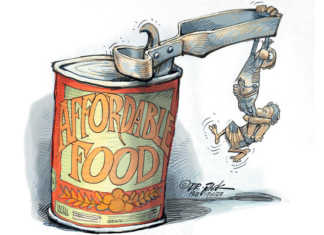
Global hunger: the price we pay for food
In poorer nations, buying the ingredients for a single meal can use up a significant portion of a person’s earnings. Where there is conflict or economic collapse, it can exceed these earnings outright. Researchers involved with the World Food Programme propose what should be done to ensure true food security.
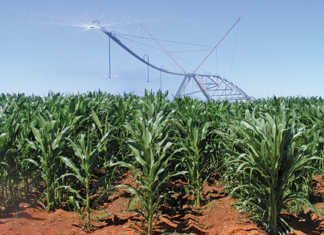
Do we need a new way to measure our prosperity?
Claims have emerged that institutions such as the World Bank are ‘doctoring’ the methods they use to measure food security, competitiveness and other factors in developing countries.

Agriculture is changing and so must agri economists
It’s not only farmers who have to adapt to the fundamental changes occurring in world agriculture, or go out of business. Agricultural economists also have to adapt. This is the warning from Bongiswa Matoti, president of the Agricultural Economists’ Association of South Africa.

Black youths must be made aware of agri sector careers
In his BCom Hons research paper, Mlungisi Mama examines why so few black youths are interested in agriculture as a career. His conclusion is that they believe the sector comprises little more than farmers and farmworkers, and are unaware of the job opportunities available in various agricultural disciplines. Rectifying this will demand an education campaign run jointly by several government departments.

We all want land reform. Let’s make it work!
Meaningful land reform is crucial, not only to allay the farming community’s fears, but to help restore the economy and benefit South Africa’s poor.

How Africa can emulate India’s agricultural success
India’s self-sufficiency in grains is no accident. In the 1960s, in response to food shortages, the country began systematically modernising its agricultural sector. This was achieved through government subsidies, research into improved seed, manufacturing of farming equipment, and other interventions. Sub-Saharan Africa can learn many lessons from India’s ‘Green Revolution’.
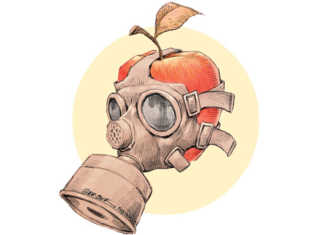
Addressing agrochemical residues on fresh produce
The use of agrochemicals in the commercial production of fresh produce is widespread in South Africa and elsewhere. However, according to Tom Murray, technical manager at Woolworths, retailers realise that many shoppers are growing concerned about the possible health threats of agrochemicals.

The role of ‘human error’ in climate change
Speaking at a technical information day hosted by the Dried Fruit Technical Services and Canning Fruit Producers’ Association, environmentalist Dave Pepler focused on individual responsibility in terms of climate change and damage to the environment.
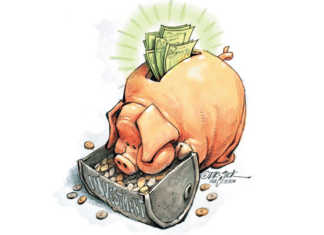
Reap returns on investments by ‘farming the markets’
Farming the markets’ originates from the analogy that exists between personal finance (investing) and farming.
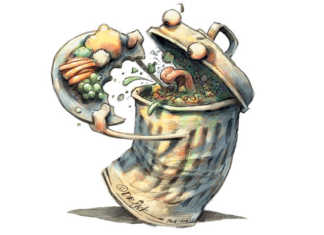
The cost of South Africa’s food loss and waste
The 2017 ‘Food loss and waste: facts and futures’ report, compiled by the WWF-SA, investigates food loss and waste in South Africa. According to the report, a third of all food in the country is not consumed, but wasted, while millions of South Africans go to bed hungry every night.
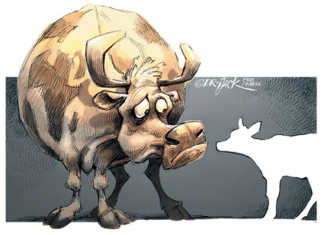
Low rural calving rates threaten Africa’s food security
During the Agribusiness Africa conference hosted by Farmer’s Weekly, Dr Riaan du Preez, manager of scientific affairs at Afrivet, highlighted a disturbing statistic about cow conception on the continent: six out of 10 cows in Africa do not produce calves. He spoke about the dangers this poses for food security, as well as possible solutions to the problem.

SA needs compassionate business leaders
South Africa needs leaders from all sectors of the economy who are proactive, imaginative and understanding of the economic difficulties the country faces. This was according to former finance minister and current member of parliament, Pravin Gordhan, speaking at the 11th Agribusiness Africa Conference, hosted by Farmer’s Weekly in Johannesburg.
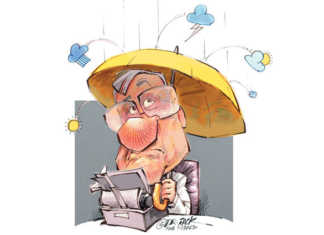
Climate variability versus climate change
Climate expert Johan van den Berg recently addressed the Northern Cape Red Meat Producers’ Organisation congress on the outlook for climatic conditions in the future, and how to manage the associated risks. He highlighted the differences between climate change and climate variability and suggested how farmers could factor this into their planning.
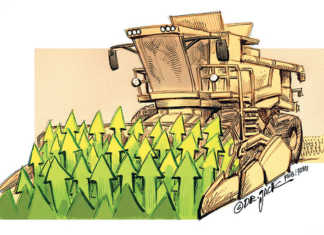
Global food demand and prices to decrease over next decade
The “Agricultural outlook 2017-2026” report, compiled by the Organisation for Economic Co-operation and Development, as well as the United Nations Food and Agriculture Organization, forecasts that over the next decade, demand for agricultural products will slow considerably, causing real prices of most agricultural and fish commodities to follow a slightly declining trend, thereby keeping them below previous peaks.
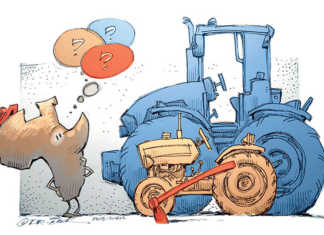
Farming in Africa: bigger is not always better, studies show
Improving the efficiency of smallholder farmers in Africa is necessary not only to help grow African economies, but also to improve the livelihoods of these farmers and their families. However, research has found that not all farming models aimed at helping smallholder farmers increase production and link in to commercial value chains, are appropriately structured to reach this goal.
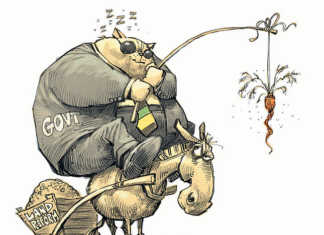
Take a cue from Asia on successful land reform
Speaking at the AVI Africa Poultry conference, Christo van der Rheede, deputy executive officer at Agri SA, questioned government’s commitment to land reform. In particular, he criticised its protracted and fragmented approach, and offered suggestions on sustainable land restitution.

Resolving agriculture’s transformation deadlock
James Martin, an independent agricultural transformation consultant and facilitator, says that transformation is a critical goal, but expecting power imbalances and prejudice to simply disappear is unreasonable. He believes that real change will only happen once we start changing human behaviour to shift perceptions, so that we can meet as equals.
China’s love affair with wine, and how SA can benefit
Chinese consumers’ growing affinity for wine, particularly imports from international premium wine producers, presents a growth opportunity for the South African wine industry, according to research conducted by Buyambo Mantashe of agriculture investment company, MM Agrivestment.

Consumer trends are crucial for production decisions
Independent consumer researcher, Nadia van der Kolf, urges farmers to keep consumer trends in mind when planning production expansion.
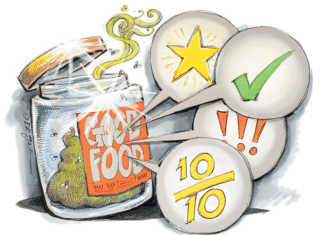
Food label claims: true, misleading, or outright lies?
Consumers face a barrage of confusing, sometimes dubious, claims on food labels. This could end up harming consumer trust in the food value chain, and substantially damaging the industry and the environment.
- ADVERTISEMENT -
- ADVERTISEMENT -
MUST READS


- ADVERTISEMENT -