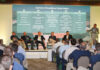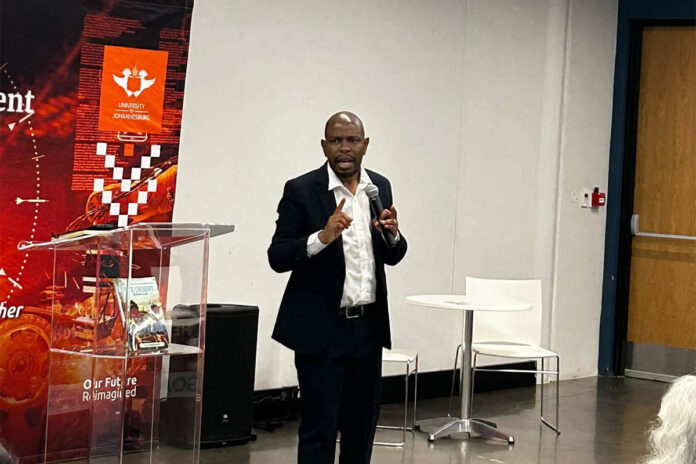
The event held on 22 September at the University of Johannesburg’s Centre for Ecological Intelligence, was far more than a traditional book launch; it was a profound moment of reflection and celebration of youth leadership, environmental stewardship, and Africa’s agricultural potential.
Parents, children, and leaders from academia, industry, nutrition, and child development, alongside representatives from various African countries, gathered not just to celebrate a story but to ignite a conversation that Africa needed to have long ago.
Why does this book matter?
The Desert Bloom Club seamlessly blends African cultural wisdom with modern ecological intelligence. By teaching children about living soil, sustainable farming, nutrition, entrepreneurship, and the power of teamwork, this book directly supports national goals centred on climate resilience, healthy nutrition, and youth empowerment.
Speaking during the launch, Kandaya said his book celebrates youth leadership, environmental stewardship, and Africa’s agriculture potential.
“The narrative blends African cultural wisdom with modern ecological science, teaching children about living soil, sustainable farming, and the value of teamwork. Designed for schools, community programmes, and families, The Desert Bloom Club aims to inspire a new generation of young agripreneurs and environmental champions,” Kandaya said.
During the launch, stakeholders evaluated whether current primary and high school curricula act as a catalyst for a generation of food producers, or if they merely sustain a culture of consumption.
The book reframes young people as future food producers who are redefining farming – not as a last-resort vocation for those who have run out of options, but as a field of innovation, entrepreneurship, science, and culture. Through the book’s storytelling, food systems become a space where youth-led creativity and courage can change the course of history.
With only four years remaining to achieve the United Nations Sustainable Development Goals, the common question hanging over the event was, where do we stand on Goal two (Zero Hunger)?
By 2050, the world will need to feed nearly 10 billion people; however, youth interest in farming is currently lower than anticipated. The book is an important push towards Africa’s food security in the next decade and the kind of food that the continent is likely to produce.
Prof Michael Rudolph, director of the University of Johannesburg’s Centre for Ecological Intelligence, invited stakeholders to embrace the book as a framework for reimagining and reintroducing agriculture into schools and community structures.
Reflecting on the expert contributions made at the launch, a central question emerged: Are we equipping the next generation to be producers and job creators, or merely consumers and job seekers?
Experts’ insights
The insights shared by the panellists underscored the critical urgency of this work:
- Prof Kat Yassim from North-West University highlighted the profound link between leadership, foundational learning, food security, and nutrition. She emphasised how a narrative framework can foster teamwork, inclusion, and specialised teacher education praxis.
- Prof Kathleen Fonseca, head of department and senior lecturer in the Department of Childhood Education at the University of Johannesburg, explained how early childhood nutrition directly impacts cognitive development and educational outcomes, reinforcing that the lessons in this book are not just timely but overdue.
- Dr Alex Kamgain, senior research associate at the University of Johannesburg, emphasised the importance of indigenous knowledge systems among other relevant topics that deserve special attention.
- Daniel Makamedi, who is the principal of Philena Primary School in Centurion, emphasised the practical necessity of complementing the National School Nutrition Programme with the book’s hands-on components to establish thriving student-led food gardens.