
Advances in pome fruit breeding are introducing a new generation of cultivars with improved production and market traits.
According to Dihan Blom, pome product manager at Delecta, the newer cultivars offer tangible advantages over older varieties. These include improved packouts, more uniform fruit size and colour, reduced labour inputs, such as fewer picking rounds, and less need for manipulation during the growing season.
Some cultivars also show improved tolerance to certain diseases and better storage life, which is critical for export markets.
However, these benefits are not guaranteed across all production regions.
“Performance can differ significantly depending on climate, soil type, rootstock and management practices. Therefore, what works well in one area may not necessarily deliver the same results elsewhere,” Blom cautions.

Given the high cost of establishing orchards and the long-term nature of these investments, picking the right cultivar is a decision with lasting consequences.
“Establishing a new apple or pear orchard can cost in the region of R800 000/ha and upwards, increasing to around R1,3 million/ ha under nets. Apples take an average of five years and pears around seven years to repay the investment, although newer varieties are helping to shorten this payback period,” he says.
He adds that, for optimal returns, orchards need to remain financially viable for at least 20 years. Planting a variety that is not in demand or does not perform well under local conditions can therefore be a major setback.
Reducing risk through on-farm trials
When deciding which cultivars to plant, growers typically draw on a range of information sources.
These include feedback from plant improvement organisations, observations from other farmers who have already tested the variety – preferably under similar production conditions – and, where possible, their own experience from small trial blocks on their farms.
Blom identifies on-farm trials as the most effective way to reduce uncertainty.
“By testing a new cultivar on your farm, you can see exactly how it performs under your specific production conditions. This allows you to identify potential challenges early on and adapt your management practices before committing to commercial-scale plantings,” he explains.
Some farmers plant one or two rows of new varieties, with the same picking time as the commercial variety, on the outskirts of commercial blocks. This can simplify management, as trees can be pruned, sprayed, thinned and picked alongside commercial blocks, while also allowing for easy comparison.
However, while this approach may ease management and be less labour intensive, Blom prefers dedicated trial blocks, as these allow for more uniform conditions, fairer comparisons between trialled cultivars, and more accurate evaluation of management practices.
These blocks should be established on uniform land that is representative of the broader production area. Ideally, dedicated labour should also be allocated to manage these trees.
He recommends planting at least five trees per cultivar for evaluation purposes.
“Two trees are simply too few to give a reliable indication of performance. The more trees you include, the better your understanding of the cultivar’s consistency and overall potential,” he notes.
Trials can be expanded further by testing cultivars on different rootstocks and under different pruning systems. This helps growers assess how trees respond to various management approaches and identify the most suitable production strategies.
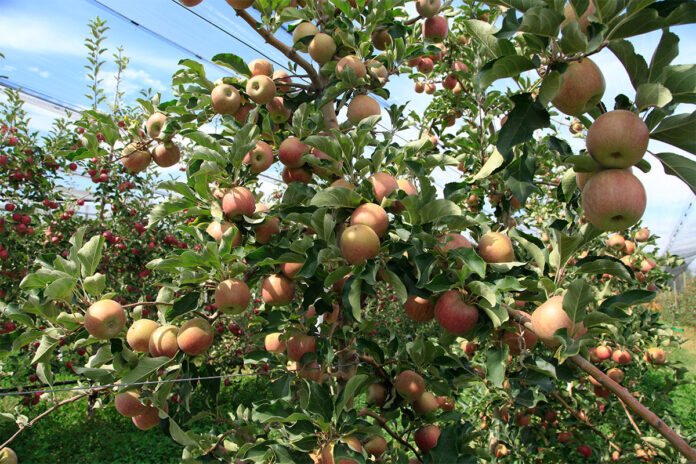
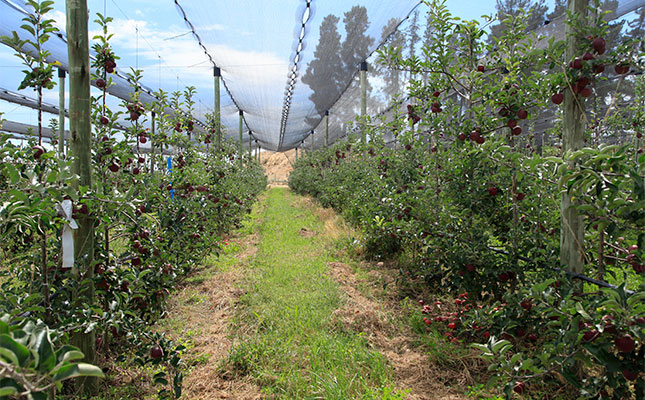
For instance, at Rietfontein farm, belonging to Graaff Fruit – a major shareholder in Delecta – about 1ha has been set aside for testing new pome fruit cultivars. The trial is conducted under grey nets with 18% UV protection to reduce sun damage. The farm is in the Koue Bokkeveld, an area well suited to pome fruit production.
Market considerations
Production performance alone is not enough to guarantee success. Blom stresses that market alignment is equally important when selecting new cultivars.
“Pushing an unknown variety into the market can be challenging. For instance, consumers were initially wary of buying the bright yellow Opal apple because they thought it was overripe,” he says.
If it is a new cultivar, it is therefore important to understand whether it is supported by a clear marketing strategy, as well as the target market for which it has been developed.
Exporters and marketers often play a key role in this process. In some cases, fruit from trial blocks is sent to overseas buyers to gauge their response before larger volumes are planted, while in other instances buyers themselves may drive demand for specific new cultivars.
“Buyers are constantly looking for the next best thing – novel fruit that can differentiate them on the shelf. A unique appearance, taste or eating experience can create excitement and help drive consumer demand,” Blom explains.
Consumer preferences can differ significantly between markets. For example, UK consumers generally favour smaller, more aromatic apples with a slightly tart taste, while many Eastern markets prefer larger, sweeter fruit.
Golden Delicious, once a dominant variety, has lost appeal in most international markets, although it remains popular in some African markets.
Targeting a single market and a single variety can therefore increase risk, as growers may be exposed to price pressure, shifting demand or market access challenges. Some of the newer varieties aim to address this challenge by offering broader appeal.
Apples tested at Rietfontein
Several apple cultivars planted at Rietfontein are currently showing promise.
Cosmic Crisp (WA 38) was developed by horticulturist Bruce Barritt at Washington State University from a cross between Honeycrisp and Enterprise. The bi-coloured apple, commercially released in 2019, is juicy with a high sugar content combined with high acidity, allowing it to maintain its eating quality even after long-distance transport.
It is a mid-season variety that ripens more uniformly than many other cultivars, resulting in fewer picking rounds, and produces higher packouts than Honeycrisp due to its excellent colour development.
In addition, it can be stored under controlled atmosphere for more than 10 months and browns slowly once cut, making it a good option for processing.
Joya (RDS) is a bicoloured mutation of Cripps Red, which was originally developed from a cross between Lady Williams and Golden Delicious at Stoneville Research Station in Western Australia. The variety was released in South Africa out of quarantine in 2017, with the first trees planted in 2020.
The crisp, juicy apples have a balanced, sweet-tart flavour and a red-striped blush with significantly more overcolour than Cripps Red, offering the potential for higher packouts. The variety ripens at a similar time to Cripps Red.
Story (Inored) apples were developed in France by INRAE/Novadi from a cross between Pinova and X6398, with commercialisation starting in 2017. The apples have a deep garnet-red skin, sometimes showing lighter stripes or blushes.
The variety is resistant to apple scab, and its strong colour development supports high packouts. It is a mid-season cultivar, ripening around the same time as Golden Delicious, and can be stored for up to eight months under controlled atmosphere.
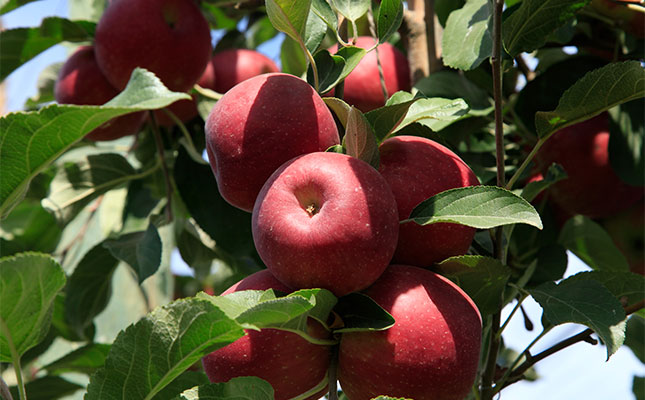
Soluna (ANABP 01) is a burgundy-red apple developed through a government breeding programme in Western Australia by John Cripps and released in 2022.
“The variety is not yet commercially available in South Africa and was planted at Rietfontein about two years ago. It has us excited because of the other promising cultivars that came out of this breeding programme, such as Cripps Pink (Pink Lady) and Cripps Red (Joya),” says Blom.
The apple’s trade name reflects the union of sun (sol) and moon (luna), symbolising the contrast between its dark skin and bright flesh. It is said to have excellent natural storage potential, maintaining its crispness and colour due to high flavonoid content, making it a practical option for both consumers and the food service sector.
The variety is expected to be a mid-late-season variety, falling between Fuji and Pinks.
New pear variety
In the past, people used to joke that pears are planted for your grandchildren because they took so long – about five to seven years – to reach commercial production and recover investment costs.
With less innovation in pears historically, producers also tended to keep pear orchards longer than apple orchards.
Hybridisation trials between Asian and European varieties are however helping to change this dynamic. One of these is Eden Gold (TP 15-41), bred at Ben Dor Fruit in Israel from a cross between European and Asian pears. Trees at Rietfontein were planted around two years ago.
The fruit is said to be crunchy with a rich flavour and has a low chill requirement, making it adaptable to a range of climates.
It is a mid- to late-season pear, and is expected to produce commercial yields from about three years after planting, which would greatly improve the profitability and financial viability of pear production.
These emerging cultivars underline a broader shift in the industry towards varieties that combine improved eating quality, better storage performance, and stronger market differentiation, while also reducing production risk through more predictable yields and packouts.
“This is where the industry is heading: varieties that don’t just perform in the orchard, but also deliver consistent quality and value across the entire supply chain,” Blom concludes.
For more information, email Dihan Blom at [email protected].