
The story of Deli-Co began with Pieter Truter and his mother, Susan. After joining the 1 300ha family farm De la Fontaine near Riebeek-Kasteel in the Western Cape in 1992, Pieter quickly grew bored with the farm’s daily routine. Like most farms in the Swartland at the time, operations centred around wheat, sheep and cattle production.
But it was not just the monotony that bothered him – it was the margins. “It became clear to me that the only way to break through the financial ceiling was to add value ourselves and sell directly to customers,” he explains.
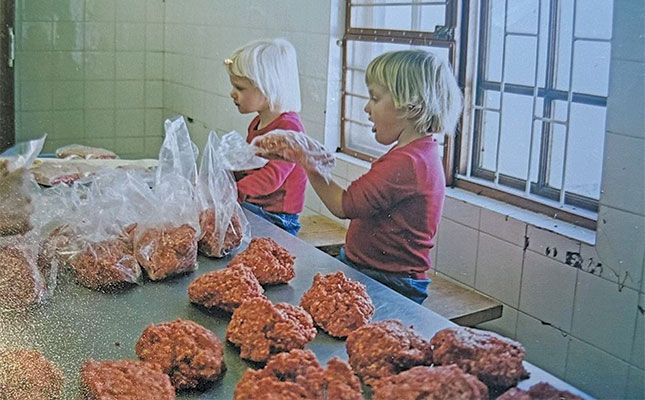
In 1993, Pieter finally persuaded his mother that it was time to do things differently. So, in the evenings, after the farm work was done, the two began processing lamb and mutton, and made sausages and minced meat using an old Kenwood meat grinder and sausage stuffer.

Finding a market was not difficult. The farm had already earned a reputation in their local church community thanks to the meat they supplied for the ‘meat table’ at the annual bazaar.
“People kept asking where and when they could get more of our boerewors and patties,” Pieter recalls. “So, we started supplying the community – and as word spread, grew into other regions.”
Small beginnings
To make the most of the offcuts, they began selling these in Esterhof, a nearby informal settlement.
“At first, we delivered meat to Esterhof on Wednesdays using our Sunday car – a Nissan Double Cab – and collected cash on Fridays when the people got paid. But people started asking for more meat when we came back, so we eventually changed our deliveries to Fridays.”
Those Friday evenings were often long. “We used to go there at 6pm and stay until everything was sold out. In Decembers, when demand spiked over the Christmas season, we sometimes stayed past midnight,” says Pieter.
Scaling up, step by step
As demand grew, Pieter and Susan bought in two extra hands – Klara April and Elsie Booysen – to help with processing.
Hendri Truter, who was still at school at the time, remembers the lively energy in the kitchen: “My mother, Pieter, Klara and Elsie made so much noise while working and chatting that it interfered with my father Erik’s Egoli time,” he laughs.
Eventually, Erik had enough. Between the chatter and clatter – and the growing scale of the operation – it was clear they had outgrown the kitchen. He told them to move everything to a ‘meat room’ on the farm.
Around the same time, they took over a 3m x 3m cold room from Erik’s neighbour, Hennie Truter. Erik also bought them a KIC chest freezer, which greatly increased their storage capacity.
“We thought we had arrived when we received that chest freezer,” Pieter smiles. “Soon after, we upgraded to a bigger sausage filler. And we really felt like serious players when my father bought us a big bandsaw at Freddy Hirsch, allowing us to move from processing two to five sheep a week.”
A year of growth and grief
In the early days, the sheep were slaughtered in the old farm dairy. But by 1998, the operation had grown enough to warrant its conversion into a formal abattoir.
“We just could not manage everything on our own anymore. So, my mother called in both my wife, Suzaan, and my late brother Frederick’s wife, Enid, to help. Some might have seen involving more family as a risk, but for us it was a strength – we were all on the same page and gave it everything we had. There simply was no other choice,” says Pieter.
That same year, the family suffered a devastating loss when Erik passed away. In the wake of his death, Susan asked Frederick to return to the farm and help Pieter oversee operations. Together, they managed the abattoir, meat processing facility, grain production, sales and overall farming enterprise.
Today, around 400ha of the farm is under a canola-wheat rotation, while another 600ha is dedicated to a 50/50 rotation: alternating between feed barley for the feedlot and cover crops to improve soil health.
Shifting gears
Over time, the business continued expanding its footprint. When Hendri went to high school in Paarl, for instance, they unlocked the market there, making deliveries twice a week in the family’s Vito Bus. Hendri joined the business full-time in 2008 after studying marketing – something he had shown a passion and natural flair for since childhood. With fresh energy and a sharper eye on risk and scale, he encouraged the family to rethink and formalise their business model.
By then their higher end market was well developed. So, the family decided to phase out direct deliveries to Esterhof and instead work with trusted third-party resellers who bought meat directly from the farm to serve informal markets.
“Delivering meat at Esterhof was lucrative for a long time and allowed us to build strong relationships in the community. But it became increasingly risky because everything was done in cash, and there was a massive influx of people from outside the area. Eventually we started receiving threats to our lives,” says Pieter.
Hendri adds: “We realised we could not be bakkie hawkers forever. It was time to level up. We started focusing on the hospitality industry – restaurants, boarding houses and hotels – as well as butcheries and retailers. These markets offered more stability and fewer risks than selling directly to consumers.”
Hendri also recognised the importance of building a brand – both to protect the reputation they had earned and to position the business for future growth. This led to the formal launch of Deli-Co in 2010.
From there, the business continued to grow organically. It started supplying one restaurant in Stellenbosch, then another across the road. Before long, a butchery called, looking for a supplier – then another.
Eventually, Deli-Co’s products also found their way into retail stores.
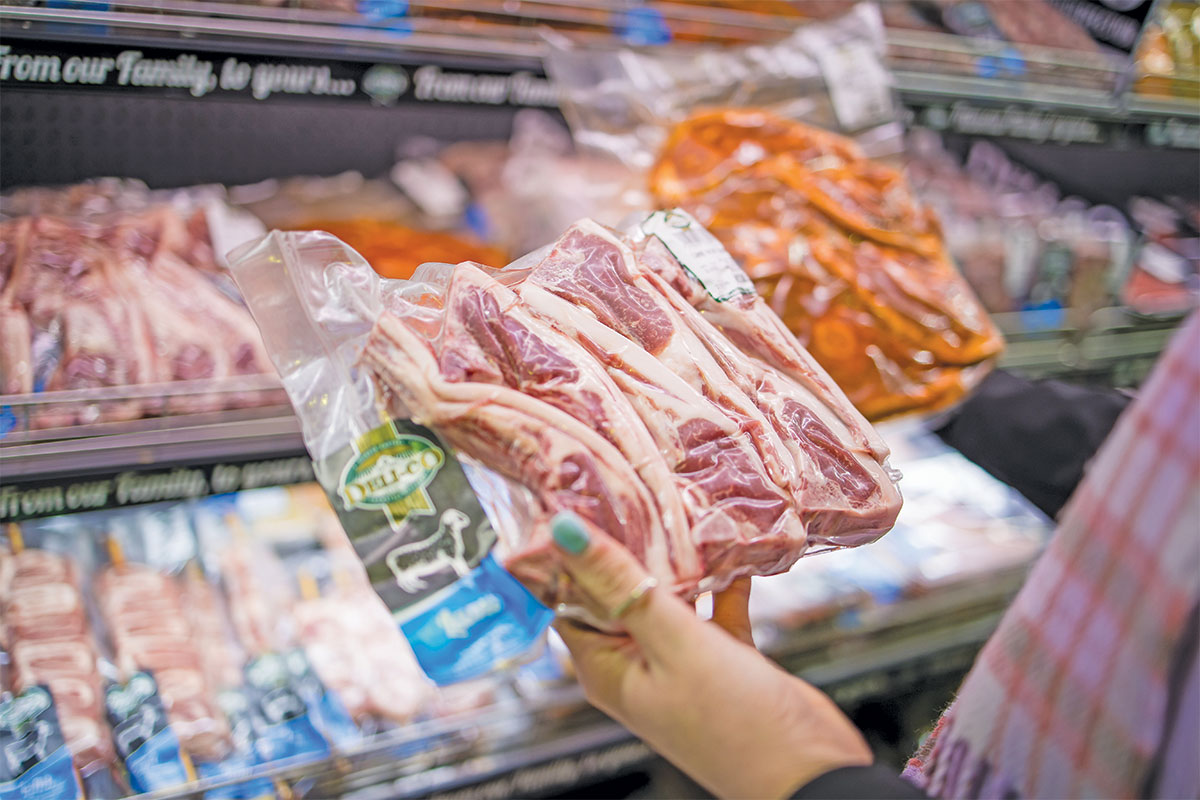
“Today, we employ more than 700 people and supply over 1 900 distribution units – from butcheries and restaurants to retailers across South Africa,” says Pieter.
Deli-Co has also expanded beyond South Africa’s borders. “We supply meat to several African and Middle Eastern countries. But we do not sell live animals, as I see that as outsourcing jobs and value-adding opportunities. It is also more humane not to transport live animals over such long distances,” says Hendri.
Evolving the engine room
Looking back, Pieter admits one of the toughest transitions came when they bought a second delivery vehicle and had to hand over deliveries to someone else.
“We were used to doing everything ourselves – from processing to the deliveries and collecting of payments,” he explains.
Hendri agrees: “Today, we have a fleet of 30 delivery trucks, but switching from one to two was the biggest leap. It forced us to completely rethink how we operated. Suddenly, handwritten orders, cash payments and personal deliveries were not sustainable anymore.”
To support the shift, they had to put proper structures and systems in place, from invoicing and logistics to customer service.
“We had to move beyond a close-knit, relationship-based model and adopt structured systems that could deliver the same trust and reliability at scale. It did not just improve efficiency; it also helped position Deli-Co as a professional, dependable supplier to small and larger customers,” says Hendri.
Today, these systems are continuously re-evaluated to unlock new opportunities and ensure the business stays competitive.
“You can never feel like you have arrived. You have to keep pushing to stay the best,” says Pieter.
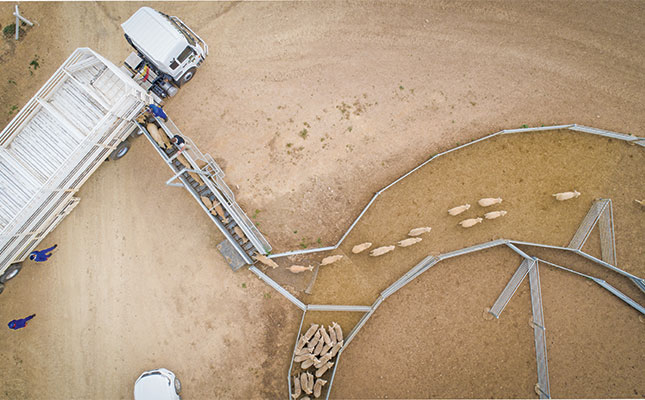
As the business matured, Deli-Co phased out its own sheep production and began sourcing store lambs weighing between 25kg and 35kg from external producers, some located up to 1 200 km away.
The change reduced biosecurity risks and allowed the company to scale more efficiently, focusing its energy and resources on processing, distribution and value-adding – the core areas where the Deli-Co brand achieves the most impact.
Over time, the brand’s holistic solution has also expanded to include pork, beef and chicken. Lamb and mutton, once the backbone of the business, now account for only 40% to 50% of the total offering.
Family focus
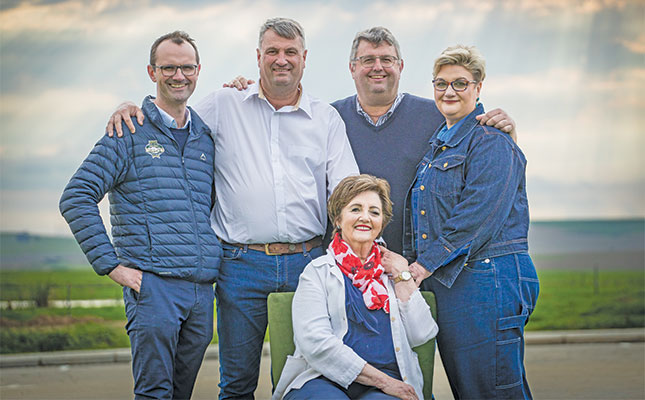
Despite its growth, Deli-Co has stayed true to its roots as a family business. Susan along with sons Pieter and Hendri and their sister Anneli Botha, Hendri’s wife, Shelly, Pieter’s wife, Suzaan, and daughters, Léan and Sune, and Frederick’s widow, Enid, all play active roles in strengthening operations.
Pieter emphasises that joining the business is not an obligation, but rather an opportunity: “Nobody is ever forced to join. It’s a choice, and it only works when the person genuinely buys into the company’s values and vision.”
The Truters, nevertheless, have recognised the importance of bringing in outside expertise.
“We know we cannot do everything ourselves. So, we bring in professionals from outside the family to help cover blind spots and build key areas of the business – from procurement, operations finance to compliance and marketing. It is about putting the right systems and skills in the right places,” says Hendri.
This approach has helped to professionalise Deli-Co without compromising its family feel.
Hendri adds that they walk a road with every new employee – shoulder to shoulder, to ensure they buy into the company values.
“We don’t just give them a role but help them understand what Deli-Co stands for and how they fit into the bigger picture. Over time, these employees become like extended members of the greater Deli-Co family,” he says.
While Deli-Co has evolved in scale and sophistication, its soul remains unchanged – grounded in hard work, family values and a relentless drive to keep doing things better.
“Our story is not about chasing numbers or money, but about creating value for our customers, our people and for generations still to come. There is nothing that gives me more satisfaction than seeing how our business is changing lives,” says Pieter.
For more information email Hendri Truter at [email protected].