
Spier Wine Farm, situated on the outskirts of Stellenbosch, is a premier example of a historic Cape wine farm that has evolved into a flagship of innovation and international recognition. Established in 1692, it holds one of South Africa’s oldest wine histories, now transformed into a 650ha destination focused on regeneration, art, hospitality and a portfolio of award-winning wine.
Under the stewardship of the Enthoven family since 1993, Spier has evolved into a diversified wine farm where wine, hospitality, farming, art and community impact are closely connected.
Guided by its Growing for Good philosophy, Spier includes a recently refreshed hotel, restaurants, contemporary South African art, farm-grown produce and initiatives that support people and the environment. This approach has helped position Spier as a leader in regenerative agriculture and responsible tourism.
This year marks three decades of Frans Smit being closely involved with the day-to-day business of the farm, having joined Spier straight from the Elsenburg Agricultural Training Institute for his first harvest as winemaker in 1996.
In 2001, he was promoted to cellar master and in 2021, to wines managing director of this extensively diversified global business that exports wine around the world while annually welcoming thousands of local and international visitors to its immaculate facilities.
“Our primary aim is to set a benchmark in everything we do at Spier, whether it is winemaking, viticulture or hospitality. We value our environment, with the vineyards on our two owned farms organically certified by Ecocert, while we are completely committed to providing a socially responsible environment for our employees,” according to Smit.
Spier’s journey began in 1692 when Governor Simon van der Stel granted the first title deed to German settler Arnoud Jansz. Recognising the potential of the Stellenbosch “terroir” (all factors that impact on the vineyard), the farm quickly established itself as a significant producer and by 1754, more than 30 000 vines were flourishing on the property. The estate’s historical significance is still tangible today.
It features the oldest dated cellar in South Africa, a testament to the longevity of winemaking on the site. The architectural legacy is equally profound, with the Manor House (dating back to 1822) and the old wine cellar (1767) anchoring the farm’s original ‘werf’ (farmyard).
The modern era started in 1965 when the farm was acquired by Niel Joubert, who in 1971 started bottling wine under the Spier label and, together with Johan Malan of Simonsig and Spatz Sperling of Delheim, founded the Stellenbosch Wine Route initiative.
When the Enthoven family acquired Spier in 1993, it already had an established wine production and tourism offering but, rather than merely managing the farm, they envisioned turning the sprawling 650ha estate into a vibrant hub that marries agricultural excellence with community, art and conservation.
The vision was guided by a philosophy of ‘good wine from good people, grown in good soil’, which turned Spier into a pioneer of regenerative farming, where the focus is not just on sustainability (maintaining the status quo), but also on regeneration.
Established in 2012, the dedicated nursery on the farm has planted more than 100 000 indigenous trees, shrubs, and fynbos, as well as over a million bulbs. This massive revegetation effort restores endemic flora.
Regenerative agriculture
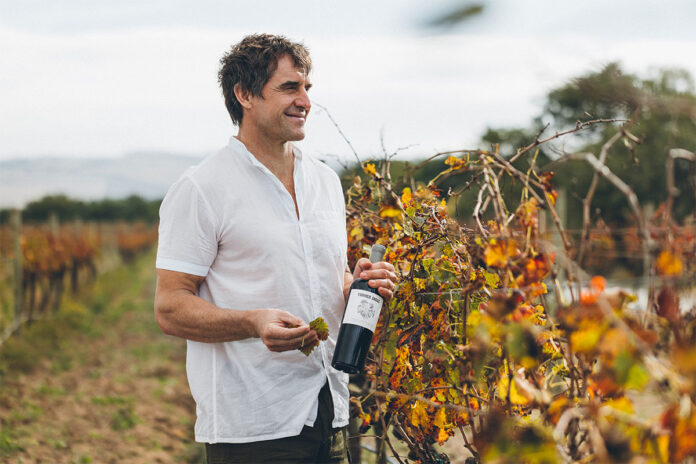
In 2006, Angus McIntosh set out to revive an abandoned Chenin Blanc vineyard on the farm by embracing natural farming methods, reducing reliance on chemicals, and focusing on soil health. This ultimately led to Spier committing to regenerative agricultural practices in 2009, and since 2015, all the vineyards on the estate have been certified organic.
The farm also plays host to Farmer Angus, a company that produces pasture-reared beef, eggs, pork, and chicken, thereby contributing to a truly circular food system on the farm. This commitment was recognised with the Drinks Business Green Awards Ethical Award 2022 and the Drinks Business Amorim Biodiversity Award 2019.
Apart from the livestock products and wine produced under the Farmer Angus brand, it is also a pioneer in carbon sequestration through improved soil health.
In turn, this leads to increased nutrient content and water-holding capacity, while decreasing erosion and the need for irrigation. A side- business has been created whereby the carbon captured in the soil is sold as carbon credits to companies and individuals that are unable to cut their emissions timeously, with half of the net income income generated from this endeavour being paid out to the employees of Farmer Angus.
The farm has implemented other cutting- edge systems, such as using chicken feathers as ground cover to protect vineyard soil and an initiative to turn 96% of waste into energy.
This commitment was recognised with the Drinks Business Green Awards Ethical Award 2022 and the Drinks Business
Amorim Biodiversity Award 2019.

Award-winning wines and modern viniculture
At the heart of Spier’s success is its wine, which reflects the terroir of its carefully regenerated soils, and the winemaking team’s focus on creating wines that are both expressive and sustainable.
While the portfolio of wines produced comprises a wide spectrum of varieties and styles, it is the Chenin Blanc wines that lie at the core of the business. “We currently hold the number one spot in terms of value for the production of Chenin Blanc in South Africa,” according to Smit.
“While you see many Chenin Blancs selling for high prices on the retail shelves and restaurant wine lists, white blends utilising Sauvignon Blanc and Sémillon are more of a hand-sell. I fell in love with those wines when I visited Bordeaux for the first time in 1999 and therefore decided to dedicate our flagship white wine to making the best possible blend from these varieties, sourced from top fruit in Durbanville and Darling.”
Spier’s Cellar Master Johan Jordaan was named Chenin Blanc Master Winemaker for the second consecutive year at the prestigious Master Winemaker 100. This followed after the 21 Gables Chenin Blanc received the competition’s highest honour, the Grand Master Award, and the Spier Seaward Chenin Blanc 2024 earned a Master Award, one of only three Chenin Blancs globally to do so.
“We plan the wine from the soil to the glass,” explains Jordaan. “Central to our philosophy is soil regeneration, nurturing living resilient soils that support vine health over the long term rather than chasing short-term yields. It’s about allowing vineyards to express their natural character.”
Jordaan is passionate about carefully designing the cellar so that each member of the team can develop in the best possible way; just like the best wines.
An entire team of winemakers is responsible for Spier’s winemaking: Heidi Dietstein, Anthony Kock, Tania Kleintjes, Anton Swarts, Lizanne Jordaan, Heinrich Opperman, and Lutske Scholtz, with Bennie Liebenberg looking after all matters of a viticulture nature.
In the winery, no expense or effort is spared in ensuring that only the best quality grapes are processed into wine.
With the making of their flagship wines, the grapes are picked into small 12kg lug boxes and cooled overnight before being subjected to selection or rejection by a high-speed Bucher optical sorter – a piece of equipment that is a massive capital investment but ensures that unwanted items such as stems, leaves, green berries, raisins, and defective fruit are removed before fermentation starts.
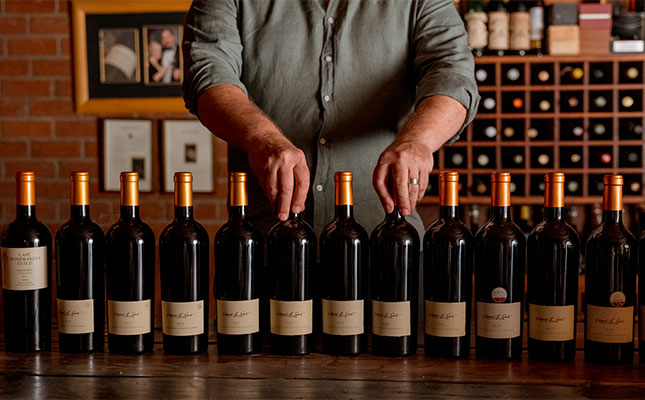
The product portfolio ranges from the accessible Signature and Seaward ranges to premium offerings such as the Creative Block blends and the pinnacle Frans K. Smit range.
With the expansion of wine production over the past three decades, more grapes were needed to fulfil demand and additional vineyards were identified in Durbanville and Darling, as well as against the Helderberg in Stellenbosch.
The future of Spier
From its humble beginnings in 1692, Spier has transformed into a modern, multifaceted agricultural business that stands as a leader in regenerative viticulture, wine tourism, and social consciousness.
By fostering a balance between a successful commercial enterprise and a regenerative environment, Spier ensures its legacy continues to grow. It is more than just a wine farm; it is a community-driven initiative that demonstrates how agricultural, cultural, and environmental regeneration can exist in harmony.
For more information, visit Spier Wine Farm at spier.co.za, or email [email protected]. Visit Farmer Angus at farmerangus.co.za, or email [email protected].