Most consumers see wine as an alcoholic beverage made from fermented grapes. It can be white, red or pink and, if it’s a moment of celebration, may even have bubbles rising to the surface. It can be anything from very sweet to bone dry, or ‘sour’ as the true wine quaffer would point out to you.
If the tipple of choice is white, it will in all probability be Sauvignon Blanc, Chenin Blanc or Chardonnay, and if red, a Shiraz, Pinotage, Merlot or Cabernet Sauvignon will suffice. On the pink front, grape variety is less important unless it is the ubiquitous Chardonnay / Pinot Noir blends favoured by ladies during lunch.
very adventurous outings, a Grenache or Viognier may even make it to the table, but by then you’ve probably already crossed the line from social wine drinker to wine enthusiast.
In the last century, vineyard planting decisions were based on perceived consumer demand as well as availability of planting material. This led to vineyards sometimes being established in unsuitable locations, for example Cabernet Sauvignon being planted in cool-climate areas not really suited to it, merely because that was what the market demanded at the time.
Until the turn of the 20th century, the most planted white grape variety was Semillon, which today commands only around 1% of total vineyard plantings. The same applies to red varieties: Cinsaut had the largest footprint of red grape varieties in the 1950’s, but that has since decreased to less than 2% of total plantings.
South African Wine Industry Information and Systems (SAWIS) lists more than 100 distinct grape varieties planted in South Africa, but, of these, the top 10 planted cultivars (in descending order are Chenin Blanc, Sauvignon Blanc, Colombar, Cabernet Sauvignon, Shiraz, Pinotage, Chardonnay, Merlot, Ruby Cabernet, Cinsaut) account for 85% of total plantings.
A long and winding road from vine to glass
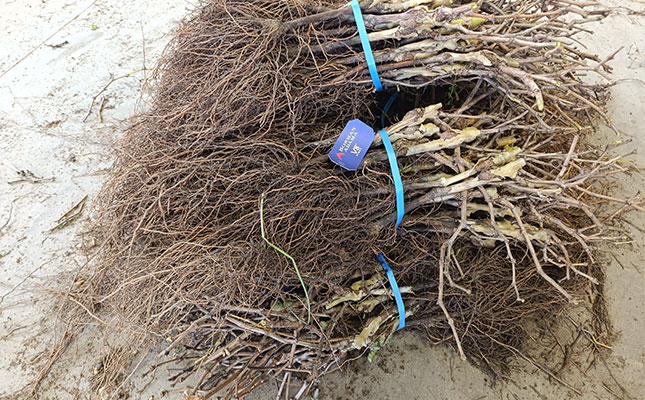
Vititec is South Africa’s leading vine improvement organisation, supplying over 90% of the scion and nearly 50% of the rootstock plant material to the local industry through a variety of partnerships and plantings of new varieties and clones. Based in Paarl, the company develops, propagates, and supplies top-tier, virus-free clonal material and grafted vines to nurseries and producers.
In 2014, Charles Visser, then chief viticulturist of Vititec, when asked which new grape varieties were showing the most potential, stated: “There are quite a few producers interested in planting Vermentino, a white grape variety native to Italy, while Marselan, a cross between Cabernet Sauvignon and Grenache, is also in demand.”
The statistics show that his predictions proved correct: these two new varieties had the largest areas planted between 2015 and 2025 with the plantings of Vermentino reaching 13,45ha and Marselan 15,15ha. Looking at the bigger picture, however, this is still a very small footprint compared to the almost 16 000ha of Chenin Blanc or 8 600ha of Cabernet Sauvignon.
Diving a bit deeper into the statistics, it becomes evident that establishing a new variety and getting it to a point where it commands consumer support and becomes commercially sustainable takes time. This is evident from the fact that, although Professor Abraham Perold already cross-pollinated Cinsaut with Pinot Noir in 1925, the first commercial release of a varietally labelled Pinotage only happened in 1961.
Grape varieties that were already planted before 2015 that showed the fastest pace of growth from 2015 to 2025 include Durif (more than 500% growth from 85ha to 517ha), Irsay Olivér (185% growth from 37ha to 107ha), Grenache Blanc (128% growth from 83ha to 190ha) and Alicante Bouschet (512% growth from 6,32ha to 38,73ha).
Bosman Adama vines and plant improvement
Located in the Bovlei Valley of Wellington, the story of Bosman Adama is intrinsically tied to the land and the generations of families who have farmed it.
The Bosman family have been farming there for eight generations since 1810, while the name Adama is also deeply significant: not only is it derived from the Hebrew word for ‘from the soil’, but it is also a heartfelt tribute to Adam Appollis, who was a legendary patriarch, mentor, and highly respected right-hand man to the Bosman family.
The name Bosman Adama reflects the 26% ownership of the working community since 2008, still the biggest transformation deal in the South African wine industry.
Petrus Bosman, current CEO of Bosman Adama, shares some history: “In the 1880s we started grafting European grapevines onto resistant American rootstocks in response to the phylloxera crisis at the time. It was, however, only in 1947 that my grandfather decided to start selling our surplus grafted vines to other farmers.
From then on our family has been involved in the propagation and cultivation of new vine plants and, in the process, we have also taken a keen interest in developing new varieties better suited to South African conditions.”
Today the Bosman Adama Vine Nursery is recognised as the largest vine nursery in Africa, supplying roughly a third of the grafted vine material used in South Africa to vineyards, table grape farmers, and raisin producers across the country.

A variety that has shown steady growth, although from a very small base, originally hails from the island of Sicily off the coast of Italy. Nero d’Avola was brought to the farm when Petrus Bosman visited the island in 2004 and brought back cuttings to be propagated for planting here. Although only two cuttings survived the journey, there are now almost 10ha of plantings.
“We became aware more than two decades ago that climatic conditions were changing and I went looking for a grape cultivar that could withstand the hotter, drier climatic conditions predicted for our area,” says Bosman. Today the Nero Red and the Nero Rosé have gained loyal following and are selling well.
On visiting the historic Bosman Wine Estate, Glenneis Kriel and I are introduced to wine made from two recently established varieties at Stellenbosch University. Like the Nero, these new heat-tolerant, disease-resistant cultivars are being trialled to establish whether they would be suitable for making good quality wine.
“This is the first fruit from these two cultivars so we could only make a very small volume of wine from it – in the region of 22 bottles each,” explains Bosman winemaker Corlea Fourie. “At this stage we are not trying to make award-winning wines but rather just trying to determine whether they could have potential for making quality wine in our growing conditions.”
The two grape varieties were both bred by Norbert Becker at the State Viticultural Institute in Freiburg, Germany. The somewhat confusingly named Souvignier Gris bears no relationship to either Sauvignon Blanc or Viognier, but is rather a crossing between Seyval Blanc and Zähringer. Muscaris, on the other hand, is a direct cross between the disease-resistant Solaris and Gelber Muskateller (Yellow Muscat) grapes.
What makes these varieties special is that due to genetic selection and selective breeding they have built up a natural resistance to a range of common vine diseases. Internationally, these varieties are referred to as PIWI varieties. PIWI is the German abbreviation for fungus-resistant grape varieties (pilzwiderstandsfähige Rebsorten; Pilz = fungus, widerstandsfähig = resistant).
These partially resistant grape varieties that are the result of methodical crossings and breeding. PIWI grape varieties (locally referred to as naturally-disease resistant (NDR) varieties) display a high level of resistance to at least one fungal disease, such as Botrytis cinerea, downy mildew, or powdery mildew.
Both Souvignier Gris and Muscaris display crystal clear in the glass and on the nose both show aromatic and exotic fruit with underlying flavour concentration and well-balanced acidity.
According to Fourie: “We have to appreciate that these are very young vines and the winemaking process is standardised to just give an idea of the underlying structure and characteristics of the grape variety. At this stage, we find both of these varieties very versatile with pleasant, crowd-pleasing flavours. In future when we have more grapes to work with, we will also be able to play around with other styles of fermentation and maturation, for example experimenting with ageing in oak barrels, concrete eggs or even clay amphorae.”
Wian Mouton, head of cultivar management at Bosman Adama, explains: “One can look at these new varieties in terms of a soccer game. When they start developing these NDR varieties, they often only had one ‘goalie’ against disease attack. The source material to which we now have access has, in some instances, up to three defences, leading to farmers being able to reduce their spray programmes drastically and thereby effecting substantial savings in vineyard management and in terms of carbon footprint – less chemicals, less tractor usage, therefore less diesel, less soil compaction, less wear and tear. We currently have 29 alternative crossings or hybrids available with another five or six already in quarantine.”
While hybrids (crosses between Vitis vinifera and American/Asian species) have been a contentious issue in the past, the stance is subtly shifting. Driven by climate change and a push for true sustainability, South Africa’s National Department of Agriculture (NDA) and the wine industry are increasingly looking at heat-tolerant and disease-resistant cultivars.
The NDA, via SAWIS, periodically updates the list of permitted grape varieties and clones for winemaking. Non-traditional and hybrid-based cultivars (such as Villard Blanc) are increasingly being sanctioned for specific uses like brandy production. One should also note the international view on hybrid grape varieties with prominent industry voices, such as wine writer and plant biologist Jamie Goode, arguing that the future of wine relies on disease-resistant hybrid grape varieties.
He believes embracing hybrids is essential for sustainable, regenerative viticulture as they combat climate change and drastically reduce the need for chemical spraying.
Variety in a glass
Although South Africa Wine, the national body for the wine industry, proclaims as its motto ‘discover diversity in a glass’, the grape varieties on offer do not always reflect this. That said, a number of producers have actively pursued expanding the offerings to include rare varieties whether bottled on their own or in blends.
Winemaker Henry and viticulturist Riëtte Kotzé of Pilgrim Wines focus on innovative methods with tried and tested cultivars, as well as experimental styles with unorthodox, unfamiliar varieties.
“South Africa has an incredible diversity of soils and no one piece of soil is suited to only one cultivar. Riëtte and I visited many of the foundation blocks and found these drought-resistant, skin-hardened, early-ripening varieties that nobody knows anything about except that they are foreign. So we’re making these wines on a semi-commercial scale just because we’re curious,” says Henry.
Another producer who realised early on that vineyard plantings need to better reflect changing climate conditions is Arbeidsgenot under the stewardship of Jaco Brand.
“We get most of our grapes from blocks in the Swartland that were specifically planted taking into consideration the drier seasons we are experiencing more frequently as well as increased heat during summer. All the wines we produce are made from grapes that can sustain extreme conditions, including Cinsaut, Grenache Blanc and Grenache Noir, Roussanne, Verdelho and of course the dependable industry workhorse Chenin Blanc,” says Brand.
A rose by any other name
In a 2014 article for the now long-defunct Classic Wine Magazine, I wrote: “I’m waiting for the release of Lledoner Pelut, Caladoc, Arriloba, and Ekigaïna – all grape varieties that have been imported by Vititec in the past few years, and currently going through their quarantine paces.”
I was therefore pleasantly surprised when, during a 2023 visit to Kloovenburg, just outside Riebeek-Kasteel in the Swartland, I tasted the maiden vintage of their Lledoner Pelut, planted in 2018, with roots in both France and Spain. On a recent visit to the estate, I was puzzled that the name of the variety on the label had been changed.
Duncan Stuart, winemaker of Kloovenburg, explains the reason for changing the name on the label: “We found that Lledoner Pelut was actually more closely related to Grenache than we originally thought, almost more of a clone than a separate variety. The original somewhat quirky and unknown name also led to some confusion for consumers.”
Since the 2024 vintage, the label was therefore changed from its French moniker to the seemingly more acceptable Spanish name of Garnacha Peluda. It is also no longer bottled as a single variety wine but rather as a blend with the better-known Grenache. While the 2024 vintage consisted of 72% Grenache and 28% Garnacha Peluda, the 2025 vintage brings the two grape varieties into almost equal proportions.
Stuart explains: “In 2024 we felt that both our Grenache and Garnacha Peluda, in their individual states, lacked a certain something and when we made a blend of the two it gave a much better wine in terms of flavour, structure, and acidity and as such we decided to bottle it as a blend in future.”
A decade of new grape varieties
Between 2015 and 2025, a total of 17 new grape varieties were introduced to South Africa with the most plantings per variety during this period indicated in the table to the left.
The future of new varieties
Of the more than 4 000 grape varieties used internationally, South Africa relies on just over 100 varieties for winemaking.
With mounting pressures on producers due to climate change, increased costs and legislation regarding the use of herbicides, pesticides and fungicides, farmers have to adapt to the new normal by updating the composition of their cultivar mix to optimise their production to these new conditions.
Visit Bosman Adama at bosmanwines.com; Pilgrim Wines at pilgrimwines.co.za; Arbeidsgenot Wines at arbeidsgenotswines.co.za; or Kloovenburg Wines at kloovenburg.com.