

Dr Prins has dedicated her career to reshaping the landscape of plant genetics, crop improvement, and scientific innovation in South Africa. Her journey reflects scientific excellence, courage, vision, and determination, showing what is possible when innovation is guided by purpose.
Dr Prins reminds us, however, that true societal impact is measured not only in publications, technologies, or awards, but in the lives changed, the opportunities created, and the lasting contributions to society.
Introducing DNA-based technologies
Dr Prins played a pivotal role in introducing and advancing DNA-based technologies in South Africa’s wheat and barley breeding programmes, at a time when these approaches were still in their early stages locally.
In 1999, while at the Agricultural Research Council, she led South Africa’s first quantitative trait loci (QTL) study in wheat. This work laid the foundation for identifying genes linked to disease resistance and other important crop traits.
Establishing CenGen
At the turn of the millennium when molecular genetics was still emerging within South Africa’s small grain industry, Dr Prins made a decision that altered the course of agricultural research in the country. She established CenGen (Pty) Ltd, a private molecular genetics laboratory in Worcester in the Western Cape, creating a scientific career for herself in a developing environment, and ensuring that future agricultural research and breeding programmes would be based on DNA technologies.
From a modest office at her home, CenGen has over the past two decades grown into a national strategic scientific facility and an internationally recognised molecular genetics and genomics laboratory that competes on the global stage. Today CenGen has 12 highly educated staff members who are employed at their facilities in the Breede River Valley.
The business is currently also hosting a BSc Bioinformatics Honours student who is conducting his honours project using one of CenGen’s flagship projects.
CenGen offers molecular genetics diagnostic and research services to plant breeders, farmers and agricultural related industries or research funding bodies. A defining strength of Renée’s career has been her ability to build and sustain strong collaborations. Through partnerships with leading scientists and institutions in South Africa and abroad, she helped keep local research globally relevant and competitive.
Over the past years CenGen has secured funding from various international funding bodies including the British Council (Newton Fund), Pioneer Open Innovation (Corteva AgriscienceTM), the King Abdullah University of Science and Technology (KAUST), as well as the Science Innovation Network, South Africa (British High Commission).
Some of the research conducted at CenGen includes quality gene mapping across a host of species and traits that provided valuable knowledge on genes and DNA markers for marker assisted selection (MAS), as well as the implementation of MAS in wheat, barley, and table grape breeding programmes.
CenGen’s impact and contribution
This work has had a significant long-term practical impact. By enabling breeders to detect desirable traits at the genetic level well before they become visible in the field, CenGen has improved the efficiency and precision of breeding programmes. These advances have contributed directly to the release of improved wheat cultivars, supporting greater productivity, resilience, and food security in South Africa.
In 2022 CenGen was instrumental in producing the first complete reference genome of Kariega, a South African commercial wheat cultivar now recognised internationally as one of the highest-quality wheat genomic resources available.
That same year, Dr Prins’s team in partnership with scientists at KAUST and the University of the Free State (UFS) successfully cloned a disease-resistance gene in South African wheat, a landmark achievement that deepened global understanding of plant-pathogen interactions.
Together, these breakthroughs placed South Africa firmly on the global genomics map and showed that the country can make meaningful contributions to cutting-edge international science.
Recognition and awards
Dr Prins’s contributions have earned wide recognition across agricultural and scientific communities. These honours acknowledge both her scientific achievements and her broader influence on the agricultural sector and society.
Some of the awards, include:
- Winner of the National Science and Technology Forum (NSTF), NSTF-South32 Award for Research and Innovation (SMME category) in 2017.
- Nominee for the Southern Africa Plant Breeders Association Plant Breeder of the Year Award (2020).
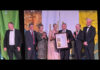
- Recipient of the Grain SA Inspiration Award (2023) for over 20 years of impactful contribution to the wheat and barley industries.
- Awarded Fellow Membership of the Southern African Plant Breeders Association (2024) in recognition of her outstanding local and international contributions to plant breeding.
- Short-listed as a finalist of 10 in the category Lifetime Award for the 2024/2025 NSTF-South32 Awards
But who is the woman behind this ground-breaking institution?
Formative years and education
Dr Renée Prins grew up in Hankey, in the Gamtoos River Valley in the Eastern Cape on a farm, where she also started her early school years. She completed the last three years of high school at Brandwag High School in Kariega (formerly known as Uitenhage).
As a child she always knew she would somehow be involved in science. After being introduced to the field of genetics in grade 11, she was not only fascinated but hooked.
“My parents began farming in the Gamtoos River Valley shortly before the devastating floods of 1972, an experience that brought great hardship and left me with a lasting admiration for farmers and producers who face so many uncertainties with courage. Although I knew I did not want to farm, I loved the countryside and valued the practical contribution of food production for society. Yet, agriculture was never presented to us as a career option at school. I was fortunate to have an uncle in a leadership role at the Agricultural Research Council (ARC). When I told him about my interest in science, technology, engineering, and mathematics (STEM) subjects, he encouraged me to pursue a BSc Agric and suggested genetics as a focus. His advice opened a door to a new world. During my honours studies in plant breeding genetics, I knew I was where I needed to be.”
Starting her career
She began her career at the ARC Small Grain Institute’s Stellenbosch station in 1991, where the leadership supported her secondment to the Department of Genetics at Stellenbosch University. This gave her access to laboratory facilities not yet available at the ARC’s Stellenbosch site, and enabled her to complete her PhD Agric in Genetics.
Business, training and academia
While running a business, she maintained her academic ties:
- 1 January 2022 – 31 December 2024: Associate Professor Extraordinary, Department of Genetics, Stellenbosch University (SU)
- 1 July 2018 – 30 June 2021: Associate Professor Extraordinary, Department of Genetics, Stellenbosch University (SU)
- 1 September 2015 – 31 July 2019: Research Fellow, Department of Plant Sciences, University of Free State (UFS)
- 1 September 2003 – 31 August 2015: Affiliated Associate Professor, Department of Plant Sciences, UFS
Developing human capital has always been important to her. Recognising early the growing need for bioinformatics skills in modern crop genetics, she initiated training programmes that equipped South African scientists with essential data-analysis capabilities. These efforts have had a lasting impact, enabling many researchers to work confidently with complex genomic datasets.
Advice for starting out
Advising young people requesting job opportunities at CenGen, Dr Prins says, “Our advice to them was always that if they want to get involved in the research field, they should try and add additional skill-sets to the portfolio they were taught during their tertiary education, as our projects often require a multi-faceted approach.”
Additional advice she offers, is that young people should not over-rely on AI.
“I think one of the biggest challenges in the AI era is to ensure that you still develop your own potential and skill-sets and not allow technology to deprive you of developing your own potential and abilities.”
She adds that one of the key elements of CenGen’s success is that they focused on the basic principles of business.
“First and foremost, one needs to respect every hard-earned penny you receive from funders and then try and give them the best possible scientific outcome as fast as possible. This also pertains to general life: have respect for others, do not over-promise, work hard, be humble and always be willing to learn from others.”
A legacy
As she steps into retirement, Dr Prins leaves behind far more than a successful company. She leaves a legacy of scientific advancement, industry transformation, and human empowerment. CenGen stands as a living testament to her vision, a platform that will continue to serve the agricultural sector and inspire future generations.
For more information, visit cengen.co.za, email CenGen team at: [email protected] or Dr Renée Prins at [email protected].