Dr Zhemu Soda, Zimbabwe’s minister of Information, Publicity and Broadcasting Services, told a recent post-Cabinet briefing that the ongoing conflicts in the Middle East and Ukraine have disrupted fuel and fertiliser supplies, and were pushing up input prices.
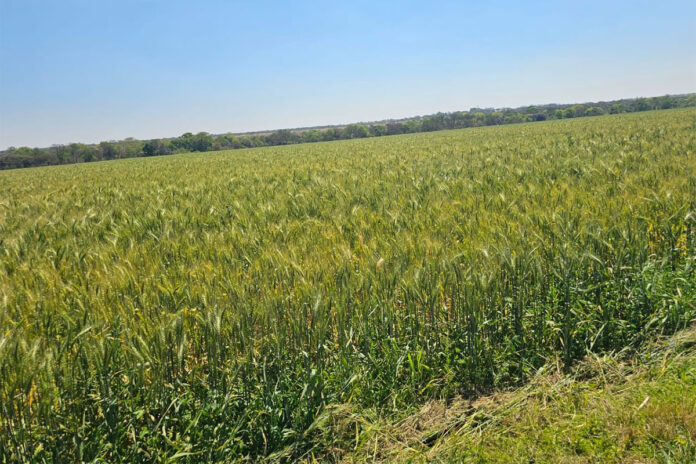
According to Soda, Zimbabwe was expected to produce 1,6 million tons of grain in the 2026/27 season, which was significantly down from the 2,243 million tons produced in the 2024/25 season, and the 2,74 million tons produced during the 2025/26 season.
Soda added that Cabinet had devised a plan comprising ‘six interventions and resilience pillars’, which included: Livestock Drought Mitigation; Accelerated Climate Smart Production; Integrated Financing Architecture; Enhanced Strategic Grain Reserve; Enhanced Imports and Coordination, Early-Warning Systems; and Capacity-Building Support.
“With [these] six strategic interventions, [the national total grain] production expected for the 2026/27 season is 1,6 million tons, with an expected Strategic Grain Reserve target of 600 000t. This translates to an expected [grain] production deficit of 266 881t to 541,881t for the 2026/27 season. The private sector will be allowed to import [grain] to meet commercial needs for both food and feed,” he said.
The six pillars
On 26 September during the National Agriculture Conference and Expo held in Harare, Ober Jiri, permanent secretary for the Ministry of Lands, Agriculture, Fisheries, Water and Rural Development, elaborated on the six pillars.
The Livestock Drought Mitigation pillar involved an assessment of the country’s cattle, and showed at least two million head were already at risk in various wards across the country. The Livestock Drought Mitigation pillar thus involved determining how long water and feed would last, and included designing strategies that could mitigate the impact of deteriorating feed and water reserves.
The Accelerated Climate Smart Production pillar focused on conservation agriculture, and ways in which farmers could conserve as much moisture as possible. Irrigation was also cited as the best way to climate-proof the sector. Emphasis was put on farming traditional grains, such as sorghum, which are more drought resistant.
The Integrated Financing Architecture pillar referred to government support. According to Jiri, the Zimbabwean government was providing input support for 3,5 million farming families.
Jiri added that the Enhanced Strategic Grain Reserve pillar addressed issues of food loss and waste, which was particularly devastating during drought, while the Enhanced Imports pillar specifically addressed the importation of grain for stock feed manufacturers and millers. In this regard, Jiri emphasised coordination and capacity building.
“These pillars are [all] organised into committees. Each committee for each pillar is chaired by a member of the private sector, the pillar chairs, [and] deputised by government,” he said.
A significant drop
Elliot Lumbe, an agricultural economist, told Farmer’s Weekly that the 1,6 million tons predicted for the 2026/27 season was 42% down on the crop of 2025/26.
“The 2023/24 El Niño was severe enough that Zimbabwe’s maize harvest fell to around 1,1 million tons,” he said. “If weather conditions deteriorate further, 1,6 million tons could turn out to be optimistic. Conversely, if rainfall is better distributed than currently feared, irrigation, drought-tolerant varieties, Pfumvudza/intensive farming and other interventions could produce a better result.”
He added that imported grain, if much cheaper than locally produced grain, would put downward pressure on prices, placing farmers under increased financial strain.