Luke Blackbeard was born in the eastern Botswana village of Serowe in 1973. His father, Gavin, took him on his first hunting trip in the Nata area when he was just four years old. While out in the bush, he fell ill and wasn’t able to join the hunt.
“I was very jealous at the time, but, you know, I was [still] there and we were in a dangerous game area, and it was awesome,” he says.
That early introduction to hunting was just the beginning of his journey. At five years old, he shot his first animal, and by nine he had shot his first buffalo.
Growing up surrounded by wildlife, with a father and grandfather who were both influential figures in his life, made professional hunting a natural path for Blackbeard.
In the 1980s, he dropped out of university in Pretoria to pursue a career in professional hunting. Having been raised in Botswana, surrounded by wildlife, he quickly realised that a career in the bush was more appealing to him than studying.
“I remember, I went to Pretoria and I was going to do a course in nature conservation, and the first day I walked through those doors, I decided, no, I want to go hunting,” he says.
When he returned to Botswana, his father and uncle, who were heavily involved in the hunting industry, tried to persuade him otherwise. His uncle, professional hunter Ronnie Blackbeard, warned him: “You’re crazy. There’s no life in hunting.”
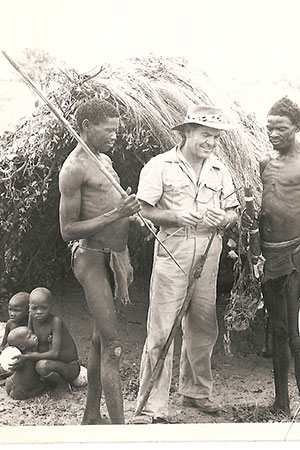
But Blackbeard was determined, and turned instead to his grandfather, Dennis, a professional hunter and co-author of The Hunting Blackbeards of Botswana.
“He said to me, you must do it. Go be a professional hunter,” he says.

After earning his professional hunting licence, he became the third generation of Blackbeards to enter the profession.
His career soon took him beyond Botswana, with hunting expeditions to Tanzania, Ethiopia, Cameroon, and the Central African Republic (CAR), which became a particular favourite despite its dangers.
“[The CAR] was a very dangerous place to hunt,” recalls Blackbeard, referring not only to the wildlife but also to the people and conditions he encountered there.
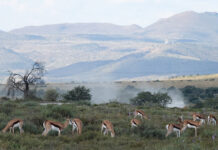
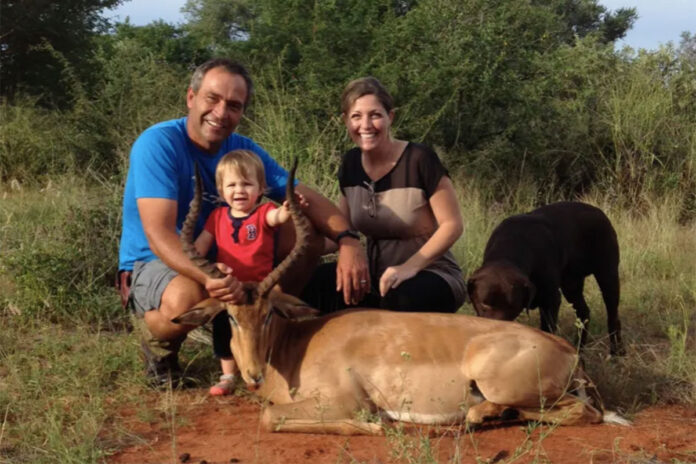
Today, more than 40 years later, Blackbeard is still working with wildlife, but his role has changed considerably. He owns Sunnyside 2, a 5 000ha game farm in the Tuli Block, where he runs a bow-hunting operation and manages the wildlife on his land.
His journey from professional hunter to game farmer reflects a growing opportunity in Botswana, where wildlife is increasingly being considered as an alternative to traditional livestock farming.
From the bush to a family home
When asked what made him decide to go into game farming rather than continue his career as a professional hunter, Blackbeard answers without hesitation: “My wife.”
After he married Shannon in 2012, the couple decided to start a family, and the long periods Blackbeard spent away from home on dangerous hunting expeditions no longer seemed worth the risk.
“Places like the CAR didn’t make sense, putting my life in danger when I had kids to think about,” he explains.
The solution came from Shannon’s father, who suggested they buy a game farm and helped make it financially possible.
He bought Sunnyside 2 game farm in 2013. “I jumped into the deep end with it,” he says.
Blackbeard was still planning to continue professional hunting, but the farm gave him a place of his own to manage and protect.
At the time, he had limited experience with managing game, but within four or five years, he says he was hooked.
The hunter becomes the farmer
The move to game farming changed more than Blackbeard’s occupation; it changed his relationship with hunting itself.
“I slowly lost a lot of interest in hunting for myself,” he says.
Today, much of his time is spent managing the farm and its wildlife, from antipoaching initiatives and providing water and minerals to the animals during droughts to maintaining genetics and managing trophy quality.
Hunting still remains an important part of the operation. After moving onto Sunnyside 2, Blackbeard established Blackbeard Safaris, through which he offers bow-hunting experiences on the farm.
The business has allowed Blackbeard to combine the profession he inherited from his family with the new role he has taken on as a game farmer. Rather than simply hunting wildlife, he is now responsible for managing the animals, their habitat, and the business that supports them.
“Everything you do has consequences,” he says.
On a 5 000ha farm, there’s little room for careless management. Unlike South Africa, where game can be restocked relatively easily, Botswana has limited access to game capture and restocking. This means Blackbeard has to carefully manage the genetics and populations on his farm.
What began as a passion for hunting has evolved into a business centred on managing, conserving, and using wildlife sustainably. The irony is that the man who once left university because he wanted to spend his life hunting now finds himself questioning the very act that built his career.
The price of conservation
For Blackbeard, the economics of game farming are inseparable from conservation. He says that 60% to 70% of the income his operation generates from hunting goes towards his antipoaching efforts. The high demand for trophy hunting from American and European clients means that, even with most income going towards conservation, the business can remain profitable.
Poaching presents an ongoing threat. Blackbeard employs and trains his own antipoaching team and works alongside wildlife officials, police, and military personnel when necessary.
“We just need to get the rest of the Tuli Block on board with antipoaching teams,” he says.
For him, protecting the animals isn’t an occasional responsibility but an essential part of running a game farm.
Additionally, the financial value of hunting comes with a personal cost: after spending most of the year managing and caring for the animals, deciding to hunt one can be difficult, particularly when it’s an animal he has watched grow over many years.
“It’s not easy hunting your own animals when you spend time with them,” he adds.
“When you’ve spent 95% of your season looking after those animals and you get to the 5% where you have to hunt a big bull, it’s really hard to understand that he’s got to pay the bills on the farm.”
For him, this is where the tension between hunting and conservation becomes most apparent. A mature animal may have reached the end of its breeding life, yet it is also an animal he knows and has invested time and resources in to protect.
“I can think of 10 different reasons not to shoot an animal,” he says.
That sentiment marks a striking evolution for the young professional hunter who once saw hunting as his lifelong calling.
A country’s future in wildlife
Blackbeard believes his experience is part of a wider shift taking place in Botswana, where more farmers are beginning to consider wildlife as an alternative to traditional livestock production.
He believes game farming can provide a viable livelihood while also creating an economic incentive to conserve wildlife.
But he argues that the industry needs support if it is to reach its potential. Improved antipoaching initiatives, access to game capture and restocking, training and skills development, and better infrastructure could help strengthen the industry and convince more farmers that wildlife farming is a viable and sustainable agricultural enterprise.
Despite the challenges, Blackbeard is optimistic about the direction of Botswana’s game farming industry.
“I think game farming in Botswana in particular is getting better all the time,” he says.
With only around 120 game farms in the country by his estimate, the industry remains relatively small, but Blackbeard believes those already involved are becoming increasingly skilled at managing wildlife as a farming enterprise.
“People need to understand that wildlife can be just as much of a farming enterprise as cattle or goats,” he says.
For Blackbeard, the future of Botswana’s wildlife industry will depend on finding the right balance between conservation, farming, and economic sustainability. After decades spent working with wildlife, he believes there is an opportunity for a new generation of farmers to make a living from the animals they protect.
Passing it on
More than four decades after his grandfather encouraged him to pursue professional hunting, Blackbeard now finds himself looking towards the next generation.
Asked whether he would encourage young people to enter the professional hunting or game farming industries, his answer is unequivocal: “A hundred percent. I would encourage them to do it.”
For someone who was once warned that there was “no life in hunting”, Blackbeard has spent his entire life proving otherwise. His own career has evolved from hunting animals across some of Africa’s most remote wildernesses to managing and protecting them on his own land.
While his role has changed, the connection to the bush that first drew him away from a university classroom remains.
“You can’t beat this kind of living out here,” he says, “I think it’s probably its purest form today.”