The WWF’s Living Planet Report (LPR), a biennial scientific assessment of the state of global biodiversity, combines sometimes grim statistics on wildlife population declines with tangible examples of how this loss can be reversed, as well as lessons on how to avoid despair over the state of the natural world.
The WWF living planet index
The WWF’s Living Planet Index (LPI), calculated by the Zoological Society of London (ZSL), tracks changes in monitored wildlife populations. It is based on around 35 803 population trends across 5 790 vertebrate species, comprising mammals, reptiles, birds, amphibians, and fish.
The ZSL determines the percentage decline by assessing changes in population sizes to establish whether, on average, the relative abundance of monitored species has increased, decreased, or remained stable.
“Information on changes in abundance is taken from populations from monitored sites around the world, which are included in the LPI database, then averaged together.
“When referring to the LPI, we use the word ‘decline’ rather than ‘loss’, as the LPI highlights an average trend in population change and not an average of the total number of individual animals or species lost,” the LPR media summary says.
The 2026 report, launched in early October, shows that the average size of monitored vertebrate wildlife populations in Africa declined by 80% between 1970 and 2022. The decline was even steeper in Latin America and the Caribbean, at 95%.
In the Asia-Pacific region, the average decline was 49%, compared with 28% in North America and 23% in Europe and Central Asia.
On the positive side, around half of the monitored wildlife populations included in the survey were either stable (7%) or increasing (43%).
Landowners help protect biodiversity
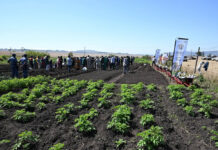
In a media statement accompanying the report, the WWF said “positive change is under way” in food and agriculture systems.
“Many people and organisations around the world [are] working towards nature-positive production, promoting sustainable trade and consumption, encouraging healthy and sustainable diets, and reducing food loss and waste,” the statement read.
According to the WWF, it is engaged in a number of successful projects in South Africa that involve farmers and other private landowners in conserving threatened biodiversity hotspots. These projects include the following:
- Strandfontein Protected Environment: officially proclaimed in 2025, this Northern Cape project protects 12 259ha of endangered coastal Succulent Karoo habitat around the towns of Strandfontein and Doringbaai. Landowners in the area balance conservation of the land with sustainable sheep farming and the development of ecotourism. The site provides an ecological link between land and sea and is home to several threatened plant and animal species.
- Papkuilsfontein Protected Environment: also proclaimed in 2025, this 6 829ha area, renowned for its spectacular wildflower bulbs, is now protected, with sheep grazing, rooibos tea cultivation, and ecotourism managed alongside conservation efforts.
- Nuwejaars Wetlands Special Management Area: 25 landowners, including those in the historic Elim village, have signed title deed restrictions to safeguard the wetland and its indigenous species from threats such as invasive alien vegetation, veld fires, and agricultural expansion.
Reversing habitat loss requires collective action
Dr Morné du Plessis, CEO of WWF South Africa, said in a press release LPR is “always a salutary reminder that it will take a mammoth effort on the part of all players to halt and reverse nature loss”.
He highlighted case studies in the latest report that demonstrate how habitat loss can be reversed.
“In the South African context, we only need to look at the story of black rhino recovery, largely aided through initiatives such as the WWF’s Black Rhino Range Expansion Project.
“Rather than feeling despair and despondency, we should redouble our efforts for people and nature,” Du Plessis said.
The LPR also looks beyond wildlife populations to examine the systems driving habitat and wildlife loss: energy, food, and finance.
The report shifts the focus from negative environmental tipping points, such as the collapse of coral reefs or the loss of the Amazon rainforest as a carbon sink, to positive ones, where a growing number of actions can amplify positive trends.
According to a WWF media statement, the energy sector has passed a positive tipping point, and “change is accelerating, with solar power now the cheapest source of new electricity generation in most countries”.
However, the statement cautioned that the energy transition “is not yet happening fast enough, and progress varies significantly between countries and sectors”.
It added that the international finance system was still in the early stages of moving towards a positive tipping point.
“The sector [needs] to work rapidly towards stopping the financing of harmful activities, valuing nature and climate as material risks, creating regulatory certainty, and closing an annual US$1,3 trillion [around R21,4 trillion] biodiversity financing gap.”
Learn from past successes
The LPR points to a number of long-term conservation successes to illustrate what WWF calls the ‘science of hope’.
- Thanks to collective action by countries, industry, and consumers, Atlantic bluefin tuna (Thunnus thynnus) and Pacific bluefin tuna ( orientalis) populations have recovered from severe declines caused by overfishing to a point where neither species is considered overfished or of major concern.
- In 2025, the green sea turtle (Chelonia mydas) was reclassified from Endangered to Least Concern on the International Union for Conservation of Nature’s Red List, becoming the first marine turtle to be downlisted to this category following 50 years of coordinated conservation efforts across some 80 nesting countries.
- Between 2010 and 2025, the global wild tiger population increased from about 3 200 to 5 700.
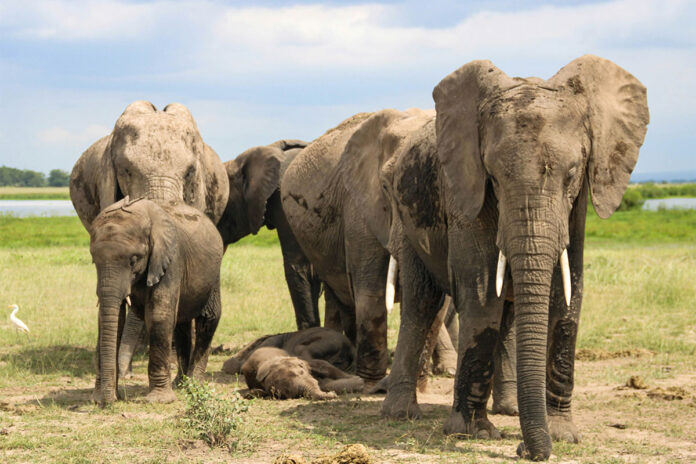
- Although African bush elephant (Loxodonta africana) populations are declining across much of their range and the species remains classified as Endangered, some populations in Southern Africa are growing as local communities manage the land they share with these animals.
The LPR and its media summary outline hope as a process with four components: a goal ‘grounded in values, identity, and culture’; a credible pathway to that goal; agency or the belief that the work you do can make a difference; and resilience: the capacity to keep going when progress stalls.
“These four components reinforce one another. When they are reinforced across groups of people, communities, sectors and borders, hope becomes collective. Collective hope is the most reliable predictor we have of whether large-scale change will occur,” the summary states.