
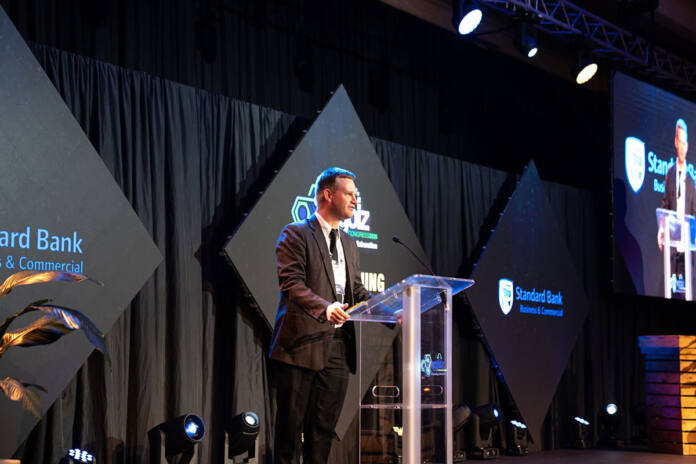
In his opening speech at the congress, Agbiz CEO Theo Boshoff stressed the importance of collaboration within the broader agriculture sector for shaping the future of agriculture.
“At Agbiz, we wish to create an enabling environment for agribusinesses to thrive through our collaborative work within formal platforms such as Business Unity South Africa [BUSA] and Nedlac [the National Economic Development and Labour Council], as well as our involvement in bilateral partnerships,” he said.
In her welcome address, Dr Lukeshni Chetty, general manager of the South African National Seed Organization and second deputy chairperson of Agbiz, said that during times of great change, the congress creates an opportunity for sharing expertise not only with one another but also with the broader sector.
She added that congresses such as this provide the perfect space for discussing solutions to challenges facing the sector while not shying away from the realities in which it operates.
“We believe in the future of agriculture and the country. Agriculture has always been about people, feeding communities, stewarding resources, and steering the industry towards the future. We have always been able to innovate and adapt according to the opportunities and challenges facing the sector and to meet changing consumer expectations. During the congress, this will remain our focus,” Chetty emphasised.
Key themes on the table for discussion included the acceleration of structural reform, improvement of coordination and collaboration across sectors, and the use of evidence-based approaches to unlock sustainable growth in South Africa’s economy and agricultural value chains.
However, the main issue on the table was how stakeholders should engage to move from intention to implementation.
Geopolitical and economic interlinkages
Highlighting South Africa’s position within the current geopolitical and economic global environment, Mcebisi Jonas, an independent Presidential Investment Envoy, pointed out that the South African agriculture sector has continued to perform well despite challenges and failing public systems.
“This is not sustainable. The private and formal agriculture sectors cannot continue to substitute for weak public systems with shortcomings,” he said.
Jonas added that although South Africa is a relatively small global player in the market, it is at the heart of regional agricultural production.
He pointed out that the challenges facing the sector are real. “The agriculture sector operates within a volatile environment characterised by wars and disrupted markets. These are creating uncertainty in business. Even if these are resolved today, the consequences will not disappear overnight. Disruption of global markets is likely to continue for a while.
“We are operating in a fragmented world economy with real consequences that impact oil prices, shipping costs, fertiliser availability and prices, job opportunities, food prices, and sustainable household incomes.”
Statistics matter
Bringing the realities in which the sector operates closer to home, Statistics South Africa (Stats SA) Statistician-General Risenga Maluleke unpacked the evolving linkages between the South African economy and demographics.
He pointed out that, according to Stats SA’s surveys, some 36 million people, or around half of the country’s population, live in three of the country’s provinces.
“Gauteng remains the most populous province with 16,1 million inhabitants. Between 2002 and 2025, the province’s share of the total population increased by more than six million people.”
Together, children under 15 years and youths aged 15 to 35 amount to just over 37,3 million people, or 59% of the population, while adults between the ages of 35 and 59 represent 18 million people or about 30%.
Focusing on the various sectors’ contributions towards the economy, Maluleke said finance, real estate, and business services form the largest combined sector in the economy.
“Finance contributes 24% towards the R1,8 trillion value, while manufacturing represents 14%, personal services 16%, trade 14%, and agricultural production about 1%.”
What is of great concern is that the official unemployment rate increased by 1,2 percentage points to 32,7% in the first quarter of 2026.
“This means that some 8,1 million people are without work, and youths aged between 15 and 34 are the most vulnerable to unemployment,” Maluleke added.
He pointed out that the agriculture sector contributes 5,7% to job creation in the country, adding: “Community and social services, trade, and finance are the largest sectors for employment in the country, while mining contributes 2,8% and around 28% of the country’s employed are in elementary or domestic work occupations.”
Maluleke emphasised that employment must translate into earning money. “Only through making money will people be able to meet their basic needs and take part in the economy.”
Highlighting the fact that business and government have access to a great deal of information that should translate into actions, he stressed the importance of using available information to find solutions to address various issues that exist in society.
“Can we allow anyone in society to suffer from poverty or hunger if we have the numbers that tell us so?” he asked.
Rail, ports, and logistics reform
As stated by various congress participants, for decades, farmers, agricultural exporters, and many other role players along the South African agricultural value chain have been constrained by inefficient logistics, unreliable rail services, and congested roads and ports.
The state of some of the country’s roads, lack of access to rail, and bottlenecks at ports not only put people’s lives at risk but also raise costs, reduce competitiveness, and prevent the sector from reaching its full potential.
Michelle Phillips, group CEO of Transnet, said government’s decision to privatise freight rail speaks to a structural reform that could reshape the economics of South African agriculture. Coupled with private-sector investment in ports and rail corridors, the reforms promise to deliver cost savings, improved efficiency, and enhanced access to export markets.
She added that if these endeavours fall into place, South Africa will be able to retain its position as one of the most reliable suppliers of agricultural products in global markets.
Phillips also announced that 11 new privately owned rail operators were recently introduced to South Africa’s rail system, expanding operations across various corridors of the national rail network.
She added that, as a further example of Transnet’s new focus, the Saldanha Infrastructure Project – which includes Tippler 3, a machine used at ports to unload bulk materials from wagons or containers, as well as other strategic investments – is aimed at modernising terminal operations.
“This represents a critical step in Transnet’s infrastructure modernisation journey and commitment to restoring operational excellence, strengthening export corridors, and positioning South Africa as a globally competitive supplier in the mining and bulk logistics sector.”
Phillips invited the private sector to take advantage of the opportunities available within the system.
Private-public partnerships
Facilitating a panel discussion on structural reforms and business–government partnerships, Tanya Cohen, a commissioner at the National Planning Commission, was joined by Prof Johann Kirsten, director of the Bureau for Economic Research at Stellenbosch University; Lunga Maloyi, director of economic policy at BUSA; and Prof Ferdi Meyer, managing director of the Bureau for Food and Agricultural Policy.
The discussion focused on the role that partnerships and strategic alliances play in driving operational improvements across the economy and advancing structural reform.
Panellists noted that while policies, regulations, and institutional frameworks have been established, challenges relating to human and institutional capacity remain.
“These constraints are often compounded by a lack of political and administrative will to implement reforms and bring initiatives to fruition,” Kirsten noted.
Minister focuses on crucial role of agribusiness
Minister of Agriculture John Steenhuisen delivered a wide-ranging address on the challenges facing the sector and the policy steps that government is taking to support agricultural growth.
He acknowledged the crucial role that agribusinesses play in South Africa’s food system and economy.
“In spite of fragmentation in the global agricultural environment, South African agriculture has grown and survived. This shines a light on the sector’s resilience. South African agriculture succeeds in this environment not because it is easy but because the sector has tenacity,” he said.
“Despite challenges ranging from foot-and-mouth disease [FMD] to US tariff pressures, South Africa’s agriculture sector continues to perform strongly.”
Steenhuisen added that the focus should remain on opening new markets and creating opportunities for growth across the sector.
“We are only scratching the surface of what agriculture’s true potential is in South Africa,” he said.
He acknowledged that government should not make it difficult for the agriculture sector and private investors to flourish.
“Inefficiencies of the past have resulted in a sort of tax paid over the years. Progress needs to accelerate. Government and industry need to work closer together and drive public–private partnerships.
“Government should not inhibit innovation and cause obstacles. I wish to make it clear today that everything we, as government, were able to do and accomplish over the past year would not have been possible without the involvement of the industry role players. But it is also true that there are some things that only government can do, such as taking responsibility for diplomacy and trade agreements.”
Referring to biosecurity and the FMD crisis, Steenhuisen warned that FMD will not be the last crisis the sector faces.
“We will, however, be stronger if we learn from this experience. We need to bring in the best people to address the problem, and we have to set aside differences and politics and focus on the issue ahead. We have learnt a great deal and can take that into the future.”
Focusing on financing in agriculture, he implored the sector to collaborate more closely to improve access to finance for smaller farmers in particular.
He also called for the de-risking of agricultural lending to help the sector share some of the burden. “The complexity of agriculture needs to translate into an adapted financing model. There is room for agricultural businesses not only in financing but also in helping farmers scale up and build viable businesses.”
Regarding the biofuels industry, Steenhuisen said he sees it as a growth frontier. “Biofuels offer an agricultural industrialisation opportunity. It is not only a discussion on energy availability but also an opportunity for investment.”
In closing, Steenhuisen called for cooperation within the sector. “We must refrain from ideological rhetoric and embrace collaboration.