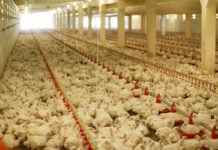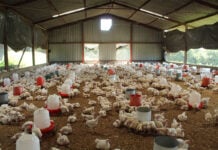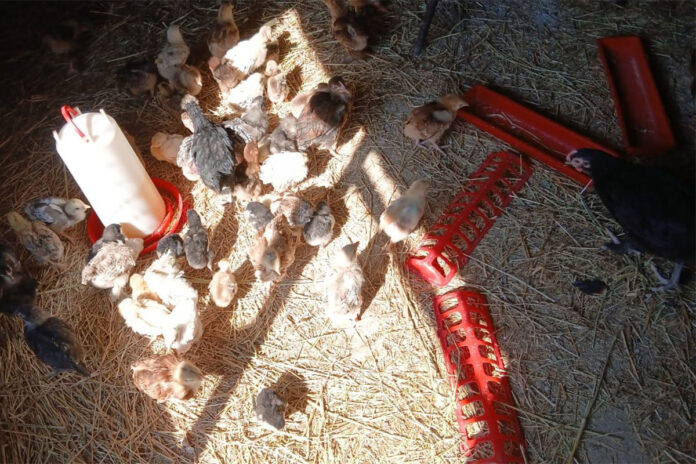
When Dube started his business, Freshmark Farming Enterprises (Freshmark), in Filabusi, Matabeleland South, in early 2022, he focused on broiler production.
“At that point, the main focus was on raising chickens for the meat market,” he explains.
Dube initially stocked about 500 broilers per production cycle. As Freshmark grew, he increased production by adding 500 birds every two weeks.
“We first sold live broilers directly to our local community. As our volumes became more stable, we started supplying customers further away, including butcheries,” he says.
However, as production increased, Dube began to recognise the challenges associated with broiler production.
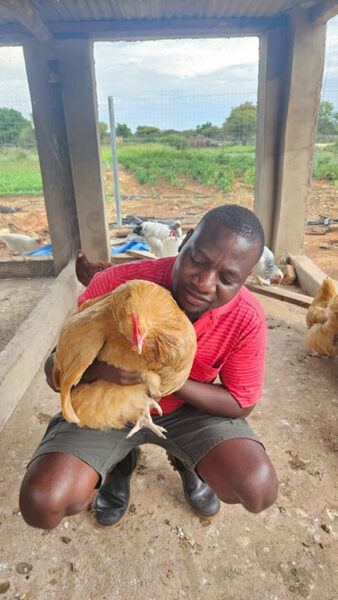
“Buyers started dictating their own prices, while our production costs were still rising,” he says.
Dube’s expenses included feed, fuel, and medication, while the farm’s rural location presented additional infrastructure challenges.
“Our farm mainly depends on solar energy, and at one point, we didn’t have sufficient refrigeration capacity,” he explains.
These hurdles convinced Dube that continually increasing broiler production was not the best way to expand his business.
A shift in focus
Freshmark has since shifted its focus to breeding and chick production.
Today, Dube’s flock comprises around 350 birds, including approximately 150 breeding birds.
This change has altered how Dube approaches poultry farming. While broiler production focused on rearing birds for meat, breeding requires him to consider genetics, fertility, hatchability, and the characteristics parent birds pass on to their offspring.
One rooster changed everything
Dube’s interest in breeding began with an experiment involving a single Brahma rooster.
Before starting Freshmark, Dube worked in logistics in South Africa, where he met producers whose approach to farming caught his attention.
“Their knowledge, discipline, and commitment to farming opened my eyes to the possibilities of farming and made me want to bring my experience and learning back to Zimbabwe,” he explains.
After returning to Zimbabwe, Dube began experimenting with poultry genetics.
“I bought one Brahma rooster and crossed it with our local village chickens. The results changed my view of poultry farming forever.”
He was particularly interested in the characteristics of the offspring.
“The offspring immediately caught my attention. They were strong, hardy chicks that displayed good growth,” he says.
This experiment prompted Dube to explore poultry breeding further. Rather than seeing chickens solely as products for the market, he began considering how careful selection of parent birds could influence the next generation.
Building a breeding programme
Dube has learnt that successful poultry breeding depends on more than just flock size. Selecting parent birds for specific characteristics is essential to achieving his breeding goals.
His selects birds based on their growth, body structure, fertility, egg production, hatchability, temperament, and hardiness.
Dube spends time observing individual birds to determine which ones should remain in his breeding programme. This approach requires patience, as the results of breeding decisions become apparent over time. Record-keeping also becomes increasingly important as the programme develops.
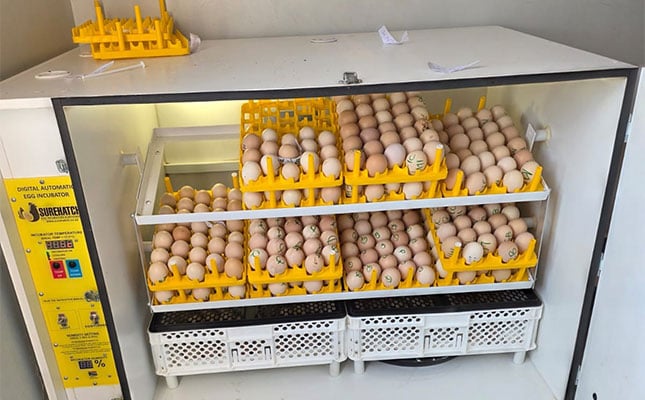
Freshmark has also invested in incubation equipment to support chick production. The farm has a setter with a capacity of approximately 680 eggs and a hatcher that can hold around 160 chicks. It currently produces about 150 chicks per week, depending on demand and egg availability.
Dube says the hatch rate ranges from 85% to 95% under favourable conditions.
With its own incubation equipment, Freshmark has greater control over chick production.
Learning across the border
Dube’s experiences in South Africa have played an important role in the development of his business.
As his interest in poultry breeding grew, he attended training at Bango Poultry Farm in Limpopo and the Bosveld Boerbok Club in North West. He also sought advice from more experienced farmers and breeders.
These experiences taught him that successful breeding involves more than selecting particular breeds. Farmers must also understand animal selection, management, and the production environment.
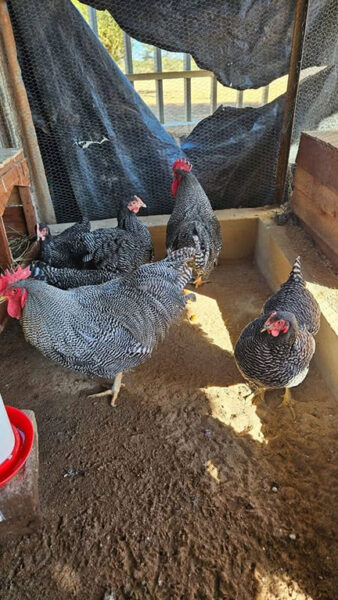
Applying what he learnt in South Africa to his farm in Filabusi has required adapting those lessons to local conditions.
Dube says feed availability, a reliable electricity supply, adequate infrastructure, and access to suitable equipment directly affect the success of his breeding operation.
Electricity is particularly important for running incubators and maintaining stable hatching conditions. In rural areas such as Filabusi, power interruptions, limited access to equipment, and transport challenges can affect hatchability, operating costs, and the overall efficiency of the farm. These factors determine how consistently and profitably Dube can produce quality breeding stock.
Dube’s experience has taught him that production must be driven by market demand, not just the capacity to produce. He considers feed costs, selling prices, customer demand, and the availability of reliable buyers before deciding how many birds to produce.
This has made him more cautious about expanding production and more focused on profitability. He wants to ensure that he can sell his output at prices that cover his costs and deliver a return.
The economics of breeding
Switching to breeding has brought its own challenges.
Breeding birds must be kept for longer than birds raised for slaughter, increasing feed and management costs. Successful incubation also depends on proper equipment management and suitable conditions.
However, the change has altered how Dube approaches business growth.
Previously, he expanded production by increasing broiler numbers, raising them to slaughter weight, and finding buyers willing to pay prices that covered his costs.
Breeding offers a different value proposition. Rather than generating a once-off return from selling a bird for meat, quality breeding stock can produce fertile eggs and offspring over multiple cycles.
One of the most important lessons Dube has learnt is to understand the economics of his enterprise before expanding production. His experience has shown him that higher volumes don’t necessarily translate into better margins when input costs rise and buyers dictate prices.
While Freshmark remains a relatively small operation, Dube is focusing on refining his breeding programme, improving bird selection, and developing markets for chicks and breeding stock.
His shift from broiler production to breeding began with a simple experiment: crossing a Brahma rooster with local village hens. The experience changed how he viewed poultry farming and the potential of selective breeding.
“The results changed my understanding of poultry forever,” he says.
For more information, email Bhekumuzi Dube at [email protected].