
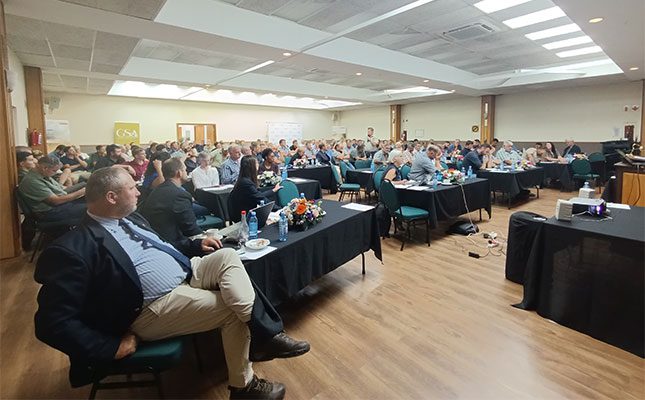
At Grain SA regional meetings held in Swellendam and Moorreesburg in the Western Cape, farmers said the wheat crisis, which has been building for some time, is tightening its grip.
At the Swellendam meeting, several farmers said they had been forced to restructure or renegotiate debt in order to survive the crisis, while some producers in Moorreesburg reported that they no longer had sufficient cash to pay voluntary wheat levies or purchase essential production inputs.
It was also noted that, in an effort to cut costs, reduced fertiliser use is beginning to affect wheat quality, with lower protein levels being recorded on some Swartland farms.
International context
The situation is not unique to South Africa, as wheat prices around the world are under pressure due to high stock levels, with escalating production costs adding to the burden. A major drawback for South African farmers, however, is that most exporting countries subsidise production and have increased support measures in response to the current downturn.
On top of this, large volumes of wheat are imported into South Africa between October and December, coinciding with the Western Cape harvest. Farmers argued that these imports drive local prices down and create logistical bottlenecks that push costs up.
The wheat import tariff is intended to protect farmers against subsidised imports, but producers said it currently takes months for the tariff to be announced, creating opportunities for price exploitation.
Grain SA applied to the International Trade Administration Commission (ITAC) in June 2024 for an improved tariff system, including the automation of the mechanism. Despite ongoing pressure, a decision has not yet been finalised.
Logistics is another major pain point, with Western Cape producers voicing their unhappiness about the transport differential since its introduction.
The transport differential is based on the cost of transporting wheat to Randfontein, which is R800/t for wheat produced in the Western Cape, even though most of the province’s wheat is processed and consumed locally.
Farmers also raised concerns that imported wheat is traded alongside South African wheat on SAFEX, despite differences in quality.
Protection against cheap imports
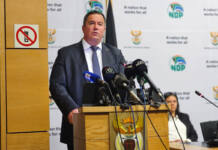
At both meetings, various speakers told farmers that Grain SA was doing everything in its power to help stabilise and revive the industry. Grain SA CEO Tobias Doyer said the industry also has the support of Minister of Agriculture John Steenhuisen.
As evidence of this engagement, Doyer played a video interview between himself and Steenhuisen, during which the latter addressed several industry challenges.
Steenhuisen acknowledged that the current wheat tariff mechanism is ineffective and fails to protect local farmers against heavily subsidised international imports, a matter he said he had raised with the minister of Trade, Industry and Competition.
“Government needs to move towards an automated wheat tariff, like the way fuel prices adjust automatically in response to oil price movements. Farmers should not be sitting waiting for a long bureaucratic process to unfold before the tariff is published,” he said.
In response to questions about stricter import controls, particularly during harvest periods when imports place additional pressure on prices, roads, and silo capacity, Steenhuisen said South Africa’s commitments under World Trade Organization agreements limit the scope for outright import bans.
He added that alternatives such as “quota-based systems rather than outright bans” could be explored.
Investigation into pricing
In response to frustration that millers and bakers remain profitable while wheat producers absorb rising costs and shrinking margins, Steenhuisen said the Department of Agriculture supports a Section 7 investigation through the National Agricultural Marketing Council to improve transparency across the wheat value chain.
“We need to see who is bearing the actual burden. It must be a free market, but it must also be a fair market,” he said.
Steenhuisen added that such an inquiry would provide evidence-based data on pricing, profitability, imports, and who benefits most within the chain.
New technologies and insurance
Steenhuisen also voiced support for improving access to new breeding techniques and precision breeding technologies, arguing that South African farmers could not afford to fall behind their global competitors.
“New technologies are essential for improving yields, quality, and climate resilience under increasingly volatile weather conditions. We must be very careful that we don’t become Luddites and get left behind the rest of the world,” he said.
Steenhuisen added that he had been pushing for government-subsidised insurance to help pull farmers through climate-related disasters. He specifically spoke about the potential of an index-based agricultural insurance mechanism to reduce delays associated with disaster declarations and relief payments.
“An index-insurance-type system would pay out immediately, instead of farmers having to wait for a year or more,” he said.
He said he would continue pushing for reforms at Cabinet level and in engagements with the Department of Trade, Industry and Competition and ITAC.
Urgent action needed
Farmers, however, questioned whether reforms could be implemented quickly enough to provide immediate relief, given the slow pace of bureaucratic processes and the fact that key trade decisions fall outside of the Department of Agriculture.
They warned that the coming season will be critical and that, without urgent action, South Africa could lose more producers from an already fragile wheat sector.