The local industry has benefited from the two issues affecting Mexican and US pecan production: drought and dumping accusations from China.
Alfonso Visser, president of SA Pecans, told Farmer’s Weekly that volumes from the US and Mexico, the world’s two largest producers of pecan nuts, had declined during their last season due to drought.
READ Growing a pecan tree in your garden
“The supply pipeline for 2026 is quite empty and there could be a shortage of pecan nuts in the market this season. South Africa is in a good position to meet much of the demand and so producers will get the benefit of the resultant higher prices,” he said.
China, the largest importer of pecan nuts globally, is still investigating the US and Mexico for dumping pecans during the 2024 season.
Cobus van Rensburg, general manager of the South African Pecan Nut Producers Association (SAPPA), explained that this had made Chinese buyers hesitant to purchase more pecans from these countries. Procurement would therefore shift to a greater extent to South Africa
“We are the third-biggest producer of pecan nuts in the world, and one of the few in which production is growing. So, we are in a very good position to serve the Chinese, and global market,” Van Rensburg said.
Boding well for the stability and optimism within the industry was the fact that South Africa had increasingly less competition in the global market.
Visser said that unlike most other commodities South Africa produced, the local pecan nut industry did not face stringent competition in export markets. “Demand for pecans is growing faster than production globally.”
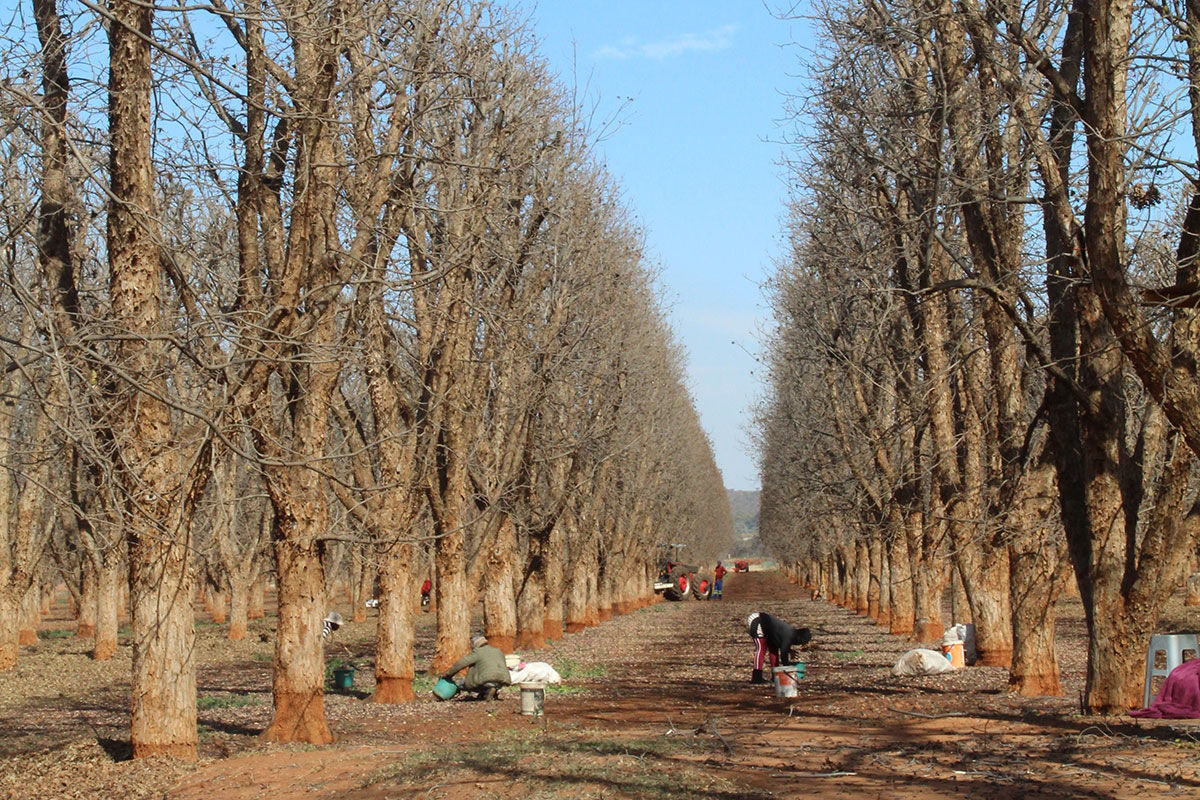
According to Van Rensburg, the 2026 harvest is expected to deliver around 53 000t of in-shell pecans. Quality is also expected to be high as weather conditions during the growing season were favourable.
Price increases despite a stronger rand
The lower global crop is expected to lift prices. Visser noted that prices in March had already shown an increase.
With most of the crop exported, the exchange rate played a big role in farmgate prices. Visser however, said that since the rand had strengthened by around 10% against the US dollar, producers would still be in a better position than last year in terms of prices.
Input costs were concerning, especially as diesel prices were due to rise in April, which would impact harvesting costs.
Growing demand aided by the Chinese
More than 90% of South Africa’s pecan nut crop was exported inshell to China. The import tariff stood at 7%, but is expected to be reduced to 0% in May as part of the China–Africa Economic Partnership for Shared Development.
Van Rensburg said that while the dependence on this market was a concern, Chinese demand far outweighed supply. “They imported around 62 000t inshell last year, and would have imported even more from South Africa if we could have provided it. Their demand for pecans is growing as consumers become more aware of pecans, its health benefits and various uses.
“China also shells a lot of what they import and sells value-added kernel into other markets strengthening demand further.
Visser added that since Chinese processing costs were very competitive, they could process high volumes of kernel. “They add value and sell into markets like the EU and Middle East. This makes China a very convenient partner in the international arena.”
READ Pecan nut farming: high cost, big returns
Van Rensburg noted that SAPPA had encouraged producers last year to divert at least 15% of their nuts to alternative markets to spread the risk of over-reliance on China. “We’ve seen over the last year how quickly market access can be disrupted, so diversification is important.”
Shelling capacity and capability needed to be considered to maximise returns for producers. Half nuts attained higher prices than nuts that cracked into pieces, which meant investments in the right technology was necessary.
“The Chinese technology has started overtaking the US in terms of attaining a greater percentage of halves. South Africa’s cracking facilities are not optimally used and there is room to increase the volume of nuts cracked locally,” said van Rensburg.
While the industry had made headway in increasing exports to the EU in previous years, the industry was dealt a blow last year when the EU decreased the accepted levels of nickel in pecan nuts.
As of 1 July 2025, the maximum level of nickel present in pecan nuts had been set to 3,5 parts per million (ppm). SAPPA sent data from tests to the EU and had discussions with them in order to decrease the limit to 10ppm. Van Rensburg said that the EU had indicated that a vote would follow shortly by the EU member states to rectify the limit. SAPPA is confident that a 10ppm limit will be in place by mid 2026.
Visser said that neither the US nor South Africa could meet this standard, since nickel was naturally present in pecan nuts, regardless of whether nickel spray applications were done. Both countries were therefore working with the EU to reverse the 2025 decision.