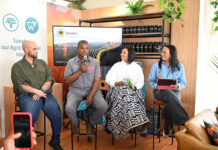
An emerging theme from the discussions was how El Niño is perceived. In the Southern Hemisphere, it is associated with below-normal summer rainfall, drought, and heatwaves, and it is frequently compared with the 2015/16 drought, described at the time as South Africa’s worst in more than a century. However, experts offered a more nuanced and cautious assessment.
South African Weather Service (SAWS) research scientist Cobus Olivier said there is a very high likelihood of an El Niño developing, which could potentially be “one of the strongest”, he said.
However, while farmer vigilance is prudent, Olivier cautioned against overinterpreting the forecasts, noting that they are based on limited observations and a relatively short forecast horizon.
“One important fact to keep in mind at this stage is that most impact estimations for El Niño on our summer rainfall areas are based on historic data. Reliable dynamical forecasts only currently reach as far as October/November 2026, which is barely the start of the summer season,” he explained.
A stronger starting point
Echoing Olivier’s view, AgriSA Chief Operating Officer Jolanda Andrag cautioned against assuming the predicted El Niño would have impacts similar to those of the 2015/16 drought.
“The first point to make is that we are dealing with a seasonal forecast rather than a confirmed drought,” she said.
While the predicted El Niño warrants careful monitoring, Andrag added that “the intensity, timing, and geographical extent of any impacts remain uncertain”.
“It is equally important not to view this season through exactly the same lens as the 2015/16 drought [because] South Africa is entering the 2026/27 production season from a fundamentally stronger position,” she said.
Andrag pointed out that the country is expected to harvest a record summer grain and oilseed crop of approximately 21,5 million tons, including the largest maize harvest on record at an estimated 17,25 million tons.
“This provides ample grain supplies, significant carryover stocks, and a strong buffer against potential production shortfalls,” she said.
On water availability, Department of Water and Sanitation (DWS) acting spokesperson Lebogang Maseko said the Vaal Dam is at a satisfactory level, providing a positive outlook for water security during the current water year.
“El Niño conditions may increase drought risk in parts of Southern Africa, but the actual impact depends on regional rainfall and catchment response,” she said.
She advised farmers to still consider seasonal forecasts, water allocations, soil moisture content, local dam and river levels, groundwater availability, and guidance from agricultural authorities before taking management decisions.
Maseko added that during droughts, farmers often rely on groundwater as a “strategic drought-resilience resource”, stressing that it should be used sustainably.
Practical interventions
Responding to questions on how the Department of Agriculture (DoA) plans to mitigate possible disruptions to key programmes, such as Fetsa Tlala, CASP and Ilima/Letsema, in the event of El Niño-induced disasters, DoA spokesperson Moses Rannditsheni said the department factors the possibility of potential disasters into its programme design and operations.
“The risks associated with selected projects are identified and mitigated prior to implementation. This includes putting measures in place to ensure the prevention and mitigation of disaster risks when designing programmes, such as procuring drought-tolerant seeds that can endure harsh conditions associated with below-normal rainfall. This will go a long way in ensuring that the impact of disasters is lessened,” he explained.
However, formal emergency responses are only triggered once the minister of cooperative governance and traditional affairs has officially declared a disaster.
He added that, as part of its ongoing awareness and communication efforts, the DoA’s National Agro-meteorological Committee works closely with the SAWS to issue monthly weather forecast advisories to the agriculture sector in support of disaster preparedness.
Rannditsheni said a key development has been the growing recognition among farmers of the value of disaster risk mitigation, with greater emphasis now being placed on preparedness rather than responding only after disasters occur.
Reflecting on lessons learnt from the 2015/16 drought, he said the DoA had realigned its food security and farmer development and support programmes to build greater resilience to recurring drought. These include:
- The Comprehensive Agricultural Support Programme, which provides infrastructure, production inputs, training, and technical support to developing farmers;
- Ilima/Letsema, which aims to reduce poverty by increasing food production and improving household food security; and
- Fetsa Tlala, which supports subsistence and small-scale farmers to bring underutilised land into production.
He added that these programmes have been strengthened by incorporating disaster risk reduction into project planning, including the use of drought-tolerant seed and climate-smart farming practices to reduce farmers’ exposure to drought.
On the financial impact of natural disasters on farmers, Sakhumzi May, chief agricultural economist at Land Bank, said the 2015/16 drought reinforced an important lesson: building resilience in agriculture requires more than emergency financial relief.
“It requires financing solutions that strengthen farmers’ capacity to withstand, adapt to, and recover from increasingly frequent climate and market shocks,” he added.
May said one of the innovations that the bank has introduced based on lessons learnt from natural disasters is the Blended Finance Scheme (BFS), which combines a loan with a conditional grant.
“By combining grant funding with loan finance, the BFS reduces borrowers’ leverage, improves project viability, and strengthens financial resilience from the outset.
“The scheme also provides support for agricultural insurance premiums, recognising the importance of insurance in managing production risk,” he explained.
Similarly, Dr Elias Sithole, head of the National Disaster Management Centre, said the 2015/16 drought had changed South Africa’s approach to drought risk management.
He highlighted several improvements since then, including:
- Stronger seasonal climate monitoring by the SAWS
- Closer collaboration and data-sharing with organisations such as the Agricultural Research Council (ARC) and SAWS to improve understanding of drought development and impacts
- Greater use of impact-based early warning systems
- Improved monthly monitoring of drought and vegetation conditions using geographic information system and satellite observations, with findings shared with the National Joint Drought Coordinating Committee to support decision-making
- Seasonal hazard analyses and advisories provided to the National Disaster Management Advisory Forum and other disaster management stakeholders to support decision-making
- Integration of drought into the UN’s Early Warnings for All framework, aimed at ensuring protection from natural disasters and the impacts of climate change worldwide.
“The better prepared farmers are before a drought develops, the better their chances are of reducing losses and sustaining agricultural production,” Dr Teboho Masupha, researcher in agrometeorology at the ARC,” said.
She added that the ARC’s disaster management and mitigation work includes the Agricultural Drought Early Warning System, an online platform that provides near real-time drought monitoring information to support farmers, extension practitioners, disaster management officials, and policymakers in planning and decision-making.