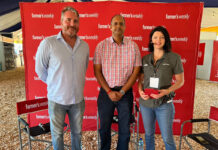

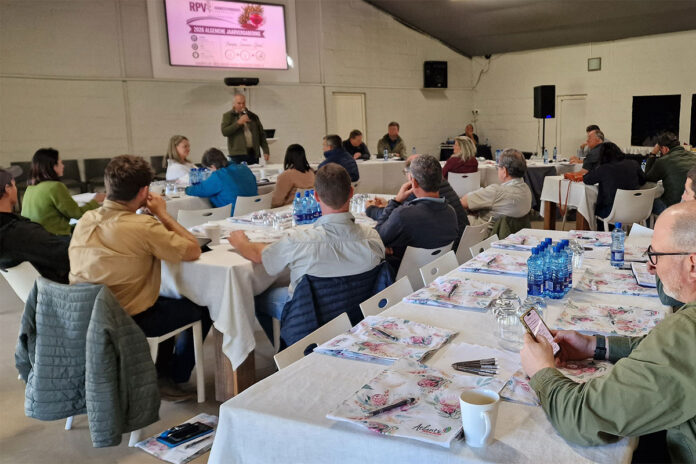
While recent rainfall brought welcome relief after a delayed planting season, discussions focused largely on grower profitability, market conditions, industry information and the long-term sustainability of the rooibos sector.
Addressing members, Werner Nieuwoudt RTPA chairperson said the organisation remained committed to ensuring that producers retained a strong voice within an industry built on the world’s only commercially cultivated rooibos crop.
“We are the producers of the primary product. Without producers there is no industry,” he noted.
Nieuwoudt told Farmer’s Weekly that dry conditions had disrupted planting across much of the production region after rainfall largely stopped in mid-June.
“Normally our planting season is during June, July and August, but unfortunately rainfall stopped around the middle of June and we haven’t had a proper planting season,” he said.
Many seedlings remained in nurseries while growers waited for suitable soil moisture conditions. However, recent rainfall during September has allowed planting activities to resume across the region.
Nieuwoudt said the rain could also provide a welcome boost to established rooibos fields ahead of the next harvest season.
“When we get rain between September and November it can increase production in older tea plants by 20% to 30%,” he highlighted.
Growing Demand Brings New Opportunities
Despite the challenges posed by the delayed planting season, Nieuwoudt said market demand remained one of the industry’s strongest positives.
“The positive thing is that our product is in demand,” said Nieuwoudt.
He highlighted continued growth in export markets, particularly Japan.
“Japan is a very exciting market for us and demand continues to grow,” he said.
However, Nieuwoudt cautioned that maintaining a healthy balance between supply and demand remained critical to the industry’s long-term viability.
“The markets are growing, but if the product isn’t available, prices rise and that creates problems for customers. On the other hand, surplus stocks place pressure on producers. We need to find a balance across the value chain,” advised Nieuwoudt.
Discussions at the AGM also highlighted the importance of reliable industry information to support decision making throughout the value chain.
Nieuwoudt said producers, processors and marketers all benefited from accurate information on production volumes, stock levels and market demand.
“We need reliable information on production, stocks and market demand. Without good information, it becomes difficult for producers and other role players to plan properly,” he said.
Improved information sharing would help the industry make better decisions, avoid unnecessary market volatility and strengthen long-term planning, he added.
Sustainability starts with sustainable producers
The issue of profitability also featured prominently during discussions.
Rooibos producer Bernard Liebenberg said many farmers continued to face considerable financial pressure.
“Farmers are under pressure right now from a financial perspective, and we need to make sure that we work together as an industry to find solutions,” said Liebenberg.
Nieuwoudt agreed that cooperation across the value chain would be essential for future growth.
“We all need each other. Producers, processors and marketers are part of the same value chain and we have to work together if the industry is going to succeed,” he said.
He stressed that the long-term success of the sector ultimately depended on the sustainability of primary producers.
“If producers are not sustainable, the industry is not sustainable,” he said.
Looking ahead, Nieuwoudt said the association would continue focusing on issues affecting growers while supporting the sustainable development of the industry.
“Our role is to make sure producers have a voice and that rooibos remains a sustainable industry for future generations,” concluded Nieuwoudt.