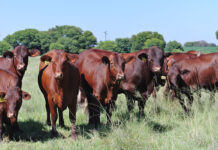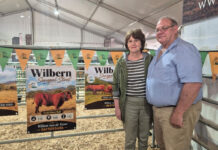
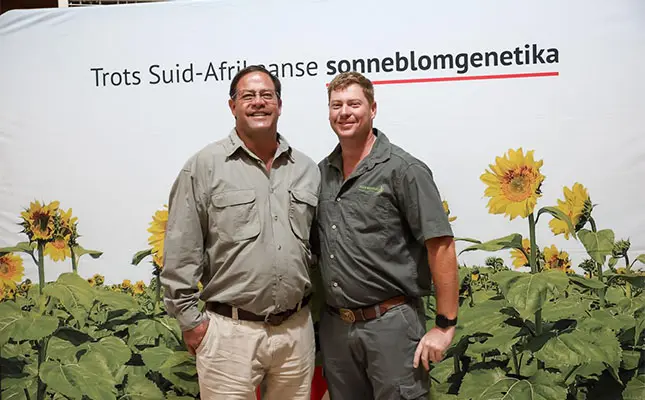
The Pieterse family have been farming in Biesiesvlei for three generations. The farming business was initially focused on breeding commercial cattle until the Benro Boerdery Santa Gertrudis Stud was registered in 2021.
Hennie started with only 10 stud cows and continued with commercial cattle production, before the commercial cattle concern was done away with in order to focus exclusively on stud breeding, producing early-maturing, medium-framed, and structurally correct animals.
Quality over quantity
“Our stud currently consists of five bulls, 50 cows, 35 heifers, and a number of young animals to be considered for the stud in future. Our intention was from the onset to run a smaller stud with a very strong emphasis on genetic excellence. We only retain outstanding animals for the stud. Animals not making the grade are sold either as weaners or to abattoirs,” says Henro.
“We are relentless in our quest for outstanding genetic quality and breeding based on scientific values. Our long-term vision is to develop the Benro stud as a leader in terms of genetic advancement, breeding animals of choice that add value to both stud and commercial producers. We are also increasingly implementing genomic evaluation in order to increase the accuracy of our selection criteria,” adds Henro.
The father-and-son team is committed to breeding functional and balanced Santas that offer a combination of adaptability, outstanding growth, and top meat production. The Pieterses select for exceptional length, depth, capacity, and muscling.
Strong legs and claws are essential, given the often-extensive and challenging farming conditions in the country, which call for strong walking ability. An even temperament is also high on the selection list, as it adds markedly to effective management and increased production. Top fertility is obviously non-negotiable.
Challenging production conditions
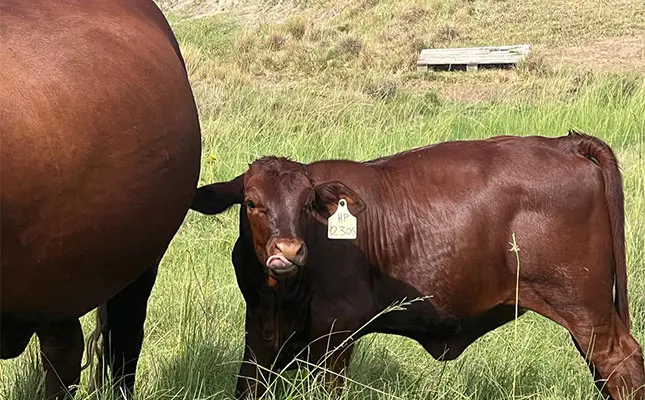
Over and above the Santa Gertrudis stud, the farming concern also includes maize and soya bean production. The Pieterse’s land mainly consists of sandy loam soil and sweetveld, with some sourveld in the vlei areas of the farm. Summer temperatures often soar into the high 30s, with extremely cold and dry winters. Droughts are not uncommon. The average annual rainfall is about 500mm, but, according to Henro, rainfall often fluctuates markedly from year to year.
“The ever-fluctuating weather conditions call for highly adapted cattle that are able to withstand adverse climatic conditions. Adaptability and hardiness are therefore very high on our list of selection priorities. This is of utmost importance for long-term sustainability and profitability. The innate adaptability of the South African Santa, coupled with the breed’s superlative stamina, makes it the ideal option for optimum production of beef per hectare without excessive input costs. It truly is a money-making beef cattle breed.
“In order to achieve just that, we put a lot of emphasis on the genetic and genomic progress of our herd. The breed’s outstanding hybrid vigour makes it the obvious choice for crossbreeding purposes,” adds Henro.
Hardiness with fewer inputs
The Benro herd is kept on the veld and crop stover with the minimum of feed supplementation. Grazing conditions are carefully monitored, and the animals are moved between camps as and when needed. Ample time is allowed for the vegetation in a specific camp to recuperate sufficiently before animals are reintroduced. Henro stresses that efficient veld management forms one of the most important cornerstones of any livestock production concern. The grazing is augmented by maize stover in the winter months.
“Supplemental feeding is kept to the minimum. Although licks and other supplements are provided, the herd remains dependent on the veld. We do not believe in overfeeding our cattle. Our philosophy is that once one of our animals leaves the farm, it must be able to seamlessly adapt to its new destination. We do not believe in cosseting our herd and are dedicated to breeding resilient animals that are able to flourish, even under adverse conditions. Animals finding it difficult to maintain themselves effectively under our farming conditions are not allowed to remain in the herd,” explains Henro.
The ideal Benro animal
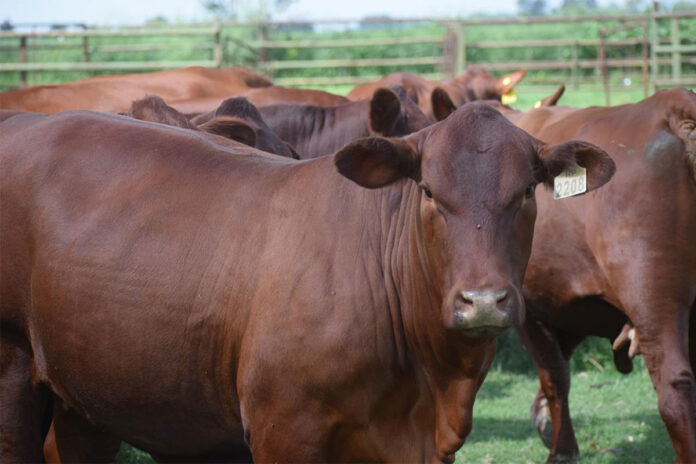
The ideal Benro cow is feminine, wedge-shaped, highly functional and true to form, fertile, with a well-developed udder and teats. The cows are expected to successfully drop and raise a healthy calf every year, with enough milk to ensure a high weaning weight. According to Henro, the cow herd forms the heart of any cattle herd and, to a large extent, determines the success of the herd in the long term. Heifers are first put to the bulls at 18 months to allow the young animals enough time to develop sufficiently.
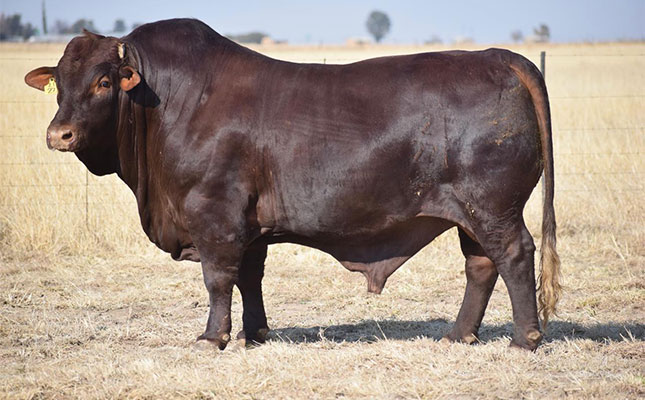
Benro bulls are known for a combination of optimum meat production, fertility, functionality, and sound genetics. The main determinant of a bull’s success is the quality of its progeny. The ideal Benro bull is naturally polled, very masculine, with outstanding hindquarters, a good topline and width, as well as a well-developed scrotum and sheath.
Breeding for the future
Asked by Farmer’s Weekly what the long-term objective for the Benro stud is, Henro says it is to become “the Santa Gertrudis breeder of choice for prospective buyers. Our main aim is to produce beef cattle that will add exceptional value for all beef cattle producers under all possible production conditions in the country. Additionally, the breed excels in terms of crossbreeding because of its hybrid vigour.”
The stud maintains an average birth weight of about 35kg and a weaning weight of about 230kg. The Santa Gertrudis is, according to Henro, a highly economical breed that promises top meat production per hectare because of its innate ability to effectively convert grass into beef.
For more information, email [email protected].