
South Africa’s aquaculture industry has recorded limited adoption despite possessing an extensive coastline of 2 798 km and having a rich fishing culture.
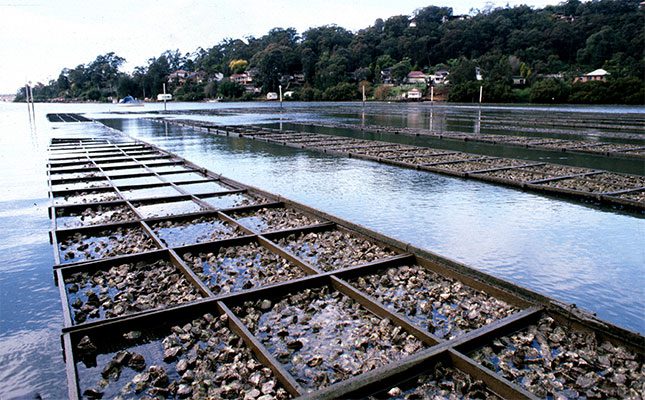
In 2023, 179 operational farms were recorded, of which 39 were marine and 140 freshwater farms, according to data from the Department of Forestry, Fisheries, and the Environment. More than 80% of total production is situated in the Western Cape, and marine aquaculture accounted for more than 90% of total production, with key contributions from mussels, abalone, and kelp.
The last major push to develop a smallholder aquaculture sector in South Africa came through operation Phakisa: Oceans Economy, an initiative launched in 2014.
Operation Phakisa identified aquaculture as an important opportunity for uplifting smallholder producers, creating employment and expanding economic participation in rural communities. However, implementation has remained difficult in practice, and relatively few of the proposed projects have developed into sustainable commercial operations.
As a supplementary programme in 2016, the Department of Forestry, Fisheries, and the Environment introduced the small-scale fishing policy to include small-scale fishers and encourage their participation in fishing and aquaculture. The Saldanha Bay Aquaculture Development Zone (ADZ) also formed part of this wider drive to expand aquaculture production and create opportunities for new industry participants. Saldanha Bay ADZ is the primary area for bivalve (aquatic mollusc) production in South Africa.
Abalone
There has been some success with high-value aquaculture products such as abalone, particularly where small-scale or community projects have been developed through partnerships with established private companies to help offset the large amounts of infrastructure and start-up capital needed for land-based breeding enterprises.
One such project, Doring Bay Abalone, remains operational and has progressed from a small-scale development initiative into a fully commercial operation. Abalone accounts for most aquaculture exports from South Africa.
Unfortunately, recent developments in the global abalone industry have placed additional pressure on South African producers. China, the main market for abalone, has more than doubled its own production through improved production methods, production optimisation, and the crossbreeding of faster-growing abalone varieties in the last decade.
This rapid increase in Chinese production has contributed to persistent oversupply and depressed international prices for abalone. As a result, abalone farming in South Africa is becoming a less attractive development option, except where producers can target the premium segment of the market that can still demand high prices.
Mussels
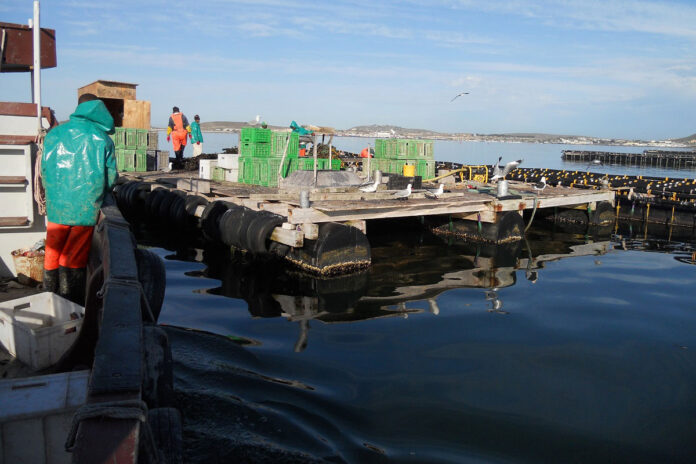
The greatest success in terms of smallholder participation has generally been achieved through less intensive forms of aquaculture. Mussel rope farming, for example, requires less infrastructure and capital than many land-based fish or abalone production systems. It consists of 800 specialised ropes per hectare of 6m meters each on which the mussels are grown. The mussel subsector is responsible for almost half of all marine aquaculture in South Africa.
One of the most successful examples is the Imbaza Mussel Farming Empowerment Project, which started in 2012 and developed in collaboration with Blue Ocean Mussels. Blue Ocean Mussels provided the training and mentoring to the first six black-empowered mussel farmers in South Africa, out of which Imbaza started.
The project developed into the first commercial black-owned mussel farm in the country. Imbaza’s production subsequently increased to 600t, with plans for further expansion in production up to 1 200t annually.
Kelp
The commercial kelp sector in the Western Cape is based mainly on the collection of beach-cast kelp and the harvesting of kelp from the ocean.
Fresh beach-cast kelp is collected primarily for use as feed on abalone farms. Dry beach-cast kelp refers to kelp that has washed ashore and is then collected, dried, and milled into chips. This dried kelp is exported to produce alginate that is used in a range of applications, including medicines and gelling agents.
There has also been a growing demand for kelp for complex organic nutrient additives, and it has seen widespread adoption in the high value horticultural sector in South Africa.
As with other industries based on the gathering or harvesting of wild products, the kelp sector faces challenges related to interdepartmental bureaucracy. Responsibilities are spread across the departments that make scaling of wild harvesting difficult.
There are also questions about the sustainability of harvesting a keystone species. These concerns have become more important as demand for kelp has increased. To reduce pressure on naturally occurring kelp resources, kelp cultivation has been identified as a possible alternative.
A pilot project is being investigated in Small Bay, Saldanha Bay, through cooperation between the Department of Forestry, Fisheries, and the Environment and the Bivalve Shellfish Farmers Association of South Africa.
The project focuses on the cultivation of commonly occurring cultivars on the west coast: Ecklonia maxima (commonly known as sea bamboo) and Laminaria pallida (commonly known as split-fan kelp).
The proposed system makes use of infrastructure associated with other aquaculture enterprises such as the aforementioned mussel production. These facilities can be used for the cultivation and early growth of kelp spores.
The kelp is then grown in PVC spools attached to vertical droppers in the bay. This creates the possibility of integrating kelp cultivation into existing shellfish-farming operations without requiring an entirely separate production system.
Fish farming
High infrastructure costs and the need for specialised technical expertise are major limitations to the development of small-scale fish farmers.
Compared to shellfish aquaculture, marine finfish farming remains limited in South Africa. There is some production of dusky kob (kabeljou) through recirculating aquaculture systems and land-based pond farming, but this remains largely limited to a few commercial producers.
Although South Africa is a water-scarce country, there is still potential for freshwater aquaculture. In contrast to premium abalone, there is strong local demand for tilapia as a relatively inexpensive source of protein. South Africa currently consumes more than 11 000t of tilapia a year, all of which is imported.
However, Nile tilapia, the species most commonly used in aquaculture, is classified as a Category 2 invasive species, creating significant regulatory barriers for small-scale producers. To develop the industry successfully, coordination between the departments responsible for environmental affairs, fisheries, forestry, water, and sanitation is required. This has proven difficult in the past.
Rainbow trout has traditionally been South Africa’s main freshwater farmed fish, partly because of its popularity as a sport fish. Small-scale producers in the Western Cape have also had some success with floating-cage trout farming, which uses existing irrigation dams as production ponds and reduces the need for new water-storage infrastructure.
Prof Moenieba Isaacs, academic coordinator and senior researcher at the Institute for Poverty, Land, and Agrarian Studies at the University of the Western Cape, states that the lack of an enabling regulatory environment has hampered the development of freshwater aquaculture in particular and aquaculture in general. The freshwater sector is legislated through provincial regulations in the absence of overarching national legislation, making entry into the industry difficult.
She further explains that the specialised nature of aquaculture also makes extension support critically important. At present, there is a shortfall in the extension services available to support new and developing aquaculture farmers. Without suitable technical support, it is difficult for small-scale producers to manage production risks and develop economically sustainable aquaculture enterprises.
Low domestic demand for some aquaculture products, combined with limited access to profitable export markets, further complicates entry into the industry for small-scale producers.
Although showing great promise as an industry, development is limited, and aquaculture as an industry is underutilised in South Africa.