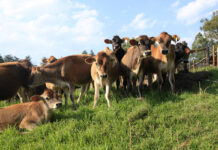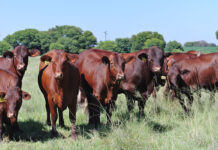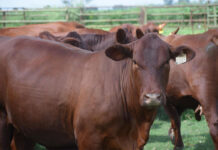

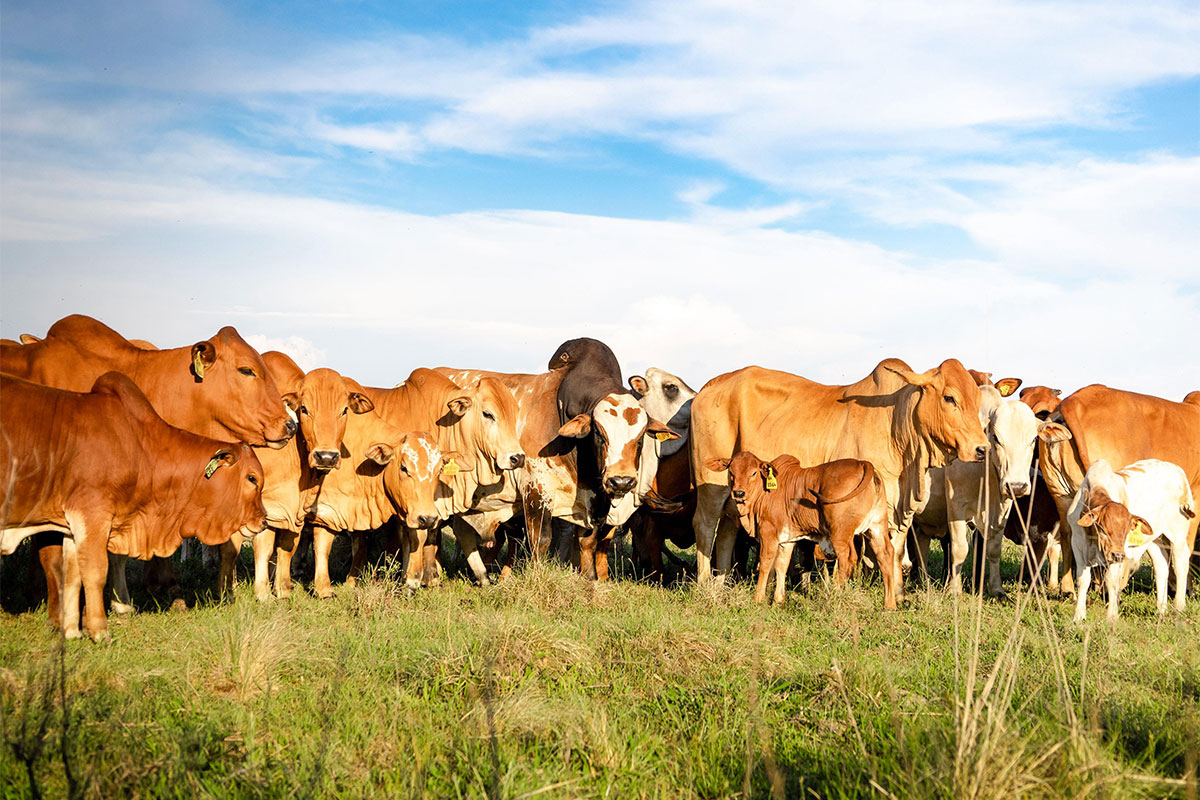
Paul de Wet registered Green Valley Boran on his farm, Honingkloof, in 2022, located near Kestell in the eastern Free State, although he has been involved in beef farming for many years. His company, The PEC Group, managed alongside his wife, Tia, previously carried a large Bonsmara herd, which has since been sold.
Parasite resistance, adaptability, and maternal ability played a key part in the original decision to buy in Boran and have held up under farming conditions since. The farm reintroduced Bonsmara and Brahman cattle for a period and found the Boran easier to manage in every aspect.
“My labour on them is far less than with any other breed. They just keep going on their own,” says Van Niekerk.
Honingkloof spans 3 500ha across the highland terrain of the eastern Free State, with mixed sweetveld and sourveld grazing, with an average annual rainfall of 650mm to 700mm. The winters are harsh, with heavy frost and occasional snow. Those conditions shaped management decisions, particularly around mating season timing.

They have a combined stud and commercial Boran operation with 824 females and 241 bulls, including breeding bulls, developing stud bulls and bull calves. Their large commercial Boran herd runs alongside the registered stud. The farm also maintains an Ankole herd of fewer than 100 animals, kept primarily for breed preservation. The Boran stud now accounts for about 20% of the farming business.
Adaptability remains Van Niekerk’s primary selection focus. Boran are non-selective grazers and self-regulate under both heat and cold. She has experience managing other breeds and says that Boran will graze a camp clean and move on instead of breaking fences to get to patches they prefer.
Dual breeding seasons
Van Niekerk splits the Boran into summer and winter breeding groups. The summer mating season runs from early December to early March. The cows calve in September, October, and November, with weaning between April and June at six to eight months.
The winter mating season runs from mid-May to the last week of July, with calves weaned in December and January. Approximately 80% of the herd calve in summer and 20% in winter.
Van Niekerk shortened both seasons after pregnancy testing revealed that late-calving cows were taking up to two months to cycle again and then missing the next mating season entirely. The summer season was reduced from three months for cows and four months for heifers to a flat three months.
The winter season lasts 75 days to 80 days. Calving season timing was also shifted a month later. Heifers previously calved in July and August when temperatures in that part of the Free State are at its lowest. Calving now runs from September.
Van Niekerk’s natural mating structure uses a ratio of 30 cows per bull, with multi-siring used in larger herds. The operation introduced artificial insemination (AI) last season and found that the use of fresh semen in AI outperformed the natural mating group in that first run.
The ability to use top bulls across the entire herd simultaneously, tightening the calving window and reducing the calving interval, is the main benefit Van Niekerk values. Follow-up bulls are placed after AI to cover returns.
She also runs a dedicated white Boran programme within the stud, with white bulls used exclusively on the white herd. Red and ‘bont’ animals are mated based on Van Niekerk’s assessment of which bull best suits each cow. Her donor cows have been flushed, and embryos have been stored at Absolute Genetics in Bloemfontein. The next step is to prepare commercial Boran cows as recipients for on-farm implantation.
She retains all her heifers. Every heifer calf is grazed back on the veld alongside bull calves until they reach mating age. On the stud side, first mating is at 22 months to 24 months by age rather than weight. On the commercial side, Van Niekerk uses frame and visual maturity to assess readiness. Weight, she says, can mislead. First-calving heifers are placed on a production lick from the time they join the bulls, continuing through pregnancy, calving and their second mating season.
“Getting a first-calver to reconceive can be difficult, which is why supplementary feeding continues through the second mating season,” she says.
The stud is currently achieving a calving percentage of 93% and a weaning percentage of 92%, with an average birthweight of approximately 31kg and an average 205-day weaning weight of 210kg. Inter-calving periods (ICP) across the herd range from around 340 days to over 500 days, which Van Niekerk attributes to the diverse origins of purchased animals.
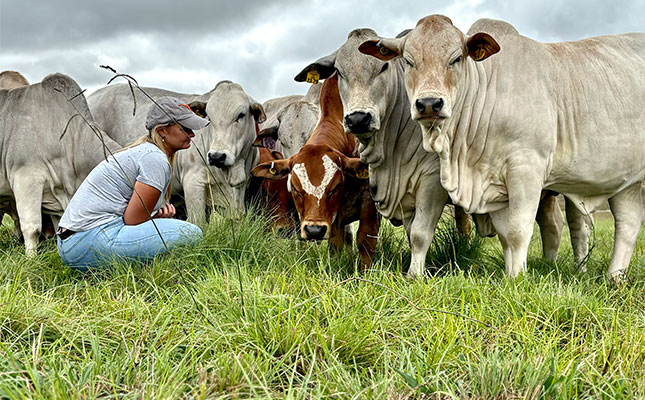
She says newly acquired cattle typically need around two years to fully adapt, and that culling pressure on ICP will increase once her homebred lineage makes up the bulk of the herd. Her target is 370 days.
She adds that data is central to the selection programme. Van Niekerk weighs both cow and calf at calving and again at weaning, calculating a cow efficiency ratio. She submits this data to the Breed Society and uses the expected progeny difference (EPD) feedback directly in selection decisions.
“Measure and know. Know what every cow gives you each year and weigh every calf,” she says.
Her primary selection trait is capacity, which she defines as width, depth, and functional correctness combined. Van Niekerk says capacity links directly to a cow’s ability to milk, raise a calf and reconceive. Medium-frame cows are preferred. The data shows they produce the best weaning efficiency relative to their own body weight and are lighter on the veld. When assessing bulls, the dam’s performance record is the first point of reference.
Her animals going to auction receive no intensive backgrounding, preventing them from being over-finished. They go on standard veld grazing with the same lick as the rest of the herd. A naturally developed animal, says Van Niekerk, settles far more easily into an unfamiliar environment after sale.
Health and hardiness
The biggest seasonal disease challenges in the area are lumpy skin disease and three-day stiff sickness. This year’s heavy summer rainfall led to standing water and elevated disease pressure, particularly among yearlings and two-year-olds. However, she notes that Boran recover from three-day stiff sickness faster than other breeds she has worked with, typically back on their feet within one to two days.
Green Valley’s annual vaccination programme covers lumpy skin disease and three-day stiff sickness for all cattle. Heifers receive two doses of RB51 for brucellosis before their first mating. Bulls are vaccinated annually against vibriosis and fertility tested for brucellosis, trichomoniasis and vibriosis before each mating season.
Calves receive clostridial vaccines while still with the dam, and Bovishield Gold at weaning to manage stress, pneumonia, and respiratory disease. Her parasite control is managed by reading the animals and the season, and tick control is kept to a minimum. Van Niekerk says treating for ticks too heavily prevents animals from developing natural immunity.
“I always say the animals should carry a tick or two. That is how immunity is built. If you over-treat, you take that away from them,” she says.
Honingkloof lies within in a foot-and-mouth risk area. A neighbouring property experienced an outbreak of unknown origin, and the disease spread from there. In response, Van Niekerk introduced strict biosecurity protocols. New animals are quarantined separately for two to three weeks on arrival, re-tested for brucellosis, and pregnancy-checked before joining the herd.
Vehicles and workers are disinfected when moving between farms, and fence-line separation is maintained wherever neighbouring herds are present.
Planning for 2027
Van Niekerk’s five-year plan was to hold a production sale, which has been confirmed for February 2027. In 2025, the stud sold its first animals publicly through the Boran heifer sale and the Hurwitz and Friends auction, where two pregnant heifers were sold. The animals going on offer in 2027 will be selected with the event in mind well in advance and will be mated to bulls she has used before and whose offspring she can assess.
Her auction preparation and marketing will lean heavily on social media. Van Niekerk’s plan for 2027 includes animal-specific content on Instagram and Facebook in the weeks ahead of the event, an online catalogue published before the sale, and an online bidding platform for buyers who cannot attend in person.
“Photos and videos can make or break a sale. People see the animals before they arrive and decide right there whether they want to come,” she says.
Van Niekerk adds that Boran auctions are typically very well supported, even for newer breeders entering the market, and the breed remains community-driven in its progression as one of South Africa’s established beef breeds.
“Breeders will travel across the whole country to be at each other’s sales. Whether they buy or not, they are there,” she says.
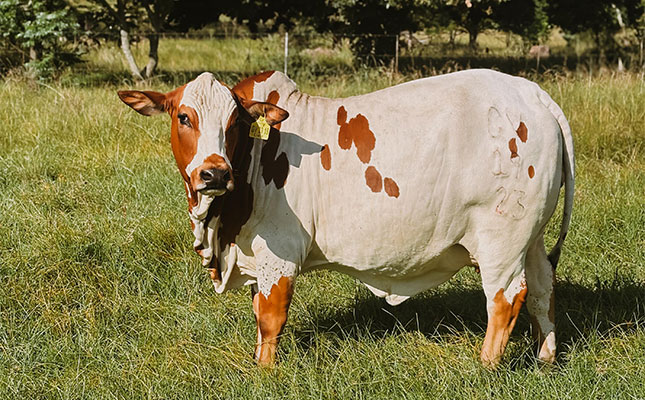
Implementing an embryo programme is the next step in van Niekerk’s breeding plan, with commercial Boran cows being prepared as recipients for embryos currently stored at Absolute Genetics in Bloemfontein. Fixed-time AI across both the commercial and stud sides is also planned for the coming summer mating season.
Her advice for new potential Boran breeders is to do thorough research before making the initial purchase, as these animals lay the foundation for your herd. She says that a functionally correct, fertile cow and a quality bull give a programme something to build on.
Van Niekerk also warns that bulk-buying average animals to reach a number only creates problems that will need to be addressed later. Breeders should keep data, submit to the Breed Society, monitor carrying capacity, and read the animals and farm environment rather than following a fixed treatment calendar.
Green Valley Boran is building a stud around low-input costs, data-driven selection, and a strict focus on adaptability. According to van Niekerk, Intelact conducted an input cost comparison study and found that Boran requires the lowest total input when compared to other major beef breeds, which further motivates her to expand their herd.
With a production sale planned for February 2027 and an embryo programme in the pipeline, the operation is putting its early foundations to the test.
Van Niekerk is #changingperceptions with her growing herd of hardy, adaptable Boran.
For more information, email Annalea van Niekerk [email protected].