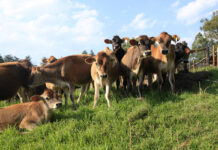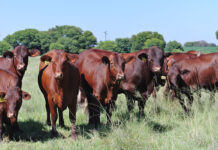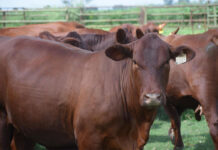
The animals went from the green pastures of Rwanda’s highlands, which receive near-year-round rainfall averaging between 1 000mm and 1 600mm, to the brown veld of Zimbabwe’s Midlands province, a semi-intensive farming zone.
The province receives between 650mm and 800mm of rainfall a year, mainly between November and March, and mid-season dry spells are common. The rainy season is followed by about five months of dry winter conditions.
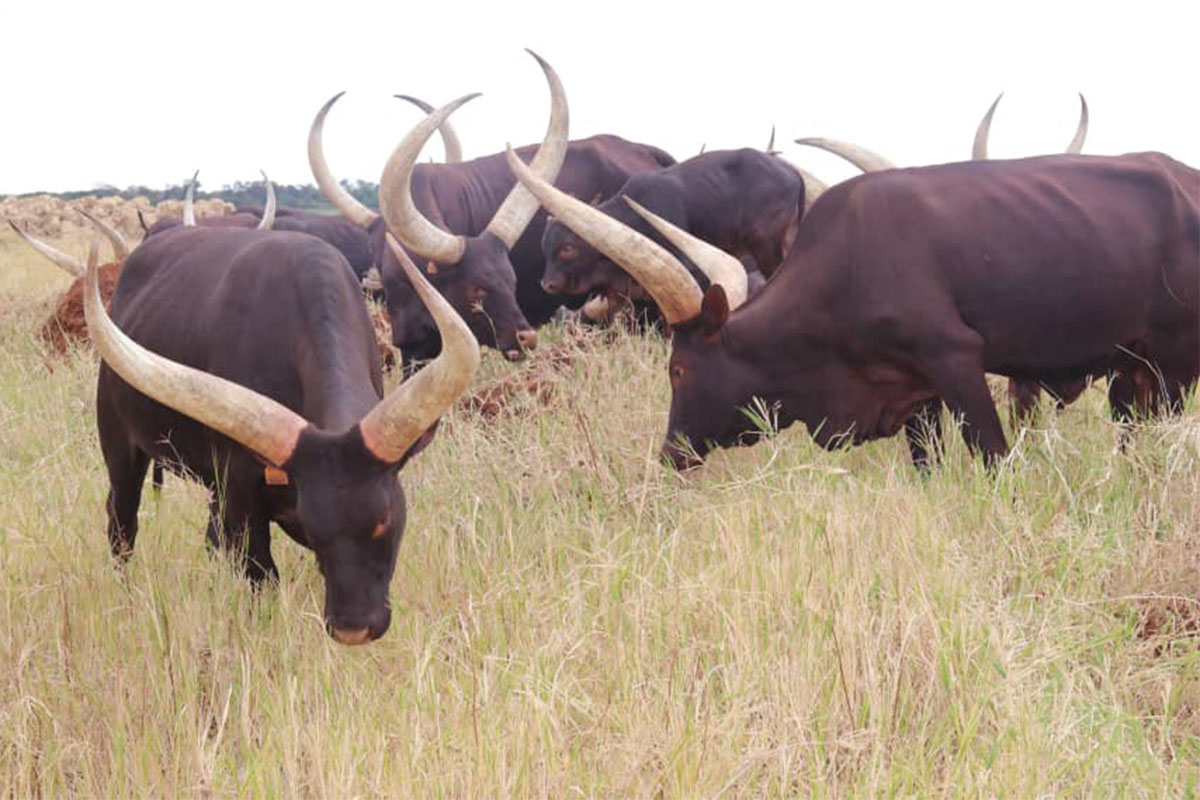
Mnangagwa keeps his Ankole, valued at between US$65 000 (around R1,1 million) and US$300 000 (R5 million) each, on his Pricabe Farm, where he also breeds Bonsmara, Mashona, and Brahman cattle.
In an interview earlier this year with Zimbabwean content creator Wadzanai Manyore for her programme Agricultural New Directions: Agribusiness in Support of Vision 2030, Mnangagwa said his Ankole herd holds sentimental value.

When he visited Rwanda and saw Kagame’s Ankole cattle, Mnangagwa said it was love at first sight for him. Kagame gifted him 17 animals, and five years later, Mnangagwa now has 54 head.
Mnangagwa doesn’t crossbreed or slaughter his Ankole, and he keeps a close count of the herd to ensure records remain accurate.
“They’re not for anything else. They’re just [of sentimental value]. I don’t know what will happen in the future, but for now, the question of eating these cattle is out,” he added.
Adapting to a drier climate
Dr Vicky Zwenyika, who works in the livestock section at Pricabe Farm, also spoke to Manyore.
She said the Ankole found it difficult to acclimatise to the new environment in Zimbabwe, having been used to rainfall for most of the year in Rwanda. She explained that the key to their eventual adaptation was behavioural retraining, seasonal nutrition, and strict genetic isolation.
The first issue that needed to be resolved was the animals’ feed behaviour. According to Zwenyika, they had to train the Ankole to lick salt blocks to stimulate their appetites and encourage them to eat dry feed. They also had to grow pastures for them.
“During the rainy season, we don’t need to supplement. But in winter, when we have limited pastures, we supplement a little so that they maintain their body [condition],” she explained.
She added that nutrition is managed in-house. Maize, soya bean, wheat, and barley stover are baled and mixed with molasses, salt, and other farm-sourced ingredients to give the cattle the right nutrients while cutting costs and operating at a profit.
Handling and health management
A well-fenced paddock was created for the Ankole and has a borehole specifically for them. There are also spray races (walk-through dipping systems) tailored to the cattle’s sizeable horns, which make standard facilities inaccessible.
“The Ankole are handled separately. So, when we want to dose them, vaccinate them, or dip them, we come to the paddock separately,” Zwenyika said.
The province experiences high tick pressure after rain, and Ankole are susceptible to tick-borne diseases, so during the rainy season, dipping takes place weekly using Supadip, and tick grease is used on the animals’ udders, necks, and tails every two weeks. Chemicals are rotated seasonally.
Zwenyika said the animals’ hooves are trimmed before the rainy season to prevent softening and lameness, especially in the bulls.
Scratches or wounds from fighting are treated with wound powder to speed up healing, while water troughs are cleaned and medicated during dipping to strengthen hooves and prevent infection.
Genetic diversification and breeding management
Zwenyika noted that young bulls that came from the farm’s first calving were separated from their mothers to prevent parent–offspring mating.
They also want to introduce new genetics. “So, we’ve got semen from South Africa, which we are going to use on about six of our Ankole heifers through [artificial insemination],” she said, adding that this will introduce unrelated Ankole genetics to diversify the bloodline and help avoid inbreeding.
The large-framed bulls and small-framed heifers pose challenges during mating, so heifers are mated to younger bulls to avoid calving difficulties. Calving is monitored hourly, with trained staff assisting when needed, so losses are minimal. As a result, the farm has achieved a 100% calving rate with the Ankole, according to Zwenyika.
She said they also have a bull management programme, with the bulls kept in a dedicated pen in odd numbers and rotated.
“If one of the bulls is weaker or has already [sired] the number of calves we need for the season, we remove him for maintenance,” she explained.
“We then introduce a new bull to the programme. When we need two bulls, we use three, so that if two are fighting, the third one [remains available for breeding].”
Adding value through dairy
The next frontier for the farm is dairy. Zwenyika said Ankole milk has a high fat content, prompting trials into butter, cheese, and ice cream, and marking a new phase in value addition for the herd.
“I’m very happy that [the Ankole] are doing very well, which means they’re quite adaptable to the conditions in Southern Africa,” Mnangagwa said.