The vast majority of agricultural land in sub-Saharan Africa consists of grazing land, including grasslands, savanna and bushveld.
These grazing areas play a critical role in dry and semi-arid regions where livestock farming forms the core of agricultural production. In such areas, good veld management becomes essential, not only for sustainable production, but also for the long-term survival of a farming operation.
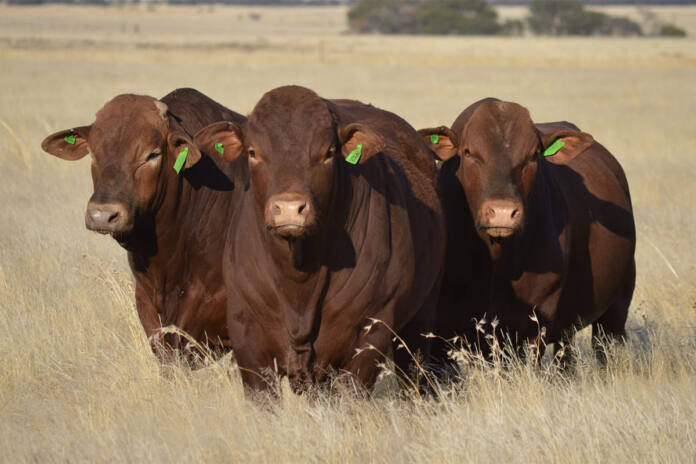
According to Guy Rensburg, Beefmaster stud farmer, the Beefmaster is particularly well positioned for the possible drought South Africa may face. Forecasts indicate a move away from a weak La Niña phase towards a possible El Niño event for the 2026/27 summer season.
Climate resilience under pressure
“El Niño in South Africa is typically associated with hotter temperatures, below-average rainfall, increased drought risk, heat stress on livestock and poorer grazing conditions in summer rainfall regions,” says Rensburg.
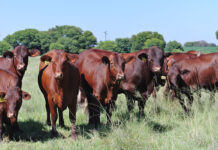
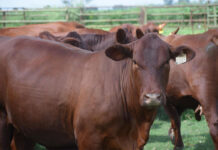
The Beefmaster is a unique three-way composite breed consisting of 50% Brahman, 25% Hereford, and 25% Shorthorn. This genetic combination brings together the best traits of each breed and contributes to improved heat tolerance, disease resistance, fertility, and adaptability across diverse production environments.
Farmers across South Africa believe that the breed’s ability to maintain body condition during drought periods is one of its greatest advantages. While other cattle may rapidly lose mass when veld quality declines, Beefmaster cattle often demonstrate better endurance and recovery ability once conditions improve.

As climate pressure increasingly shapes the future of livestock farming, climate resilience has become one of the most important conversations within the livestock industry. In this environment, the Beefmaster is attracting growing attention for its hardiness and ability to perform under difficult conditions.
Recent South African research conducted by the University of Pretoria, the South African Weather Service, and Wageningen University & Research, Netherlands, into pasture-based beef production, highlighted the growing pressure climate change could place on cattle farming systems.
The study found that future climate conditions may reduce average daily gain in feed-constrained environments, particularly in hotter regions where grazing resources become limited. Importantly, the research indicated that Composite and Sanga-type breeds showed stronger resilience in hot production areas.
Benefits of composite genetics
Composite breeds are intentionally developed by combining two or more breeds to capture the best traits from each. The aim is to improve productivity, fertility, adaptability, heat tolerance and overall efficiency. Unlike ordinary crossbreeding, these breeds are stabilised over generations to form a consistent genetic package.
According to Rensburg, the Beefmaster is an excellent example of such a composite breed. The combination of Brahman, Hereford and Shorthorn genetics gives the Beefmaster the heat tolerance of the Brahman, combined with strong beef production qualities, fertility and hardiness under difficult veld conditions.
The breed combines traits such as good fertility, heat tolerance, good temperament, strong maternal ability and efficient veld performance. One of the breed’s greatest strengths remains its ability to maintain body condition during drought periods and under lower-quality grazing conditions.
With many parts of South Africa experiencing hotter summers and more frequent heatwaves, cattle capable of coping with heat stress while maintaining reproductive performance are likely to play a key role in the future of beef production.
Importance of veld management
Effective grazing management remains critically important, especially with the possibility of an approaching drought cycle. The stocking rate of a farm largely determines the ecological sustainability of a farming operation. The recommended stocking rate is calculated as the level at which peak animal performance, measured by average daily weight gain, is achieved.
This recommended stocking rate is therefore not necessarily the maximum number of animals that can be maintained, but rather the level at which optimal production occurs. Factors such as veld degradation, drought, animal type, and grazing systems must continuously be taken into account.
South African Beefmasters are purposefully bred and selected to perform optimally under local climate conditions. Every Beefmaster is the product of dedicated breeders’ strict selection and performance testing, with the focus on functional efficiency.
The well-known ‘Rocking B’ brand mark behind the shoulder and along the back of a Beefmaster bull may only be applied to bulls that meet the required breed standards. This brand mark serves as a guarantee from both the society and the breeder that the bull is registered, performance tested and approved.
The Beefmaster has been a recognised cattle breed in South Africa for 40 years and enjoys the support of the Agricultural Research Council and SA Stud Book.
As climate pressure continues to reshape the future of livestock farming, the Beefmaster is increasingly being viewed as more than just a beef breed. It is becoming part of a broader conversation about sustainability, resilience and the future of South African agriculture.
For producers preparing for the next possible drought cycle, hardiness (which is one of the Beefmaster six essentials) and resilience may ultimately become some of the most valuable traits.
Together with the high potential nature of the breed, the Beefmaster remains a profitable choice irrespective of seasonal conditions.