
Schutte’s introduction to Ankole cattle came at auction. She saw the bull Tshinakaho and told her husband to buy him,but he declined. She saved through 2018 and bought her first three animals, a bull and two females, from Lumarie at the national Ankole auction. She credits breeder Jacques Malan and embryo transfer specialist Dr Morné de la Rey for becoming mentors from early on.
“I saw heritage, Africa, resilience and an animal that can stand in a harsh landscape and still look like royalty,” she says.
The decision carried risk. Schutte entered one of the country’s more specialised and expensive breeding programmes without a partner or co-investor, in a space that remains male-dominated.
“You must know your animals, know your numbers, know your strategy, and be willing to take the punches,” she says. “It was never a hobby for me. It was a long-term genetic, conservation, tourism and legacy strategy.”

She now runs the breeding programme with her son, Ehrus Lubbe, and Natasha Benade, who heads the genetic operations.
South Africa’s Ankole population traces back to a narrow founding base. The original genetics were sourced from Uganda, moved to the Ol Pejeta Conservancy in Kenya to comply with disease restrictions, and the resulting embryos were imported into South Africa. The first live animals were born here in 2005. The entire national herd descends from three bulls and 22 cows.
Schutte has worked with foundation bloodlines linked to breeders, including President Cyril Ramaphosa, Lasarus and Lumarie, and holds deep respect for the role those genetics played in establishing the breed locally. But pedigree, she says, only takes you so far.
“A famous name on paper does not raise a calf,” she says. “A cow does.”
The herd today
Kilima Horned Heritage Programme is run as a stud and genetics operation on a private game reserve near Tzaneen, Limpopo. The operation is not run as a conventional commercial beef concern.
Schutte currently carries 65 registered fullblood Ankole: eight foundation cows, 12 heifers, 29 calves, six bulls and 10 young bulls. A further acquisition from Embryo Plus’s second-wave of newer genetics is all on foot, representing a distinct genetic layer being built into the herd over time. Forty surrogate cows support an ongoing ovum pick-up programme, with 23 embryos currently in production.
“We are building layers of genetics,” she says.
The herd is managed within a game reserve environment using a semi-intensive rotational camp system that balances grazing pressure against the value of the animals. It runs a year-round supplementation programme, with different nutritional support provided to breeding bulls, pregnant cows and calves according to their needs. Schutte notes the important distinction between hardiness and management.
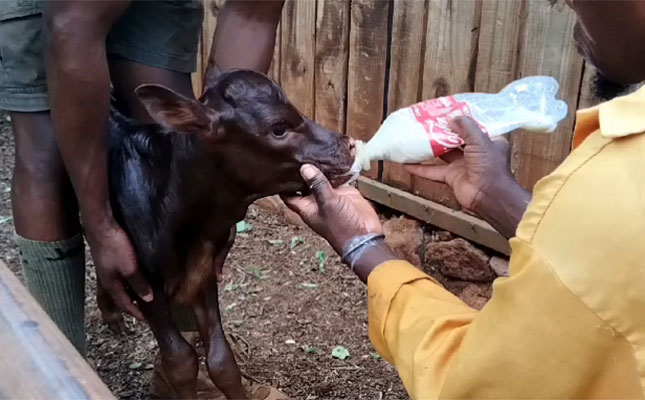
“Low input does not mean no input,” she says. “Their hardiness gives you an advantage. It does not permit you to farm lazily.”
Because of the Ankole’s horn span, handling infrastructure at Kilima has been adapted accordingly. Gates, crushes, loading ramps, race width and turning space all require specific consideration.
“You cannot handle Ankole exactly like ordinary cattle and expect no problems,” she says. “Good facilities reduce stress, injury and chaos. With Ankole, chaos can become expensive very quickly.”
Heifers are bred from approximately two years of age, subject to body condition, frame development and overall maturity. Schutte does not chase early breeding age.
“I want my heifers to be physically ready and structurally ready before they go under breeding pressure,” she says. “I would rather be slightly patient than damage a good female by rushing her.”
Playing the long game
In early 2025, Kilima sold Alexander, the first of Kilima, at the Lasarus production auction for R750 000. The four-month-old bull calf was sired by 49” BE 502 out of 46” E 734, carrying new Ugandan genetics not yet widely available in South Africa.
“Buyers were not only buying the calf in front of them,” says Schutte. “They were buying into the genetic direction behind him.”
Schutte currently markets through selected production auctions, private relationships and stud-to-stud transactions. Her flagship sales event will be an auction hosted in conjunction with Veewinkel, planned for 2030.
“By then, the second wave of newer genetics should have matured, bred, proven themselves, and given us enough depth to present something that is not just pretty, but meaningful,” she says.
When buying in animals, Schutte uses three scouting categories. Genetics and registration come first through fullblood status, DNA, pedigree and strategic fit. Functional correctness is also analysed through the feet, legs, frame, and movement of the animal. Finally, breeding value for the programme, including how related or unrelated the animal is to what she already carries.
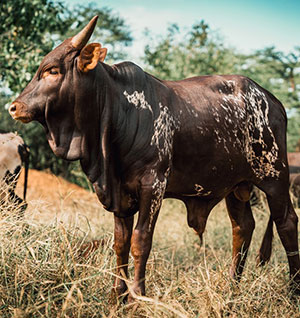
“I am not buying ornaments,” she says. “I am buying building blocks.”
Her current buyer profile spans established Ankole breeders, game ranch investors and lifestyle buyers who understand the prestige and long-term value of the breed. The Ankole also functions as a tourism multiplier on her reserve: the animals carry a story and add depth to the hospitality environment. On the broader commercial question, Schutte is measured.
“Right now, Ankole is largely a prestige and stud investment breed in South Africa. That is the honest answer,” she says. “But long term, there is potential beyond that. The meat is lean, the breed is hardy, and there is value in hides, horns and ecotourism.”
Her advice to new entrants is straightforward. Start slowly, buy quality, not quantity, understand pedigrees and work with breeders who will tell you the truth.
“Avoid buying only for horns. Avoid thinking this is fast money,” she says. “What determines success? Patience, genetics, good females, proper records, proper facilities, and the discipline to think long term.”
Building for the future
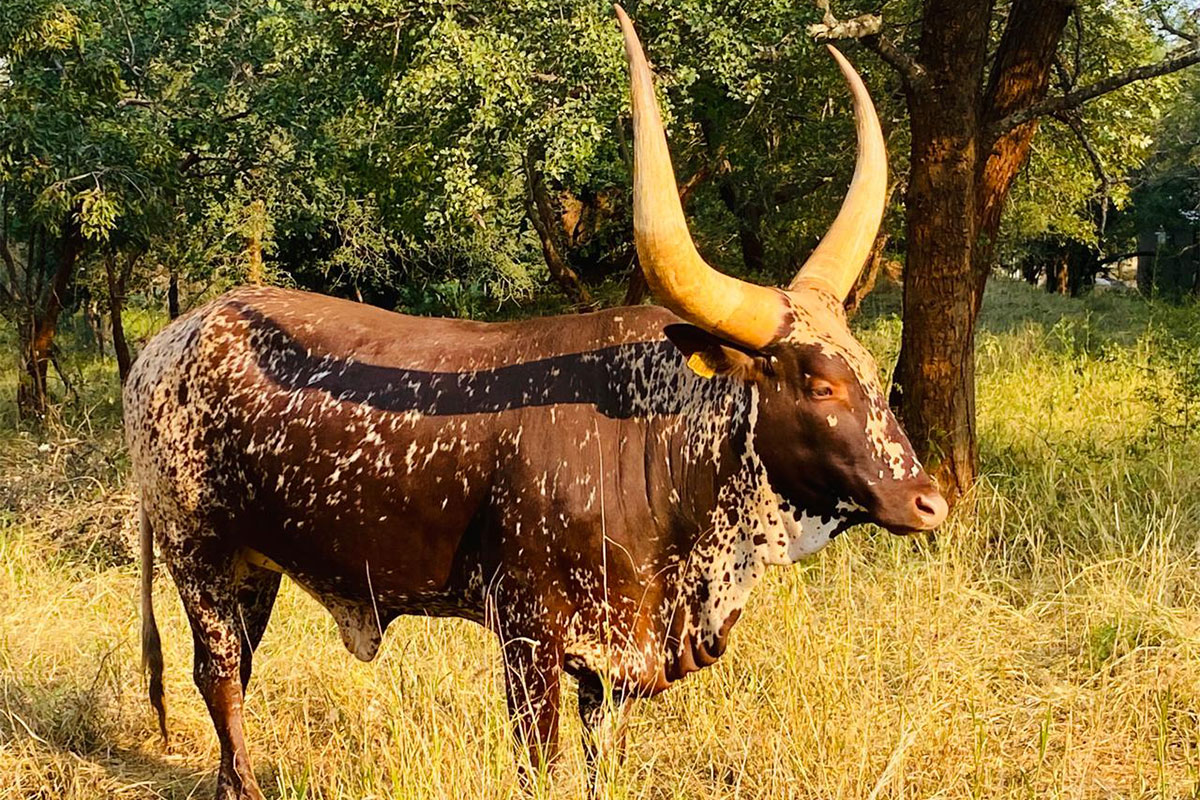
Horn length and shape matter at Kilima, as they do across the breed, and Schutte does not pretend otherwise. In Ankole, horns are part of the breed identity, and they affect value. But they are not the primary selection criterion.
“A beautiful cow that does not breed is just an expensive painting in the veld,” she says.
After five years of breeding, Schutte’s selection order runs as follows: fullblood status, correct registration, fertility, functional structure, maternal ability, temperament, and then the horn package. The cow must carry, calve, mother, survive and repeat.
Of the six recognised horn shapes in the breed, Schutte’s personal preference is the Nkome. Most of her herd currently carries the Ricumitana shape. The newer second-wave genetics introduces further variation that she is observing before drawing conclusions about horn expression.
The strategy at Kilima centres around newer genetics acquired from Embryo Plus in 2024, representing entirely new Ugandan bloodlines. The import process is neither simple nor cheap. South Africa’s disease protocols require that Ankole genetics enter the country through embryo only, produced under strict veterinary controls. Of the second-wave embryos imported, only approximately 35% produced calves on the ground.
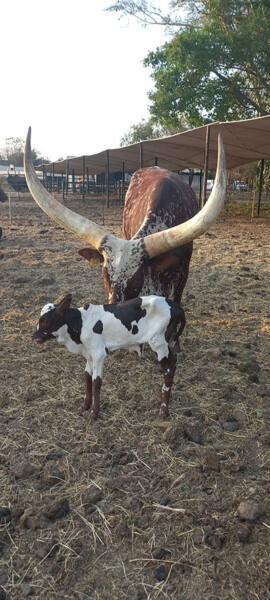
“When people see a young calf with second-wave, newer genetics, they must understand what sits behind it,” says Schutte. “It is not just a calf. It is years of work, risk and cost.”
A moratorium on further imports through Kenya means no third wave of Ugandan genetics will enter South Africa for approximately six years. The breeders holding second-wave animals are, by default, sitting on a strategic resource.
Managing inbreeding risk runs alongside all of this. South Africa’s Ankole population started from three bulls and 22 cows, and the narrow founding base creates real constraints on mating planning. The newer genetics increase the effective population size and slow the rate at which inbreeding accumulates.
“We must plan matings, know pedigrees and avoid overusing one bull, no matter how good he is,” she says. “The breed must still look like Ankole. We are not trying to change it. But we must protect it from becoming too narrow.”
The Kilima programme is still in its early chapters. The second-wave animals are young and unproven, but Schutte is patiently awaiting the growth of her young Ankole that will certainly hold strong genetic characteristics and set the tone for the years to follow.
“I would rather stand at the beginning of something brave than at the end of something ordinary,” she says.
For more information email Dr Sareta Schutte at [email protected].