

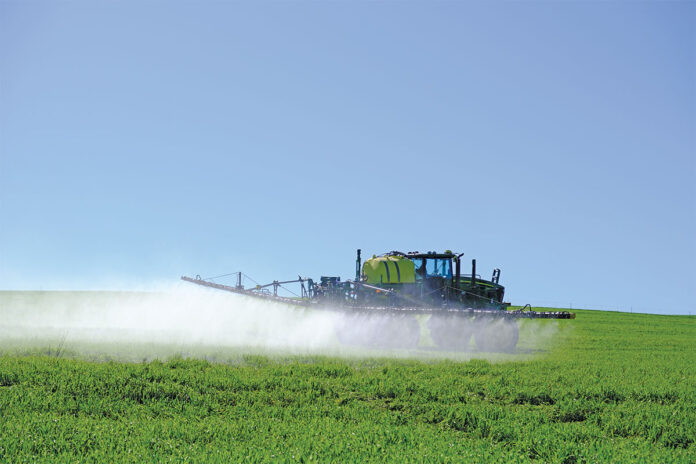
Despite all the technological advancements in agriculture, weed management remains one of the most significant challenges farmers have to cope with in crop production. Weeds are plants that grow where they are not wanted. These unwanted plants often outcompete crops for nutrients, light, and water, and can reduce crop yields and quality.
Weeds that show resistance to herbicides present ongoing challenges to farmers and the agriculture sector globally.
According to the global Herbicide Resistance Action Committee’s (HRAC) website, hundreds of cases of herbicide resistance have been documented in more than 100 weed species around the world.
South Africa has not been spared. Herbicide resistance is becoming a critical challenge for producers, and is increasingly threatening farm productivity, says Dr Elbé Hugo, category marketing lead of herbicides at Corteva. She stressed the urgent need for integrated weed management during a recent farmer road show.
According to Hugo, herbicide resistance occurs when a weed population evolves into having the ability to survive applications of herbicides that were previously effective.
“This is the result of repeated selection pressure over time. When the same mode of action is used consistently, susceptible weeds are controlled while naturally tolerant individuals survive and reproduce. Over successive seasons, these resistant individuals dominate the population, rendering certain herbicides less effective or even ineffective.”
Economically, herbicide resistance significantly impacts producers by increasing weed management costs, reducing yields, and necessitating additional herbicide applications.
Managing resistance is not just a short- term cost, but a long-term investment, says Elriza Theron, advocacy and communications manager at CropLife South Africa.
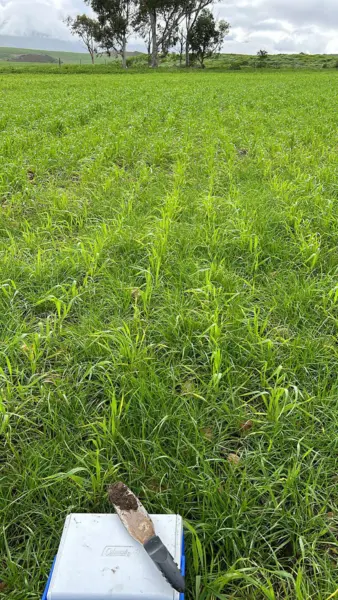
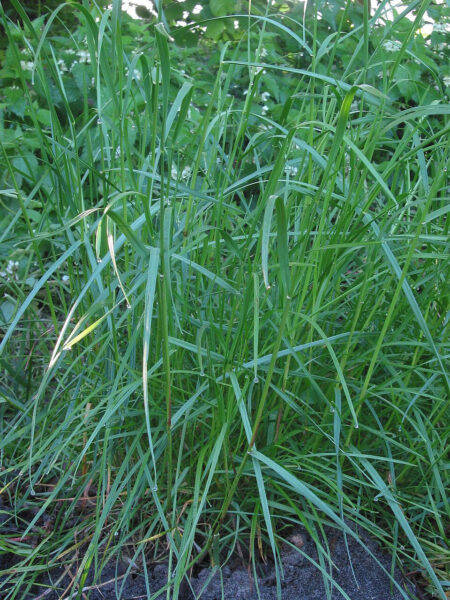
Dirk Uys, independent crop protection consultant from Agbridge, points out that farmers in the Swartland wheat region have, for many years, faced major herbicide resistance challenges with weeds such as ryegrass (Lolium spp).
“Although herbicides are available, these solutions must be used cautiously as newer alternatives are becoming scarcer, more costly, and complicated to develop. This underscores the importance of implementing integrated weed management systems, where diverse herbicide modes of action are combined with agronomic practices, including well-planned rotation systems to outsmart weeds and sustain long-term control. Herbicide resistance can be beaten by managing the system,” says Uys.
According to Maryke Craven, technical lead of herbicides at Syngenta, the world finds itself in an era of herbicide-resistant weeds.
“Farmers will have to familiarise themselves with the type of resistance they will find in the field. You cannot control the ‘target site’ type of resistance by just increasing the dose. Farmers have to look at changing the active ingredients and looking for supporting control methods. Another important aspect to take cognisance of is that the movement of implements between farms can transport weeds from one farm to another.”
Craven explains that the resistance mechanism refers to the method by which a resistant plant overcomes the effect of a herbicide. The mechanism present will influence the pattern of resistance, particularly to the cross- resistance profile and the dose response.
Herbicide resistance mechanisms have been classified into two main groups: target-site resistance, and non-target-site resistance. She says there is a difference between the two types of resistance.
“Target-site resistance occurs when herbicide binding is blocked at its specific site in the plant, while non-target-site resistance involves broader mechanisms that prevent the herbicide from reaching or affecting its target.”
Management strategies
Although herbicides remain the most effective single weed control method, relying solely on chemical control is unsustainable, Theron warns.
According to her, rotation of different mode-of-action herbicides, adhering to recommended application practices, and simultaneously implementing integrated weed management strategies to reduce weed densities and enhance crop competition are of great importance to ensure long-term sustainability.
During the recent Corteva roadshow, Chris Preston, professor of Weed Management at the University of Adelaide in Australia, warned that herbicide resistance is not just a chemical issue, but a broader management challenge requiring an integrated approach. Drawing on Australia’s experience with herbicide-resistant weeds, he argues that South African producers face similar challenges.
“Herbicide resistance is not just about the product you choose. It is about the entire system you implement. Rotation of herbicide modes of action is essential, but on its own, will not solve the problem. Integrated weed management, combining chemical, cultural and mechanical practices, is the only sustainable way forward,” says Preston.
Proper application is important
Preston points out that alternating between different herbicide groups reduces selection pressure on any single mode of action, thereby slowing the development of resistance.
“This strategy must be supported by broader agronomic practices. Crop rotation plays a vital role by enabling different herbicide programmes and disrupting weed life cycles. The use of cover crops can suppress weed emergence by limiting light and space, while strategic tillage can assist in managing weed seedbanks. In addition, optimising time of planting and planting density can give crops a stronger advantage over weeds.”
Preston stresses the importance of diversity in every aspect of weed management, from cropping systems to herbicide use.
Hanlie Geldenhuys, agronomy lead at Syngenta South Africa, says another key point is the importance of correct herbicide application, as in many cases, resistance is accelerated not because products fail, but because they are not used optimally.
“Suboptimal rates, poor timing, and inadequate spray coverage allow partially resistant individuals to survive and reproduce. It is important to get the basics of herbicide application right.”
According to Geldenhuys, the following aspects are important:
- Correct timing of herbicide applications; Herbicides should be applied when weeds are small and actively growing and not under stress;
- Strictly adhere to recommended label rates and instructions;
- Use adequate water volumes for proper coverage;
- Use adjuvants and water softeners;
- Avoid unlabelled herbicide mixtures. These mixtures can reduce efficacy through antagonism, meaning that neither herbicide may function at its full potential;
- Maintaining clean and well-functioning spray equipment is also vital to prevent ineffective applications and the unintended spread of weed seeds;
- Plant certified seed;
- Reduce weed densities by limiting weed seed returning to the seedbank.
Ineffective herbicide applications can lead to creeping resistance, where sub-lethal doses, often due to sprayer issues such as blocked nozzles, can gradually build resistance within weed populations.
“This may require increased application rates in subsequent seasons to control weeds that survive sub-lethal doses,” says Craven.
Integrated weed management
The globally increasing threat of herbicide resistance is further worsened by the continuous loss of registered herbicides.
As a solution, integrated weed management represents a paradigm shift, recognising that integrating multiple strategies may significantly reduce weed populations, enabling herbicides to perform optimally.
According to Theron, integrated weed management may be defined as the combination of two or more weed-control methods at low input levels to reduce weed competition in a given cropping system below the economic threshold level.
“Integrated weed management is a system in which two or more methods are used to control a weed. These methods may include cultural practices, natural enemies, and selective herbicides.”
There are several reasons why an integrated weed management programme can offer solutions to control challenges:
- Although one method of weed control may be effective and economic in one situation, it may not be true for all situations;
- No single herbicide is effective in controlling a wide range of weeds;
- Continuous use of the same herbicide creates resistance in escaped weeds, causing a shift in the population;
- Only one method of weed control may lead to an increase in the population of a particular weed.
Some challenges to this method is the waiting periods after and between applications; the unavailability of new products; and the slow development of new active ingredients in herbicides.
In conclusion, regular testing for herbicide resistance remains crucial, says Theron.
For more information, visit hracglobal.com, or email Elriza Theron at [email protected], Maryke Craven at [email protected], Hanlie Geldenhuys at [email protected], Dirk Uys at [email protected], or Jacqueline Mayer at [email protected].