
Twee Neefs Dohne Merino has continued to entrench itself in South Africa’s livestock industry.
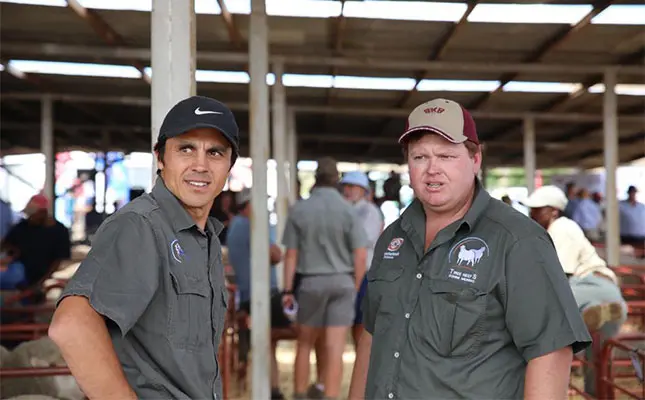
Twee Neefs consists of three studs that are managed separately by co-owners Gawie van Zyl and Steyn Steenekamp. This is to ensure strict selection for fertility and good conformation.
The Olmar and Roosterhoek Dohne studs are situated in the Burgersdorp and Venterstad areas, and GWG Dohnes is situated in Barkly East. Combined, the three studs consist of approximately 1 250 stud ewes.
Breeding dynamics
Apart from stud and commercial sheep farming, the enterprise also includes beef cattle. Steenekamp also runs a sheep feedlot in Burgersdorp.
“The hardiness of the Dohne Merino breed is what first attracted us to the breed, and we have never looked back. The Dohne breed has come a long way when it comes to producing high-quality wool, and together with the meat component it has always had, it makes it one of the most versatile breeds to be farmed. With wool prices as good as they are, it is very important to keep the correct balance and not let the meat component get compromised,” says van Zyl.
“Our goal is to breed fertile Dohnes with good maternity traits that are hardy and adaptable. The properties where the stud ewes are kept range from very flat, hot, and dry bossieveld to cold mountainous sourveld. All the young rams, after weaning, go to Barkly East.”
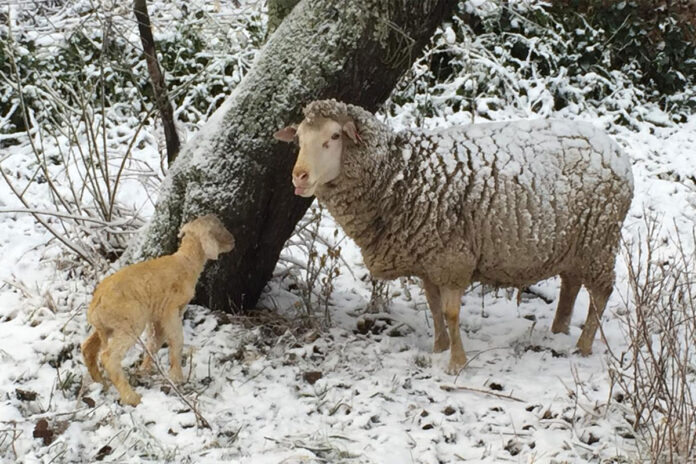
The very cold winters in Barkly East help with selection for hardiness in the rams, and from these very cold, sourveld conditions they normally adapt well anywhere in the country.
“Because fertility is very important to us, we do not keep ewes that are not pregnant with scanning. We make use of artificial insemination on the stud ewes as well as natural mating on the flock ewes. Our target is to try and maintain a weaning percentage of above 130% on the ewes; all ewes that do not wean a lamb are taken out of the stud as well as the flock. The Dohnes have an ‘open source’ system that is an excellent way to promote your best flock ewes to the stud, and by doing so you get the best adapted ewes to your own environment and farming principles to apply in the stud,” says van Zyl.
Stud management
“The Dohne breed is one of the leading sheep breeds when it comes to strict record-keeping. By using these breeding values to fine-tune whatever trait needs to be worked on under each individual need, it makes it possible for every Dohne farmer to have this tool in his/her hand when selecting and buying his/her rams or ewes for their specific needs.
“We also use BKB’s DSS system to help us make the best choices when it comes to which ewes are the most profitable under our farming conditions. With rising input costs as it is, it is important to farm smarter; there is no room for error, therefore we always try to feed strategically and make sure that a specific need is addressed at the right time when necessary, rather than just feeding. There will always be fluctuations in prices, but quality always sells; therefore, it is important to know what the market wants and to make sure that you never compriomise the quality that your farm produces,” says van Zyl.
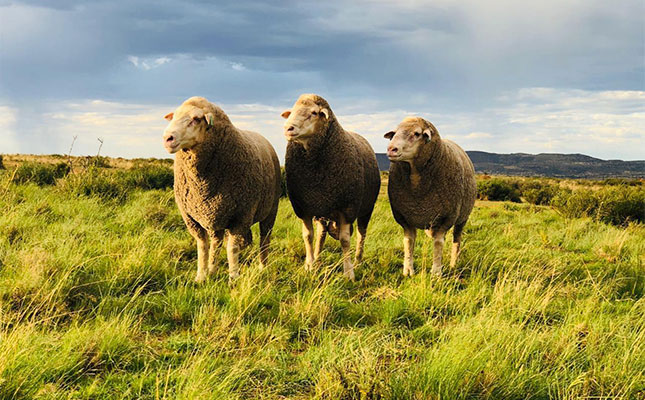
He highlights that the best reward or compliment stud farmers can get is when another farmer tells them what a positive impact or positive turnaround their rams or ewes had on the farmers’ flock.
“We see it a lot with the small communal farmers that buy Dohne rams from the farm and come back the next year to tell us how well the lambing went or how well they did with the wool; it is these small steps that make the Dohne breed grow. It will always be our goal to breed adaptable dual-purpose Dohnes that can produce quality lambs at weaning. The positive feedback from feedlots regarding Dohne lambs in general is evidence that the Dohne breed is moving in the right direction,” says van Zyl.
With more meat export markets opening to South African products, the future of sheep farming in South Africa looks bright.
For more information, contact Steyn Steenekamp on 082 438 8991, or Gawie van Zyl on 072 374 1914.