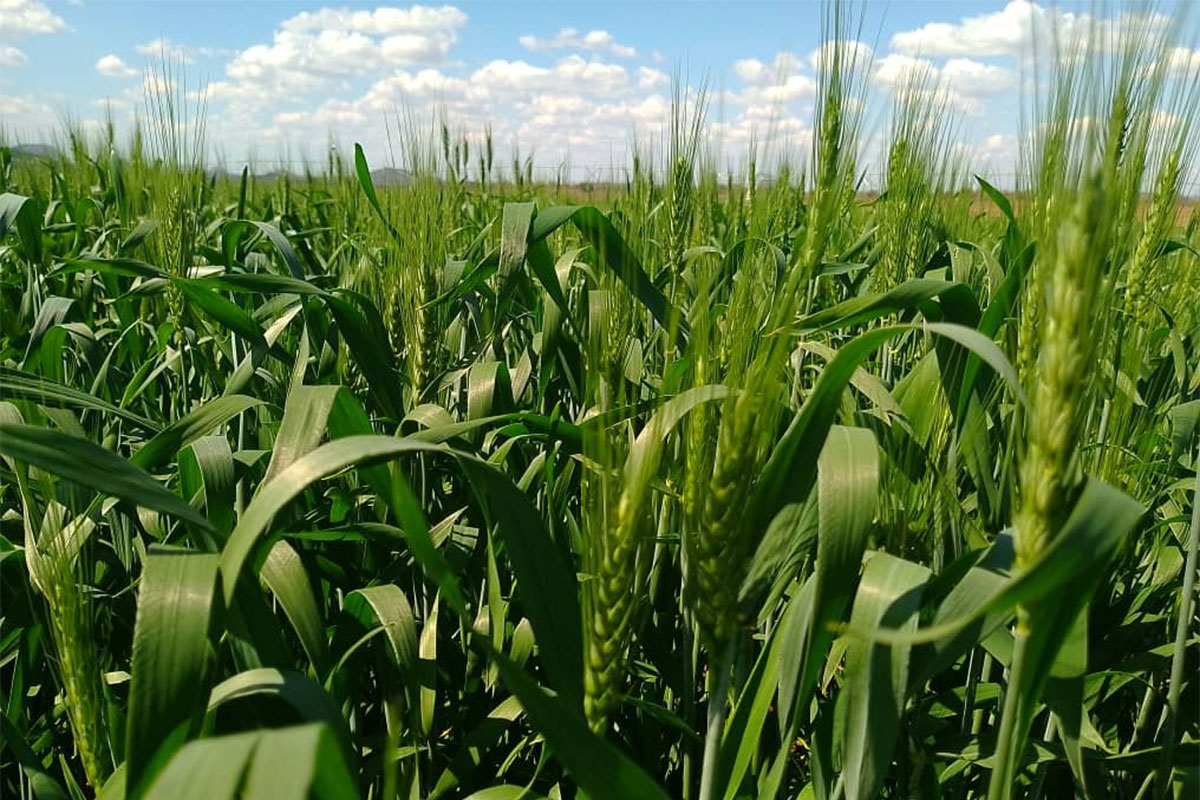
A presentation by the Minister of Lands, Agriculture, Fisheries, Water and Rural Development, Anxious Jongwe Masuka laid out the agricultural plan. According to a government statement released afterwards, wheat will be cultivated on 125 000ha this year.
“The ‘Wheat Plan’ aims to produce 662 500t, surpassing the national annual requirement of
615 000t. To ensure the successful implementation of the plan, the government will closely monitor 21 critical enablers, including essential resources such as power, water, seed, fertiliser, and fuel,” the statement said.
“Financial support mechanisms encompassing farmer payments, financing, and insurance, operational efficiency factors like mechanisation, coordination and contract farming, risk management strategies addressing migratory pests, land issues, security, and veld fire management were among the issues on the table. Capacity building, policy and regulatory frameworks, soil management, marketing and monitoring, and evaluation will be tracked. A comprehensive whole-of-government and sector approach will be employed to achieve the set targets,” the statement explained.
Wheat production on an upward curve
In 2025, Zimbabwe recorded its highest-ever wheat output of 578 059t, surpassing the 2024 record of 562 091t.
Wheat farmer Clever Matutu of Whanu Farms in Gweru, is now preparing to grow wheat after having contributed to last year’s bumper harvest. Matutu told Farmer’s Weekly that he also grows maize, soya beans, potatoes, and cabbages on his 150ha property. He said he started growing wheat in 2017 on just 15ha and had reached 60ha by last season. The farmer cultivates 45ha under centre-pivot irrigation and 15ha with sprinklers.

He avoids late planting because it pushes the crop into hot, humid periods when disease pressure spikes.
“If you plant early, by the time it gets hot it would have reached its maturity. Another way is crop rotation. If you plant in the winter, you do wheat, and then in summer, you do maize. That tends to put pressure on the crop in terms of diseases. So, to break the disease cycle, we go wheat-soybean-wheat. If diseases do appear, which are rare on this farm, we turn to chemical sprays,” adds Matutu.
He also says he has a dam on the farm which holds 3,7 million megalitres and is currently spilling. Based on his water use, he expects that to carry him through six seasons, even when there are back-to-back droughts.
Matutu says he began growing wheat in 2017 after officials from the Ministry of Lands, Agriculture, Fisheries, Water and Rural Development visited his farm. They told him about Command Agriculture – a private sector-backed subsidy programme launched in 2016 to boost food-grain production. Farmers received fertiliser, agrochemicals, seed, and diesel. From his perspective, the scheme, which has been modified, was the best thing ever for Zimbabwean agriculture, slashing production costs.
Matutu says the program was tweaked to channel loans through financial institutions, but farmers still deliver wheat to the state-run Grain Marketing Board (GMB). Late payment for wheat deliveries, however, cripple operations. GMB says the treasury has not released all the funds to pay farmers.
“Interest rates are quite high – about 20% if you borrow in US dollars and 30% to 40% if you borrow in ZIG (Zimbabwe’s currency). Private buyers do purchase wheat, paying upfront, but their prices are only about 60 % of GMB’s.
He said he occasionally sells part of his crop to private buyers to fund operations, a workaround that backfired in 2023 when he sold them his wheat and incurred a loss.
Hurdles pile up for wheat growers
Matutu says wheat farmers grapple with several challenges, especially procuring combine harvesters. In his area they hire the combine harvesters from a local bank, AFC Land Bank, formerly Agribank. He noted that AFC’s harvester fleet is shrinking, so farmers queue for the few available units during the brief harvest window before rains arrive.
Another worry, he says, is that the country’s power utility, ZESA, switched farmers to prepaid electricity for irrigation last December. With payments for deliveries already delayed, that’s a challenge, though farmers have taken it up with the government. Farmers have always been on the prepaid system for domestic power use, but the issue is different when it comes to agriculture use considering the huge amounts of energy required for irrigation. Matutu says that if these challenges are solved, Zimbabwe could begin exporting wheat.
Export window exists
“The market is always there. We know that there is some instability in Russia and Ukraine, which are traditionally big producers of wheat. So, we have got a window to be able to export,” says Matutu.
The Ukraine conflict has seen the government seeking ways to increase wheat production through the Zimbabwe Emergency Food Production Project (ZEFPP) implementation in partnership with the Food and Agriculture Organisation (FAO).
The ZEFPP is funded through a US$25 million (about R410 million) African Development Bank (AfDB) facility which was designed to boost food security, specifically focusing on increasing wheat and oilseed production by providing 17 000 farmers with quality seeds, fertiliser, and financial support through the Seed Revolving Fund. In Zimbabwe, the revolving fund is administered by the AFC Land Bank.
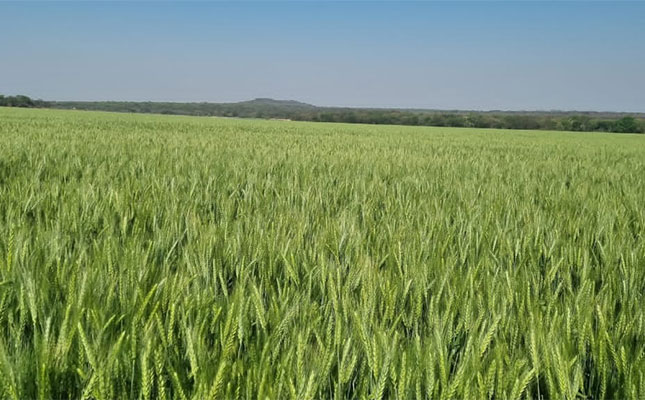
Chizivano Shava, the chairperson of Pikinini Jawanda irrigation scheme located in Mwenezi in Masvingo province, led the co-operative to grow its first-ever wheat last year, thanks to funding from the AfDB. He told Farmer’s Weekly that they started growing wheat in 2025 and the AfDB funds which came through the AFC Land Bank had given them a head start.
“Our last funding was a loan from the AFC of US$11 628 (R190 744). This was used for wheat planting. We started by planting wheat on 8 June 2025. We planted 46ha and raised 69t,” says Shava.
He says this year 60ha are earmarked for winter wheat production, but rainy season delays have set back preparations. But, he is hopeful they will do better than last season, something that Zimbabwe’s cabinet wants across the sector through its recent planning via the winter agriculture production plan.
Motivation is clear
Wheat is the second-most important cereal after maize in the food security basket in Zimbabwe.
According to a wheat advisory note published by Seed House, Seedco for the benefit of farmers, in the past Zimbabwe used to achieve some of the highest national average yields of wheat between 5-6t/ha, compared to the current global average of 2,5t/ha to 3t/ha.
The advisory authored by two Zimbabwean agriculture experts, John Basera and Tegwe Soko, states that if the country gets its management right, it can achieve in excess of 10t/ha in the high potential areas. Some good farmers are already getting above 8t/ha and some even up to 11t/ha, add the two experts.
It (the advisory) also said the optimum time for planting winter wheat is between mid-April and the last week of May, and even earlier in the Lowveld. According to Basera and Soko, sometimes planting time can be extended to mid-June, but it is not normally recommended. Delayed planting results in a loss of about 50kg/ha/day after May.
“Adhering to the optimum planting time has some agronomic explanations and rationales. Rains which come after the wheat has reached physiological maturity causes sprouting, grain germination in the ear, and results in downgrading of the wheat due to a decline in baking qualities,” adds their advisory.
It also said disease pressure, especially for rust diseases, normally rises when temperatures start to warm up around August and an early planted crop would have been given a good head start without disease pressure.