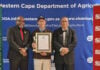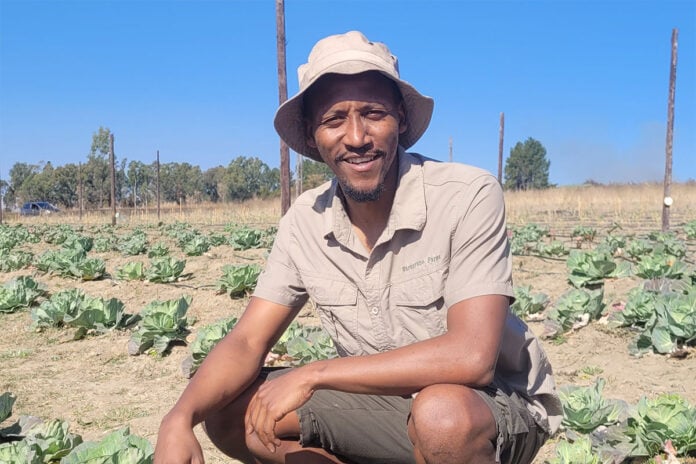
Being named a winner in the Woolworths Youth Makers 2026 programme has opened up a new world of possibilities, and he is eager to put his newfound knowledge to work.
There is an infectious energy about Nthato Motlana as he talks about everything from experimenting with new vegetable varieties to the finer details of irrigation, pest management, and compliance. Every new discovery seems to spark another idea, another improvement to make or another opportunity to pursue.
Behind the optimism is a businessman who is learning that successful farming demands more than hard work and ambition. It requires patience, precision, and a willingness to question how things have always been done.
Since leaving the corporate world in 2023 to farm full-time at Marapyane farm in Lanseria, Gauteng, Motlana has immersed himself in learning the technical and commercial intricacies of vegetable production. His selection as one of the winners of the Woolworths Youth Makers 2026 programme has accelerated that journey, giving him access to expertise and mentorship that are helping him transform his operation into a business capable of supplying major retailers.
For Motlana, however, the real reward is not only the prospect of securing a new market, but also discovering just how much more his farm can achieve.
Motlana currently cultivates only 1,5ha of the 150ha farm, leaving much room for expansion. The property was originally bought by his grandfather, Nthato, who farmed lettuce hydroponically. While Motlana’s father, also named Nthato, inherited his father’s green fingers, he sought out a more stable career in farming for Hans Merensky, a renewable bioresource company with vertically integrated value chains. Unsure of the direction his career should take, Motlana pursued a B.Com degree after school and entered the corporate world.
However, in 2022, he started farming part-time on the original Marapyane farm. “It started as a side hustle, but I soon realised there were far greater opportunities in agriculture than in the corporate world. The only way I could reap those rewards was if I invested 100% of my time on the farm.
“It was a big risk to leap from a corporate career, and my father was not overly pleased with my decision. But I’ve always wanted to be an entrepreneur, and farming has always resonated with me. I have such fond memories of being on the farm with my grandfather. It’s so satisfying to produce food, and it teaches you so much about life. Most importantly, that you can’t rush things and need to keep learning,” says Motlana.
It is this pursuit of knowledge, taking every opportunity to do things better that is guiding Motlana towards a sustainable future in agriculture.
The first crop Motlana planted was spinach, but with generally low returns and vastly fluctuating prices, he added baby marrows after realising that this vegetable generally maintained its price at the market. He then added sweet peppers, with cabbage also cultivated in winter.
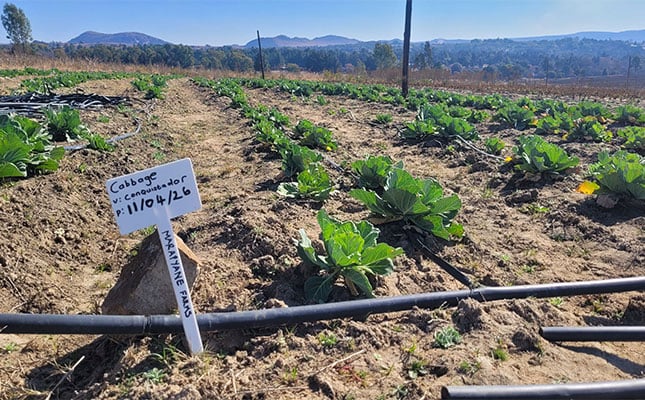
He regularly trials new crops and cultivars to identify those that will thrive. Earlier this year he did a trial on sugar snap peas to determine how late in the season they could be planted to possibly benefit from a better marketing window.
“It’s very important to do these kinds of trials. Each farm has a micro climate that could allow for a significant shift in a production window, which could result in better returns at the market.”
Around half of the seedlings Motlana plants are produced on the farm. This translates to around 150 000 seedlings each year.
The vegetables are sold to independent fresh produce stores in Johannesburg. Being in Lanseria, Motlana is closer to these stores on the northern side of Johannesburg than the Joburg Fresh Produce Market, situated south of the city.
“These stores usually source their produce from the Joburg Market, so I realised that if I supplied them directly it would save transport costs for both of us. The demand from the independent stores is high, so there is a lot of room for me to expand production and meet their demand.”
Viability through compliance
The Woolworths Youth Makers programme is bringing an exciting development to the Marapyane farm. Motlana highlights that the retailer had an honest discussion with the Youth Makers at the start, stating that the award did not automatically translate into an offtake agreement. Instead, the Woolworths team would work with Motlana to bring his business in line with the standard and level of compliance the retailer requires from all suppliers.
He has been working with the Woolworths team for the past year to improve production practices on the farm and secure Global GAP compliance. Global GAP compliance is a globally recognised agricultural certification system that sets voluntary standards for safe, socially, and environmentally responsible farm production. A major focus has been on integrated pest management (IPM) to reduce synthetic chemical use and record-keeping.
The IPM expertise that has been made available to Motlana through Woolworths has been a particular boon. When he started farming, his aim was to produce organic vegetables.
“But I quickly realised that it was not feasible due to the pest pressure. So my focus instead shifted towards sustainable farming practices, using fewer synthetic chemicals and fertilisers.”
Motlana has been introduced to biological pest control, which includes releasing predatory insects into the vegetable field to prey on insects that damage the produce. “I had heard about predatory insects, but didn’t realise how affordable and effective they were. But it also requires additional record-keeping to time their release so that they are not affected by the synthetic chemicals that are used.
“I was very nervous to use biologicals for the first time. The predatory insects can fly away, and you are not sure if spending all that money is worth it. But there is no risk without reward. At this stage I need to learn as much as possible to understand the best way forward.
“Overall the biological pest control has been very successful, especially if I apply it early in the season to keep the pest pressure low. If infestation levels do rise, I use synthetic chemicals to protect the crop,” he says.
Motlana also started covering the soil in the rows with mulching plastic, which helps retain soil moisture and reduces weeds. This has decreased the volume of herbicides needed on the farm.
Steep learning curve
Bringing the farm to a point of compliance has been a steep learning curve for Motlana. “When you start farming from scratch, there is a lot you don’t know, and you don’t always follow best practice. I’ve had to invest a lot into the farm to get it to a point where it would pass a Global GAP audit. It’s money you spend that you don’t necessarily see the return on investment on immediately, but you do reap the rewards.
“The farm is managed much more efficiently now that we have stringent record-keeping in place, and this will lead to an improvement in productivity over time.
“When applying fertiliser, for example, I know more or less what I should be applying, but if I’m not measuring and recording it then I can’t keep track of what has actually been applied.
“Previously I would spray pesticides without accurately measuring the dilution rate. Now that everything must be measured and recorded, I am working far more accurately. Better management of the production practices results in better yields because things are being done as they should. It’s not a guess.”
What surprised Motlana most about the compliance process was how detailed it is.
“Global GAP does not just look at chemical use and management but also staff welfare. We’ve had to do a lot of health and safety training, and the whole process comes with a lot of admin. It is surprising how much focus is placed on factors that don’t have a direct link to producing crops. But these things all lift the standards on the farm.”
While Motlana admits that he is pedantic by nature, the Woolworths journey has helped him track and record actions on the farm, which now helps him create a complete picture of where practices can be improved.
“Doing little things wrong consistently is where you can lose a lot of money over time. If you plant two baby marrow seeds in one hole when you are producing seedlings, for example, it can add up to a lot when you are producing 150 000 seedlings. Or if a dripper is leaking, I’d rather replace it because you can lose a lot of water over time.”
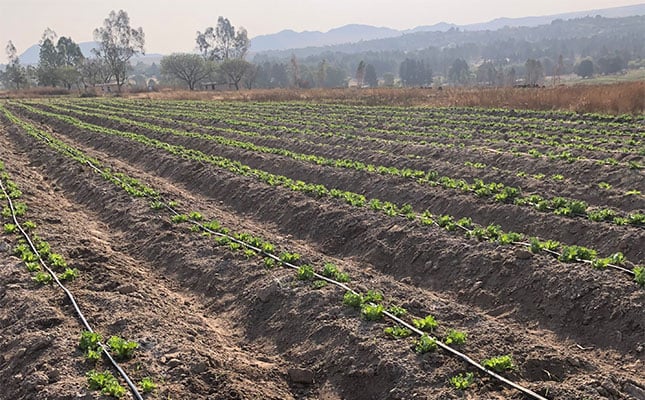
With water being a critical resource on the farm, Motlana has spent much time optimising irrigation practices. Drip irrigation has replaced micro-irrigation, as the former is more efficient.
“Drip irrigation sends water directly to the base of the plant where it is needed. It also helps decrease disease pressure. With micro-irrigation the water sprays across the whole plant, which can contaminate the plant on a larger scale if the water contains pathogens.
“The drip irrigation is gravity-fed so I save on electricity costs, whereas the micro-irrigation requires water to be pumped. I can also track exactly how much water a plant is getting because water is not lost through evaporation like it is with micro-sprinklers. Then you are able to see how much water it takes to produce the specific crop and can match water availability to production,” he says.
The challenge of growth
Access to finance remains a hurdle for Motlana, even with the credibility gained through the Woolworths programme.
“It’s a chicken-and-egg situation. You can’t scale up without funding, but financiers are hesitant to fund you unless you have sufficient scale.”
The meticulous record-keeping Motlana has started implementing is expected to pay dividends in discussions with financiers.
“The first thing investors ask for are financial records, so it’s important to have those in place.”
Labour management has also presented challenges. When production volumes were lower, Motlana relied heavily on temporary workers, who were not always available when needed. Maintaining consistent quality required continuous training and close supervision. As the business has grown, he has been able to employ four permanent workers, supplemented by 10 to 15 seasonal employees during peak periods.
Learning to succeed
One of the greatest benefits of the Woolworths programme has been Motlana’s exposure to experienced commercial farmers and industry specialists who have challenged him to think differently about his business.
“Farmers do not necessarily readily share their secrets, but they do ask questions that help you gain insight. One farmer asked me how much income I derive from one square metre. It’s something I’d never considered calculating. But once I did, I could better articulate and measure the value of the farm when speaking to financiers.”
An invitation to an Enza Zaden seed day opened his eyes to the possibilities of extending production windows through careful cultivar selection.
“I always assumed that all varieties of a crop would have the same planting window. But I learnt that by planting different varieties at different times, you could potentially extend production throughout the year. It’s very technical to match the different varieties to the different growing windows, and seeing it in action was eye-opening.”
A more challenging aspect of the Woolworths programme, and one that places Motlana out of his comfort zone, has been the push to establish a social media presence.
“I’m quite shy, so it’s not something I’m drawn to. But it’s important to have a digital footprint and create awareness about how food is produced.”
He is nevertheless careful to balance time spent online with the demands of running the farm.
“Social media is not where I get my business. I need to take my produce to buyers so that they can physically see my quality, and I can prove that I can deliver consistently. The farm is therefore a business-to-business enterprise, not a business-to-consumer enterprise. So spending a lot of time creating content is not necessarily bringing me a return on investment. It is a balancing act to create content for social media while spending the required time on actually producing vegetables. I have the content on my phone because I take videos and photos of the farm and the produce all the time. But I need to make time to convert it into content for social media,” he says.
For Motlana, the greatest value of the Woolworths programme lies in the improvements he has made to his farming practices.
“The programme has given my business more credibility. But the biggest benefit is that my produce now meets Global GAP and even Woolworth’s standards.”
He is particularly excited about the coming production season, when he hopes to see the results of everything he has learnt and implemented. While he recognises that farming will never be without its challenges, his advice to aspiring farmers reflects the same determination that has brought him this far.
“Just start. Don’t wait for the perfect time. Put in the effort and make things happen, because it won’t happen for you. Use all the resources at your disposal like the internet and podcasts to learn as much as you can. Look at where you are positioned and let that guide you on what you produce,” he says.
With 148,5ha of the farm still uncultivated, Motlana has ample room to grow. But rather than rushing to expand, he is concentrating on getting the fundamentals right, confident that the knowledge he is gaining today will stand him in good stead as the business grows.