

The burgeoning field of soil science is uncovering ever more examples of the rich symbiosis between plant roots and the soil that surrounds them. It also clears up any doubt about the importance of soil analysis as a means to fine-tune crop nutrition strategies, irrespective of whether a farmer grows annual or permanent crops.
“Soil analysis is definitely worth the expense,” says Dr Karen Truter, technical marketing specialist of crop nutrition at InteliGro Crop Solutions and formerly an agronomist with fertiliser supplier Nitrophoska in the Western Cape. “Putting it in perspective, a grain grower invests between R6 000 and R11 000 per hectare in maize input costs, of which fertiliser can comprise about 30% to 40% of the total production cost.
“Compared to this investment, a soil analysis costs relatively little (R200 to R300), but it supplies the information on which one of the biggest cost decisions of the season is based,” she tells Farmer’s Weekly in an interview, adding that a soil analysis forms an important foundation for a fit-for-purpose crop nutrition programme.
While it is possible to compile a basic fertiliser programme without the benefit of soil samples, by basing calculations on the expected yield and the crop’s nutrient use, “that only gives you a general guideline and is less accurate”, she explains.
“Soil samples provide important information on the current nutrient status, pH, and other factors that influence the nutrient availability. With the benefit of a recent complete soil analysis, which include macro- and microelements, a plant nutrition programme can be compiled with greater accuracy. Without soil samples, there is a risk of either applying too much fertiliser, which results in unnecessary costs and potential environmental impacts, or applying too little, which can limit yield and profitability.”
How it saves money
Truter says the biggest saving associated with soil sampling lies in the fact that soil analyses prevent unnecessary applications.
“For instance, if phosphate levels are already sufficient, the grower can reduce the quantity of MAP without sacrificing yield potential. Even a relatively small reduction in fertiliser application would already justify the cost of the soil analysis,” she says.
The flip side, however, is equally important. “Soil analyses also show where the deficits are. If, for instance, one part of a land has a shortage of potassium or sulphur, those nutrients can then be applied where they are needed most, instead of blindly applying them on the entire farm.”
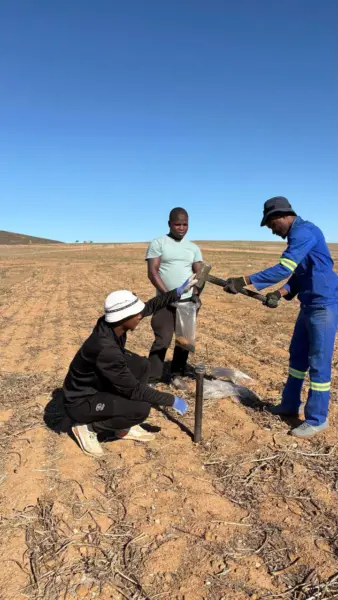
While multiple soil samples are necessary to give a complete picture of a farm’s soil nutrition, Truter says that the cost of the analyses varies according to the approach, whether only a few samples are taken per land, or whether grid soil sampling is done.
“While grid soil sampling can be a bigger initial cost, the cost per hectare usually decreases as bigger surfaces are sampled,” she says.
SA’s soil realities
Any crop farmer – be it of annual or permanent crops, summer or winter grains – will be familiar with the significant variations that can occur in soil characteristics over even a small area.
“Soil is rarely uniform. Soil type, texture and nutrient availability can differ significantly over even a relatively small area,” Truter explains, noting that the level of variation differs from place to place.
In the areas where she worked as a field agronomist (mainly small grains and row crops) farmers would typically take one soil sample per land, which resulted in an overall average of the land’s soil characteristics.
“These samples are not sufficient to establish the variations within a land. Grid sampling, however, changes the picture. By taking soil samples on a pre-determined grid, for instance every 1ha, 2ha or 4ha (depending on what the grower and agronomist wish to achieve), the spatial variation in soil fertility becomes apparent. This makes it possible to identify areas with deficits or excessive nutrients.
“When this information is available, corrective liming and fertiliser programmes can be planned far more accurately. In combination with variable-rate application technology, nutrients can be applied where they are needed, and in the quantities that each land requires. Not only does it improve the effectiveness of the fertiliser, it also helps to optimise input costs and reduce the risk of over- or under fertilisation.”
Number of required samples
Truter says the number of soil samples taken on any particular farm depends on the grower’s aims, the variations within the lands and the technology available on the farm.
“If the grower has equipment available that enables the application of lime and/or fertiliser at variable-rates, grid sampling will usually be the best option. These soil analyses are typically repeated every three to four years, and many growers divide their farms in thirds or quarters, so samples of one particular part of the farm can be taken and plant nutrition strategies adjusted annually. In areas with big soil variations, this approach is even more valuable,” she explains.
In cases where a grower does not have variable-rate technology, it is often more practical and cost-effective to take a consolidated soil sample per land or management zone.
“It still provides a good departure point for fertiliser recommendations, even if it cannot identify the finer variations within a single land.”
She also urges growers to not only rely on soil samples, but also seek other sources of data that could shed light on soil fertility levels.
“If yield maps, satellite imaging or land observations show that certain parts of a land constantly perform worse or better, additional soil samples can be taken specifically in those areas. This helps to establish whether the variations are as a result of soil fertility or other factors such as densification, drainage or diseases,” she says.
However, most important when it comes to the number and density of soil samples taken, says Truter, is that it is compatible with the decisions the grower wants to achieve with the data.
“The more specific the management and application of inputs, the greater the value of more intensive soil sampling.”
Taking a proper sample
The quality of a soil analysis begins with the quality of the sample itself.
“Even the best laboratory cannot do a representative sample if the sample wasn’t taken properly,” says Truter.
For grains, this involves taking a number of sub-samples in the same land or management zone, and blending them thoroughly and evenly to make a composite sample.
“It is also important to take samples at the same depth throughout, since nutrient levels can vary according to depth.”
One advantage of soil samples over plant or leaf samples she points out, is that soil is relatively stable, which means it does not have to reach the laboratory immediately after collection.
The Fertilizer Association of South Africa’s fertiliser manual recommends that as much information as possible should be noted down along with the soil sample to enable the best possible recommendations.
These include the date of the sampling, land size, cultivation methods, current and prior crop, previous fertilisation strategy, the previous season’s yield, any challenges, date of planting (in the case of permanent crops), irrigation system (if applicable), past liming, soil depth, root depth, soil consistency, permeability, structure, slope and aspect, rainfall, and other climate characteristics.
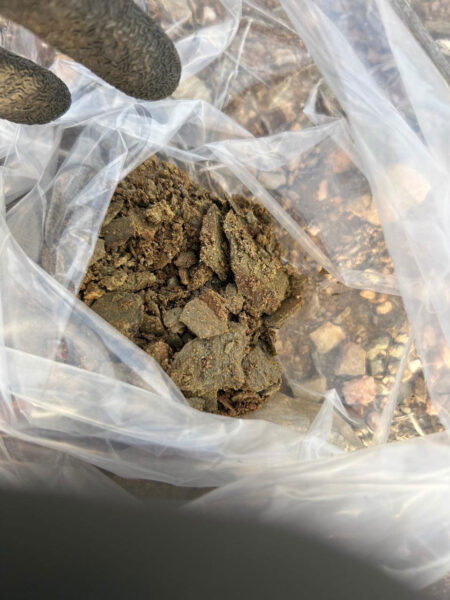
It also stresses that samples should be placed in a clean plastic bag, not in a bag that previously contained fertiliser, salt, baking soda, or other substances. When consolidating multiple sub- samples from the same land, the different samples should be mixed evenly until the composite sample contains about 1kg of soil.
It is also important that soil samples are always taken at the same time of year and in the same locations during successive years, to ensure an accurate record of changing soil conditions.
Selecting a laboratory
Truter urges growers to consult an agronomist or technical advisor to help them select a laboratory and ensure that the most relevant tests are requested.
“It is not easy, as a grower, to judge the quality of a laboratory yourself. However, accredited laboratories work according to standardised methods and quality processes, and should therefore provide reliable and accurate results. Most important, however, is that the correct analyses are requested.
“These tests depend on the soil type, soil pH, crop and the recommendation methods followed in the particular production region. This is where an agronomist or technical advisor can add significant value,” says Truter.
However, laboratories are manned by humans, and humans make mistakes.
“It is important to judge the results critically,” she says. “If an analysis turns out completely unexpected or doesn’t relate to what is observed in the land, it is worth discussing the result with the laboratory or your agronomist.
“Most laboratories keep soil samples for a certain period after they have been analysed, which means a re-analysis can be requested if there are doubts over the results.
“A soil sample is only as valuable as its interpretation. A reliable laboratory, combined with good technical advice, gives growers the best foundation to make informed fertiliser decisions,” says Truter.
One way to help ensure quality data is to inquire whether it is certified by the Agri-Laboratory Association of Southern Africa (AgriLASA), a voluntary certification body that receives monthly samples for analysis.
“Results from the participating laboratories are processed statistically. It is every laboratory’s responsibility to ensure that the quality of it’s work is acceptable. Certificates are issued annually by AgriLASA,” states the manual. It also mentions that several AgriLASA-affiliated laboratories also take part in international quality programmes.