
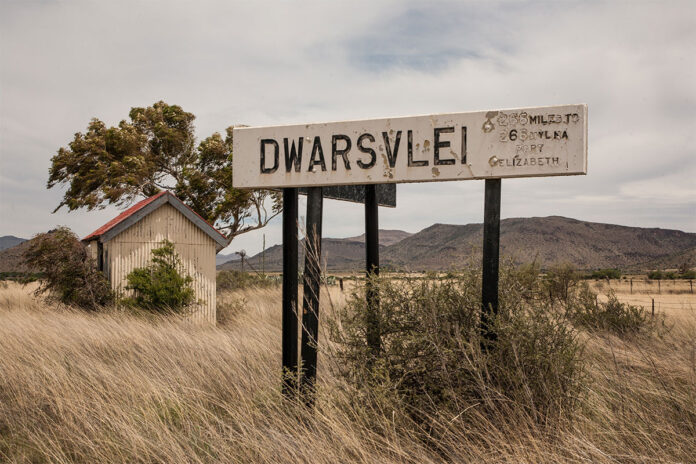
Dwarsvlei Farm, in the shadow of the Renosterberg just south of Middelburg in the Eastern Cape, has played an unusual role in South Africa’s history. A century ago, it was part of the largest Thoroughbred stud farm in the Southern Hemisphere, owned by Randlord Henry Nourse.
There was stabling for 270 broodmares and stallions, much of which still stands. Another 500 of Nourse’s racehorses were spread between Kalkfontein and Rietfontein (later bought by Gary Player) on the Orange River.
The great racing stallion Greatorex, the most famous of Nourse’s horses, is buried somewhere on the farm. He was Champion Sire of South Africa from 1911 to 1914, and then again from 1917 to 1922, earning Nourse and others a fortune in stud fees.
A Mansion for army Officers
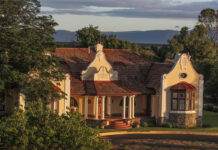
Nourse built a rather splendid two-storey mansion with a sprung-floor ballroom for the pleasure of the 7 000 British army officers at Grootfontein up the N9 highway just outside Middelburg. It’s possible he knew many of them.
During the Anglo-Zulu War, he commanded Ferreira’s Horse, and during the first Anglo-Boer War, he raised an irregular force called Nourse’s Horse.
He and Ignatius Ferreira (after whom Ferreirasdorp, the first gold mining camp on the Witwatersrand was named), then ran a mail coach service from Kimberley to Lydenburg, Barberton and Newcastle.
In 1886, Nourse founded the Kambula Gold Mining Company on the Reef, then the Henry Nourse Gold Mining Company.
During the second Anglo-Boer War, Nourse served as chief staff officer of Colonial Forces at the Cape. Lord Kitchener mentions him in his despatches.
Nourse developed a passion for horses. In 1900, he bought Dwarsvlei and went into horse breeding at a scale no one in this country had ever seen before.
The High Plains
That said, the high plateau areas of the Eastern Cape Karoo had long been associated with horse breeding and Thoroughbred studs.
In 2010, late equine veterinarian Dr Chris Marlow (based in Cradock) wrote a paper for the Journal of the South African Veterinary Association on how this came to be.
“No rail link existed from Cape Town to Kimberley and consequently everything – goods, commodities, men, women and children – were routed through Port Elizabeth [now Gqeberha].
“From there all transport was either ox-drawn, horse-drawn or on horseback to Grahamstown.
“It then moved via the old Colesberg road to Bedford, over the escarpment to the relatively disease-free, high-lying Cradock, Schoombee in the Middelburg district, and Colesberg with its many hostelries along the way, before crossing the Orange River into the Orange Free State en route to Kimberley.
“By this time, outbreaks of African horse sickness, which had been a serious and constant threat since the early 1700s, ensured that horse breeding, with any certainty or continuity, could only be carried on in the high-lying uninfected areas.
“It is therefore not surprising that the majority of the Thoroughbred studs in South Africa were established and situated in the Eastern Cape interior until well into the 1960s.”
Clink of Spurs and Crystal
During the Anglo-Boer War, Grootfontein was a military camp, but Nourse’s timing in building a swanky clubhouse was off.
The mansion was completed in 1910, and in 1911, Grootfontein was transferred to the Union government to become an agricultural college (and later, an important knowledge source of equine husbandry).
So, the officer class only enjoyed Dwarsvlei’s lovely amenities for less than a year. (Half close your eyes, and you can imagine the clink of spurs and crystal glasses, the swish of ladies’ dresses, hoofbeats and neighs, and the laughter of uniformed officers.)
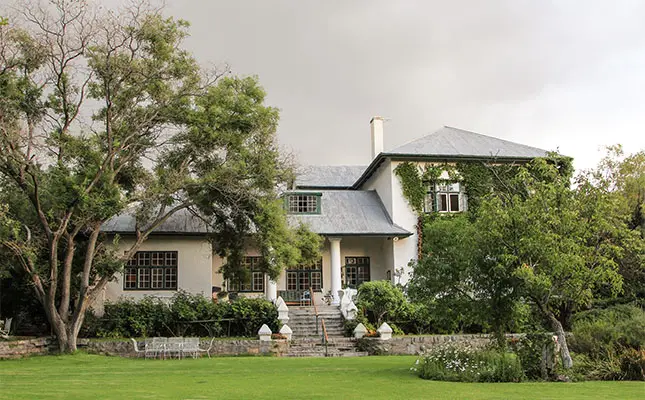
Dwarsvlei remains one of the Karoo’s more striking buildings: solid, graceful, and in summer, surrounded by white roses. It stands close to a dense poplar forest and the older farmhouse, built decades before.
We have visited Dwarsvlei several times, and on each occasion, have gleaned something new from the owners (the Van Lingen family) or managers.
We learnt that Nourse never actually lived at Dwarsvlei, but made irregular visits.
He would then sleep over in the mansion, ironically in the smallest and most austere room in the house, on the first floor. There is no history of his wife, Petronella Preller, ever visiting Dwarsvlei.
An Immaculate Farmstead
Nourse was something of a tyrant when it came to neatness on the farmstead.
The yards in front of the stables had to be raked twice a day, whether he was there or not. If Nourse arrived and found a leaf or a solitary blade of grass on the raked area, he would parade it around to shame the person who worked there.
The place must have been incredible to see 100 years ago, with paddocks full of yearlings, stallions, geldings, colts and fillies. And it wasn’t only a horse farm.
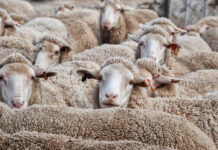
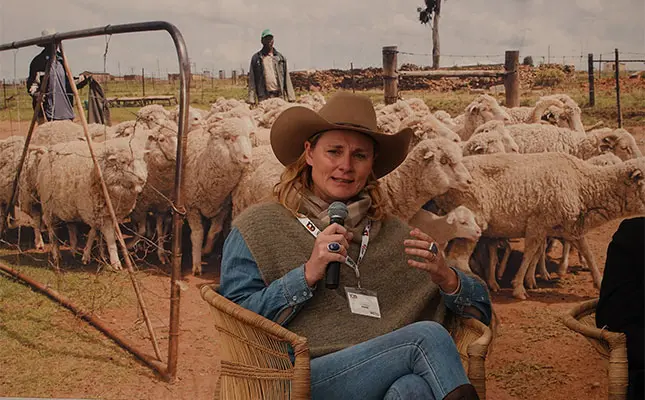
Nourse also farmed Merino sheep, ran a Jersey cattle stud, and farmed so-called ‘purebred’ chickens.
He supplied Middelburg with fresh produce from Dwarsvlei’s extensive fruit orchards and vegetable gardens.
Nourse died in 1942. He was childless. At the time of his death, according to Marlow, there were 1 000 horses in training. Everything was sold at a dispersal sale.
The brochure read: “It will be totally unnecessary for the new owner to invest any further capital in equipment and development. Nothing that money can buy has been spared to make Dwarsvlei the African Premier Stud.
“The famous Rhenosterberg Mountain is on the farm and is an excellent source of water from mountain streams which contribute to feed the magnificent dam and irrigation scheme built on the farm.”
Dwarsvlei’s Next Chapter
The property was bought by another Randlord, Nourbert Erleigh, who achieved notoriety almost immediately, being arrested and jailed for five years for ‘salting a gold mine’ with some other associates.
Part of Dwarsvlei’s land – Eselvlei on the other side of the N9 – was sold to pay for his legal costs.
The land and the house stood empty for many years, until they were sold again to John van Lingen in 1963.
For the first time ever, this grand old mansion was inhabited on a full-time basis.
When Van Lingen died in 2008, he passed it on to his children. His son Andrew bought out his sisters and started farming Merino sheep and ‘red’ cattle.
Andrew and his wife Wendy, who had started a wool duvet business, stayed on their farm, Temple, near Steynsburg.
We first visited Dwarsvlei in 2014. The hospitable Van Lingens had opened the mansion for agritourism, but the rows and rows of stables and a gigantic old shed were slumping into ruin. Sheep used the stables as shelters during bad weather.
Still, the gardens around the old mansion and the compellingly beautiful mountain landscapes of the grassy Karoo were attractions in themselves.
Run the Karoo, Ride the Karoo
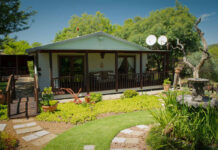
In 2019, when Andrew and Wendy’s son Matthew married Sarah Durr in Dwarsvlei’s poplar tree forest, they fixed up some of the outbuildings to accommodate guests. It brought home to the young couple what a great venue this could be. They badly wanted to fix up the old stables and sheds, but it would take more money than they could access.
Enter a Cape Town events company called Urban Goat, which organises trail runs and mountain bike races around the country. Charlotte and Rian Gouws of Urban Goat were looking for a larger base for their highly popular Run the Karoo and Ride the Karoo sporting events. Dwarsvlei turned out to be the perfect place for the hundreds of participants that arrive every year.
We returned in 2021, and found new energy at Dwarsvlei. The giant old wooden shed, now called the Nourse Shed, had been revived and turned into an enormous venue that lent itself to dining, conferences and exhibitions.
To turn it into a usable building again, Urban Goat had to remove more than
60t of ancient manure. No wonder the roses at Dwarsvlei bloom so profusely!
Many of the stables had been spruced up and now contained twin beds. Others contained showers and ablutions. There was a campground nearby, with enough space for 300 tents.
The most ‘luxurious’ stable, of course, was where Greatorex had been housed. His groom, the only one who could handle him, was Billy Boy. He too had a spacious stable named after him.
Celebrating wool at the winter festival
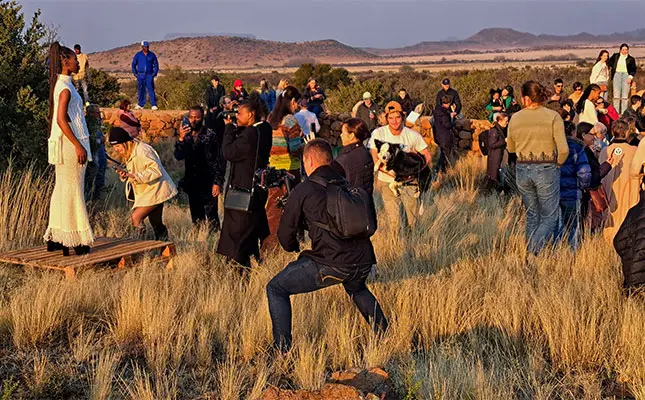
In 2023, we were back at Dwarsvlei, this time for the third Karoo Winter Wool Festival and we have returned every year since then.
It’s attended by stockmen, farmers with sheepdogs, various kinds of woolled sheep, townsfolk from Cradock, Middelburg, Graaff-Reinet and Nieu-Bethesda, wool exporters from Lesotho, and threaded amongst them, knitters from Cape Town, Gqeberha, Bloemfontein and Johannesburg. There is also usually a smattering of design students, and even a few academics.
There are demonstrations of sheep shearing, sheepdog herding and dozens of workshops on spinning, felting, weaving, dyeing, knitting (of course), talks on sustainable fashion, and walks in the veld to discover the names and importance of Karoo bossies.
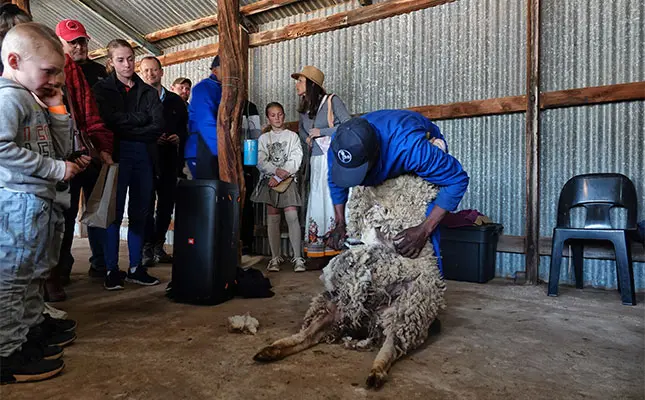
And in the Nourse Shed, you’ll find stalls showcasing everything from sheepskin slippers and knitting yarn to mohair carpets, socks and clothes, to alpaca fleece, as well as South African clothing manufacturers using local Merino fleece, and woollen duvets made in nearby Richmond.
The success of this annual event at Dwarsvlei is proof that South African knitters, crocheters and designers have become entranced by natural fibres.
We came across a fashion designer, Maxwell Boko of MmusoMaxwell in Johannesburg, while standing in front of an exhibit that showcased the entire wool supply chain, from raw fleece and classing tables, to yarn being spun into fabric on a massive machine.
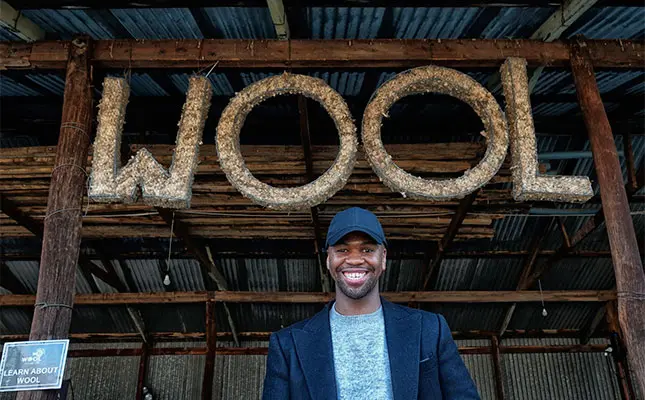
“The reason the Millennials are choosing natural fibres these days is because it is sustainable, and causes comparatively little environmental harm,” he told us.
Every year, there are speakers offering interesting insights into the wool and mutton industry, and farming in general.
Father-and-son team, Andrew and Matthew van Lingen, are now farming together on Dwarsvlei, working on regenerating the profitability of the farming business.
They’ve opened up Dwarsvlei to regular farm and business management courses, and created an on-farm forum where other farming families can learn how to adapt and evolve in this changing agricultural environment.
For more information, email [email protected], or visit dwarsvlei.co.za or WhatsApp Sarah van Linen on 066 220 2218 or 082 466 7291.