
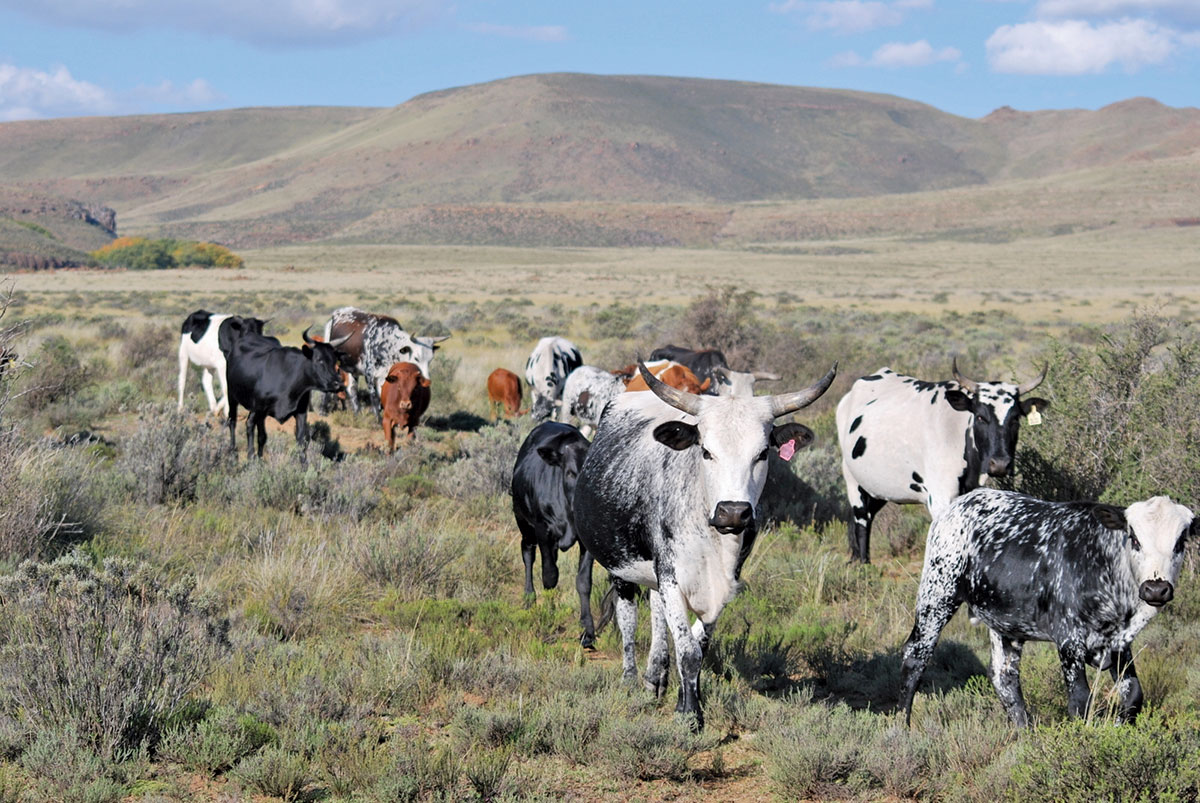
“So far during the FMD outbreak, we have not received reports of mortalities among Nguni cattle. The animals that did suffer from the disease were far less affected than other breeds and recuperated quite rapidly after the disease had run its course,” Jannasch told Farmer’s Weekly at Nampo 2026.
“That has led to a marked increase in interest in the breed, and we have seen a notable upswing in demand for Nguni cattle over the past six months.”
Jannasch, who farms in Limpopo, pointed out that the Nguni is generally highly resistant to disease. He said South Africa’s northern provinces suffer from particularly high tick loads, so the breed’s strong tick resistance makes it ideal for tick-infested areas.
Although the animals still need to be dipped from time to time, the frequency is far lower than for other breeds.
@farmersweeklysa The Nguni cattle breed has survived and adapted in Africa for thousands of years, shaped not by human preference, but by nature itself. According to Dr Oswald Janosch, President of the Nguni Cattle Breeders’ Society of South Africa, the modern Nguni remains true to its natural African form. Rather than altering the breed, breeders chose to preserve the characteristics that allowed it to thrive in harsh local conditions. #farmersweeklysa ♬ Education, science, technology, quiet(855385) – zomap