While the Department of Mineral and Petroleum Resources’ (DMPR) draft Strategic Petroleum Stock Policy seeks to strengthen South Africa’s energy security, agricultural stakeholders argue that it falls short of adequately recognising the sector’s critical role in maintaining national food security.
Fuel markets under pressure
Concerns over the country’s fuel security intensified after Russia suspended diesel exports in early July following attacks on its refining infrastructure, while renewed hostilities between the US and Iran have pushed international oil prices sharply higher. These developments have added pressure to global diesel supplies and contributed to higher costs for imported fuel.
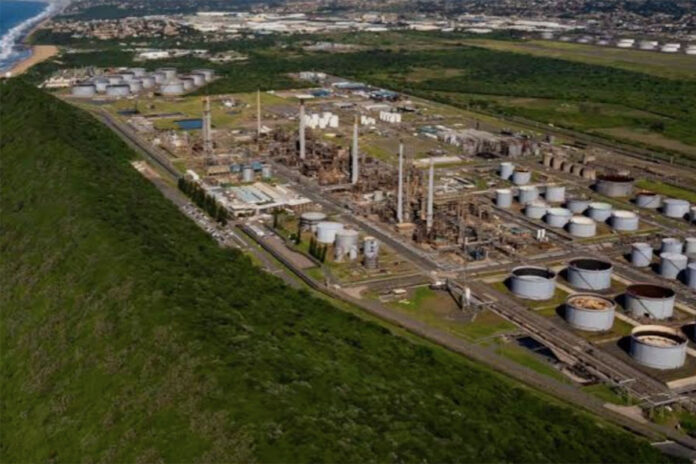
South Africa imports both crude oil and refined petroleum products and has limited domestic refining capacity following the closure or conversion of several refineries. This means the country is more reliant on international supply chains and, therefore, more vulnerable to geopolitical disruptions, shipping bottlenecks, and other global supply shocks.
Although Minister of Mineral and Petroleum Resources Gwede Mantashe previously dismissed concerns about physical fuel shortages in media interviews, stating that South Africa has sufficient supplies and that the real challenge is price rather than availability, stakeholders have continued to raise concerns about the country’s strategic reserves.
At the time, the Central Energy Fund (CEF) indicated that South Africa held strategic crude oil reserves but no strategic refined fuel stocks.
August fuel price outlook weakens
According to the CEF’s latest figures, expectations of substantial fuel price reductions in August have weakened significantly after renewed tensions in the Middle East pushed the price of crude oil above US$85 (around R1 400) per barrel, where it stood at the time of writing.
Diesel recoveries have largely disappeared, with some grades now expected to increase slightly instead of declining as initially projected.
For agriculture, where diesel is one of the biggest operating costs, higher fuel prices can increase the cost of planting, harvesting, and transporting produce.
Government proposes strategic fuel reserve overhaul
Amid these developments, the DMPR has published its draft Strategic Petroleum Stock Policy for public comment.
The proposal seeks to strengthen South Africa’s fuel security through a new shared responsibility model between government and industry.
The draft policy proposes the following:
- Government would maintain strategic crude oil reserves equal to 90 days of net imports.
- Manufacturers and wholesalers would maintain 14 days’ worth of refined fuel stocks, including diesel and petrol.
- The minister of mineral and petroleum resources would be empowered to authorise the release of strategic stocks during escalating supply emergencies.
The department argues that South Africa’s growing dependence on imported petroleum products, combined with lengthy shipping times and declining domestic refining capacity, requires a more resilient strategic stockholding system. According to the draft policy, imported fuel can take between 21 and 42 days to reach South African ports, followed by a further 10 to 14 days before it reaches inland markets.
Agriculture overlooked
While the policy recognises the need to protect the economy during national emergencies, it does not explicitly identify agriculture or food distribution as priority sectors should fuel supplies become constrained. According to Sakhile Vanqa, legal intelligence specialist at Agbiz, who drafted the organisation’s submission on the proposed policy, this represents one of the policy’s greatest shortcomings.
“There is no explicit recognition of the sector’s importance and no prioritisation of agriculture and food distribution in the draft policy. The agriculture sector is inherently dependent on a stable, predictable, and affordable supply of liquid fuels for cultivation, harvesting, processing, irrigation, and logistics,” Vanqa told Farmer’s Weekly.
He warned that the policy substantially underestimates the wider consequences of fuel disruptions.
“Any disruption to fuel supply has immediate and cascading consequences for food security, rural livelihoods, and the broader economy. The potential impact of fuel shortages on the sector is totally underestimated.”
Vanqa added that Agbiz will, therefore, recommend that government conduct a sector-specific economic impact assessment before finalising the policy.
No alternative to diesel
Vanqa said that unlike many other sectors that can gradually diversify their energy sources, agriculture remains overwhelmingly dependent on diesel.
“The agriculture sector is dependent on diesel for tractors, irrigation pumps, generators, and transport,” he added.
“All of these are critical functions, and there is no viable alternative to diesel consumption for any segment of the value chain. Therefore, the whole value chain is equally vulnerable.”
He noted that this dependence extends across primary production, agro-processing, refrigeration, logistics, and exports, which means disruptions at any point could rapidly affect the wider food system.
Who should receive priority access to fuel?
One of the central questions raised by the draft policy is whether agriculture should receive priority access to diesel during a national emergency.
Although Agbiz agrees that secure fuel supplies are essential for agriculture, Vanqa cautioned against introducing rigid regulatory allocation systems.
“Access is incredibly important for agriculture but, once again, there is a great deal of risk when the regulator starts to interfere with allocations.”
He said commercial relationships between fuel suppliers and agricultural retailers had proved resilient during recent supply disruptions.
“The retailers in the sector have a good relationship with suppliers, and we saw during the crises this year that suppliers worked very hard to ensure security of supply for their clients, including retailers supplying the agriculture sector.
“We therefore believe that the sector will be looked after, but a regulatory intervention such as this is not needed and may have unintended consequences.”
Who pays?
Agbiz also questioned the financial implications of shifting part of South Africa’s strategic stockholding obligation to the private sector.
“There is a real possibility that the costs of the proposed mandatory stockholding will be passed down the supply chain and eventually reflect in the price of food,” Vanqa explained.
“Most states around the world have a strategic reserve, but this policy is now displacing the costs to the private sector.”
Agbiz’s recommendations
In its submission, Agbiz recommends several amendments to strengthen both fuel security and food security.
The organisation proposes that the policy explicitly define the entire agricultural value chain as an essential service, including primary production, agro-processing, cold chain logistics, and fuel retail sites servicing agriculture.
It also recommends increasing the proportion of refined fuel held in strategic reserves.
“We suggest a minimum of 50% finished products in the strategic mix to ensure that emergency stocks can be immediately deployed to critical sectors like agriculture,” Vanqa said.
Agbiz also recommends that diesel receive priority within the refined-product reserve because of its central role in food production.
Other proposals include establishing a transparent cost-recovery mechanism to prevent agriculture from carrying a disproportionate share of mandatory stockholding costs, guaranteeing priority access for agriculture under regional stockholding agreements, improving communication between wholesalers and retailers during supply disruptions, and ensuring that reporting obligations for fuel retailers remain proportionate.
More than an energy debate
The draft policy represents an important attempt to strengthen South Africa’s resilience against increasingly volatile global energy markets.
However, Agbiz argues that the policy overlooks a fundamental reality: without diesel, South Africa’s food system cannot function.
Whether through explicit recognition of agriculture as an essential service, greater emphasis on strategic diesel reserves, or safeguards against rising compliance costs, the organisation believes the final policy must do more to protect the sector that feeds the country.