
Experiencing mechanical problems on a motorcycle is not only inconvenient; on a long trip in a remote area it can quickly become dangerous. The most effective way to prevent problems is to service your bike regularly at a reputable workshop.
Farmer’s Weekly spoke to Conrad Koen, owner of Off Road Cycles in Koedoespoort, Pretoria, about how riders can best prepare for extended trips. Koen is an experienced rider himself, having completed numerous long-distance off-road trips and participated extensively in off-road racing. He built his workshop over many years, starting by servicing his own bikes as a teenager.
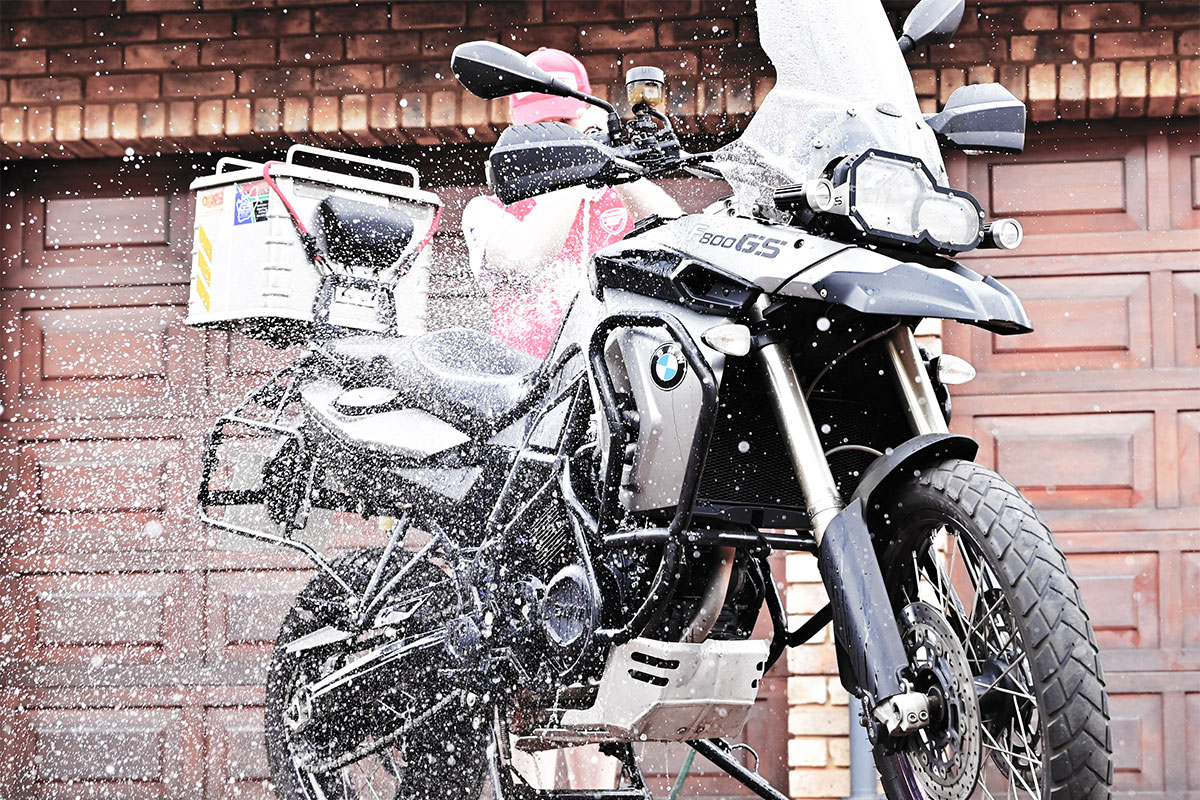
His advice is refreshingly simple: “Wash your own bike right after every trip.”
While washing your motorcycle, you are far more likely to notice common causes of mechanical trouble – loose nuts and bolts, chafed or disconnected wiring, cracked components, faulty lights, oil leaks, damaged rims, worn brake pads, and tyre issues.
Performing this hands-on inspection after every ride means your bike is effectively prechecked and ready for the next journey.
What typically ends a long trip?
Assuming the motorcycle is serviced according to the manufacturer’s schedule, the most common trip-ending problems are:
- Tyre and wheel issues (punctures, worn tread, damaged rims, loose spokes on spoked wheels);
- Battery failure;
- Loose fasteners caused by vibration;
- Broken racks or subframes due to overloading or repeated heavy impacts.
Before departing, check the service schedule carefully.
“You don’t want the next major service falling in the middle of your trip,” Koen advises.
Chain and sprockets: critical components
The final drive system deserves special attention. Ensure the chain is correctly tensioned, has the proper free play as specified in the owner’s manual (typically 20mm to 40mm for most dual-sport and adventure bikes), and is properly lubricated. Check engine oil and coolant levels yourself before departure, even if the bike was recently serviced.
Koen emphasises the importance of planning ahead: “If you’re riding 5 000km, make sure your tyres have enough life to comfortably exceed that distance. The same applies to your chain and sprockets.”
Worn sprockets are among the most common problems seen in his workshop. He insists on replacing chain and sprockets as a set, as they wear together. Hooked or ‘wave-shaped’ teeth on a sprocket indicate advanced wear. Severely worn sprockets can cause chain slip or derailment – a dangerous situation at speed or in a remote area.
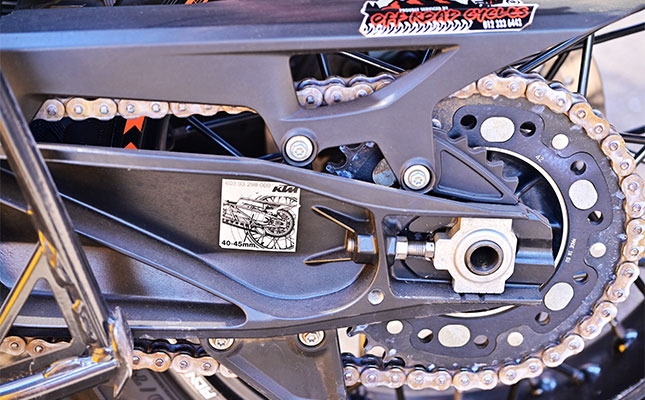
Inspect the chain carefully. All links should move freely without tight spots, excessive stretch, or damaged O-rings (on O-ring or X-ring chains).
As a general guideline, chain lubrication is recommended every 400km to 600km under normal conditions, and more frequently in dusty, muddy, or wet environments. In an emergency, clean engine oil can serve as temporary lubrication, but proper chain lube is strongly preferred.
Tools for emergencies
Packing tools and spares for every possible scenario is unrealistic. Weight and space are limited. However, punctures remain the single most common cause of delays or abandoned trips.
For tube-type tyres:
- Carry at least one spare tube for the rear and front wheel.
- Pack tyre levers.
- Carry spanners or sockets that fit both front and rear axle nuts.
- Include a patch kit as backup.
For tubeless tyres:
- Carry a quality plug kit.
- Include the correct tools to remove objects embedded in the tyre.
In both cases:
- Always carry a compact air pump (electric or manual) or CO₂ inflators.
- A tyre pressure gauge is highly recommended.
- Know your correct operating tyre pressures for both loaded and unloaded riding. Koen also recommends carrying the correct spanners for adjusting chain tension, typically those required for the rear axle nut and chain adjuster locknuts.
Additional smart precautions
For longer remote trips, experienced riders also consider:
- Basic electrical spares (fuses, spare headlight bulb if applicable);
- Cable ties and duct tape;
- A small assortment of spare bolts;
- A battery in good condition (test it if older than two years). Preparation is less about carrying half a workshop and more about starting with a mechanically sound machine.
Ensure that luggage racks and mounting bolts are secure and not overloaded.
A clean, well-maintained motorcycle that has been thoroughly inspected by its owner is far less likely to leave its rider stranded, whether on a farm road or a remote mountain pass.