
Producing premium roses in greenhouses
Luxaflor Roses, co-owned by horticulture farmer Roelof Nugteren, exports delphiniums and roses to South Africa and the Netherlands. The farm supplies the flower auction in South Africa three times a week.
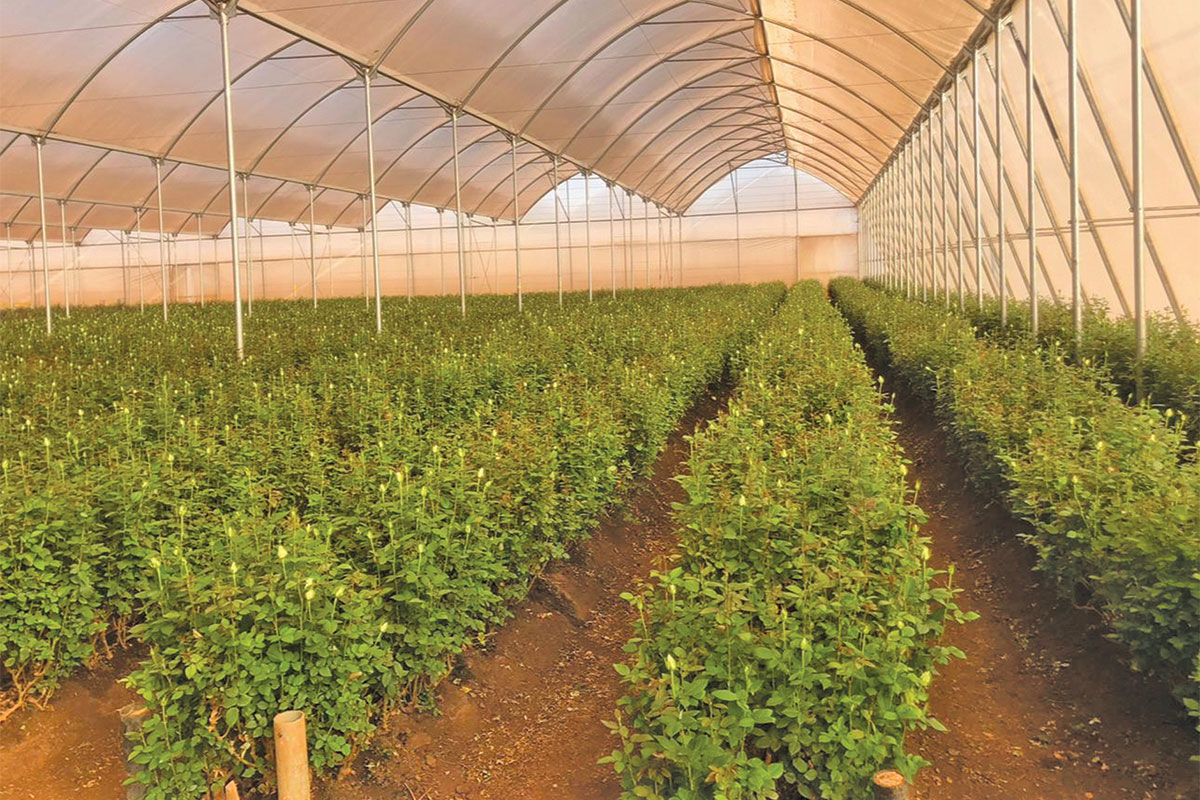
Nugteren’s farm is located in Zimbabwe’s Mashonaland Central province and is the country’s largest exporter of flowers. All production takes place in greenhouses that have been imported from Europe. Its extensive irrigation systems feature dripper lines that weave throughout the greenhouses.
“Delphiniums and roses are specialised crops that are difficult to grow,” says Nugteren.
Growing these crops in greenhouses allows Nugteren to produce a consistent, uniform and good-quality crop.
He adds that due to the difficulty of growing these crops, having the right infrastructure is a necessity.
“You can’t grow these particular varieties and these crops outdoors. If someone tries to do that, they wouldn’t be able to compete at any level against what we’re doing,” he says.
“Our greenhouses are very robust and can handle high wind speeds. They are strong and their longevity sets them apart from the traditional greenhouses [found] here [in Zimbabwe]. They can survive 25 years, and they’re obviously very [tall] so they keep the temperature relatively stable [due to the] volume of air inside [the greenhouses].”
The greenhouse’s ventilation system allows for the sides and roofs to be opened in order to control temperature and airflow.

Drip irrigation is used, with water drawn from boreholes. This, says Nugteren, is carefully managed to ensure enough water for the production season. Flowers are irrigated early in the morning to allow for maximum efficiency.
In terms of pest control, Nugteren says he employs a ‘preventative’ rather than ‘curative’ approach. He adds that monitoring and scouting are essential for efficient management of pests and diseases.
The flower farm, which is located next to a privately owned game reserve, currently has 350 people in its employ, with the majority (80%) of the employees being women.
Fair-trade certification
Through its fair-trade certification standard for the horticultural sector, which ensures produce is cultivated under good working conditions, a dedicated portion of the farm’s revenue goes to an employee-managed welfare fund.
This fund is distributed to staff members at regular intervals, supporting them with critical expenses such as education costs and other vital family needs.
“We have been the longest-standing and only representative of fair trade in Zimbabwe. We’ve since shifted to MPS-Socially Qualified (MPSSQ), which is MPS’s fair trade accreditation. The difference between the two means that on MPSSQ, we work hand in hand with the employees to follow ventures that they wish to embark on. In the past, for example, we’ve done chicken farming and mushroom farming.”
The employees receive all the benefits from these operations.
Maintenance
Nugteren says the biggest challenge the farm faces is to maintain its greenhouses to the standard that they were originally designed to. He says a lot of the required greenhouse components, whether it be plastic or movable components like motors, are not generally available in Zimbabwe.
“Zimbabwe is focusing on blueberries and horticulture, and I don’t think that those require the greenhouse infrastructure that we have [with flowers]. I believe that you’d have a much better quality crop if people were to utilise greenhouses, but due to lack of access to funding, I don’t think greenhouses are going to expand as drastically as one would hope,” says Nugteren.
This means that in the near future, it’s going to remain difficult for him to procure the greenhouse parts he needs.
Farmer turns to hydroponics to mitigate challenges
Hydroponics farming is on the rise in Zimbabwe. Keith Chipudhla told Farmer’s Weekly that he turned to hydroponics in response to the growing challenges facing traditional agriculture, including water scarcity, limited access to arable land, rising input costs, and inconsistent production outcomes.
While studying international trade and finance in China, Chipudhla was exposed to advanced controlled-environment agriculture systems and water-efficient production technologies. This experience inspired him to co-found Vitagrow Urban Farms, a Harare-based urban hydroponics enterprise that officially launched in 2019.
Starting with a small backyard greenhouse in the Westgate suburb, the business has since transitioned into a dedicated commercial operation based in Vainona, where production systems have been scaled and standardised to support consistent year-round supply into Harare’s premium retail and hospitality markets.
Today, Vitagrow supplies a growing network of high-end supermarkets, restaurants, hotels, farmers’ markets, and consumers in Harare, with increasing engagement from institutional buyers. Market demand has consistently exceeded in-house production capacity, creating a strong commercial case for structured expansion through aggregation and outgrower models linked to future export readiness.
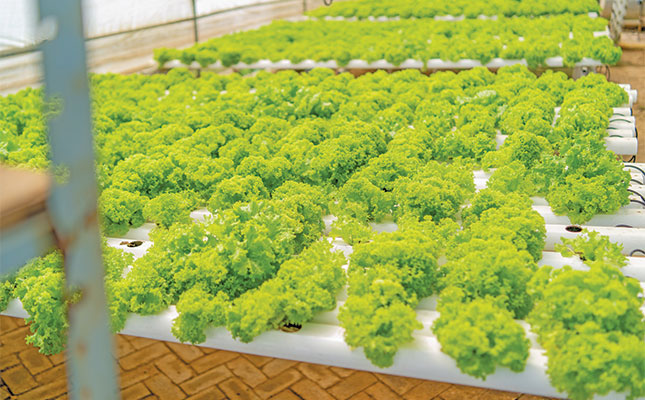
Vitagrow primarily produces leafy salad varieties of lettuce, English cucumbers, microgreens, sprouts, herbs, and edible flowers using a range of crop-specific hydroponic systems.
Chipudhla, who has received several national agricultural awards, said these crops were selected based on strong urban demand, short production cycles, suitability for controlled-environment agriculture, and their ability to deliver consistent quality throughout the year.
“Over the past six years, we have gained hands-on operational experience across multiple systems, crops, and seasons, supported by disciplined data tracking, continuous optimisation, and process standardisation,” he says.
“Today, hydroponics is not only a production method for us, but a scalable platform for skills transfer, youth empowerment, and climate-smart agribusiness development.”
Vitagrow operates a mixed-system production model, including NFT (nutrient film technique), Dutch bucket systems, deep-water culture, and vertical growing systems, depending on crop type and production objectives.
“This flexibility allows us to optimise for yield, crop health, labour efficiency, and energy use,” says Chipudhla.
“Leafy greens perform well in NFT systems, while fruiting crops such as cucumbers are better suited to bucket-based systems. Our system choices are guided by crop physiology, local climatic conditions, and production data rather than a one-size-fits-all approach.”
Nutrient management is controlled through calibrated feeding schedules, routine EC (electric conductivity)and pH monitoring, and crop-specific nutrient formulations.
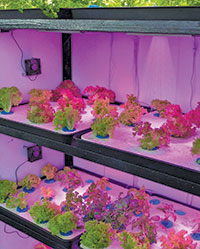
Water temperature is also closely monitored to protect root health, oxygen availability, and nutrient uptake, particularly during hotter periods.
Pest and disease management relies on strict hygiene protocols, controlled access, regular scouting, and the use of biological controls rather than conventional chemical pesticides. This approach supports food safety requirements while producing clean, low-residue produce suitable for premium retail and food service markets.
“One of our strongest performing crops has been hydroponically grown English cucumbers, where we’ve achieved consistent yields and quality across multiple seasons,” says Chipudhla.
“This performance has been driven by careful variety selection, disciplined pruning protocols, precise nutrient management, and controlled growing conditions. Small adjustments in plant load and nutrient balance have delivered measurable improvements in yield and uniformity.”
Outgrower scheme best suited for urban youths
Approximately 14 months ago, Vitagrow launched Vitagrow Empower, an outgrower- and training-linked production platform developed in response to sustained market demand that exceeded internal production capacity.
The programme focuses on youth empowerment and skills development by providing structured farm tours, hands-on training, and mentorship for aspiring farmers and young people interested in modern agriculture. To date, Vitagrow Empower has trained more than 60 prospective farmers and engaged over 1 500 youths ranging from primary school to university level.
In addition to training, Vitagrow Empower operates an integrated outgrower model supporting both hydroponic and soil-based producers who have production capacity but limited access to reliable markets. Outgrowers receive support in system design, production protocols, and technical training, with Vitagrow purchasing all produce that meets agreed quality standards. Currently, seven outgrowers are actively producing under this model.
“Hydroponics in Zimbabwe is expanding steadily, particularly in urban and peri-urban areas, driven by rising food demand, water constraints, and the need for predictable year-round supply. However, the sector still faces structural barriers,” says Chipudhla.
Key challenges include high initial capital costs, limited access to affordable financing, energy reliability constraints, skills gaps, and inconsistent access to quality inputs.
Chipudhla notes that the absence of tailored financing models and scalable commercial benchmarks continues to slow wider adoption, despite strong underlying market demand.
Despite these constraints, he says the growth opportunity remains substantial.
Hydroponics is well suited to youth participation because it requires less land than conventional farming, uses significantly less water, offers short production cycles with predictable cash flow, and builds technical and entrepreneurial skills rather than reliance on manual labour alone.
When Vitagrow was established in 2019, the company initially relied on imported hydroponic systems supplied by external specialists. Through continuous learning, on-farm experimentation, and engineering refinement, Vitagrow has since developed full in-house capability to design and fabricate its own hydroponic systems using locally sourced materials wherever possible.
Innovation reduces set-up costs
Innovation has reduced hydroponic system set-up costs by approximately 30% to 40% compared to conventional imported systems, significantly lowering the barrier to entry for new growers.
“As a result, Vitagrow now designs, builds, and installs complete hydroponic systems for the youth, first-time growers, and surrounding communities at more accessible price points while maintaining durability, efficiency, and food safety standards,” says Chipudhla.
“This directly supports our broader mission of skills transfer, youth empowerment, and the scalable roll-out of climate-smart agriculture across Zimbabwe and the wider region.”
The long-term strategy is to develop Vitagrow into a regional hydroponic production and aggregation platform, combining central production hubs with distributed outgrower networks to support scalable domestic supply and export growth across Southern Africa.
Finding success with aquaponics in Zimbabwe
Closely linked to hydroponics, some Zimbabwean farmers prefer soilless farming in the form of aquaponics.
Joe Mugwagwa, who runs an aquaponics operation in Mashonaland East Province alongside his mother, told Farmer’s Weekly that his journey into this farming model was ignited a few years ago while he was searching for sustainable farming solutions that could tackle the triple threat of skyrocketing input costs, soil degradation, and chemical overload in traditional agriculture.
He says aquaponics stood out for its ingenious combination of fish farming and vegetable production in a closed-loop system that drastically reduces water usage, eliminates the need for synthetic fertilisers, and yields fresh, high-quality produce.
“We mainly grow tilapia because they are hardy, adapt well to warm climates, and perform reliably in recirculating systems. On the plant side, we focus on leafy greens such as fancy lettuce, spinach, herbs, and baby marrow, alongside cherry tomatoes,” he says.
“These crops were chosen because they have strong local market demand, grow efficiently in aquaponics, and allow us to achieve fast production cycles while maintaining consistent quality.”
Mugwagwa outlines a business model that rests on three core pillars: production, training, and system development. The production arm supplies fresh vegetables and fish directly to restaurants and select retailers, while the training and development arm offers aquaponics training, consultancy, and system installation services to a diverse range of clients.
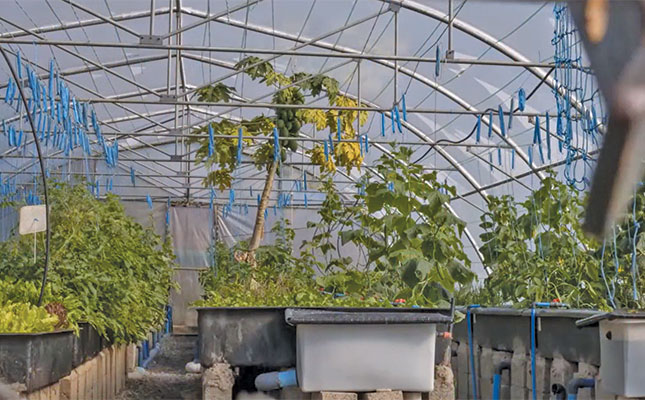
He stresses that the symbiotic relationship between fish and plants is the linchpin of aquaponics, requiring a delicate balance to achieve optimal results.
“We closely monitor water quality parameters such as pH, temperature, and oxygen levels. We are also exploring digital water-quality sensors and improved system automation to increase yields and resilience. On the production side, we continue to trial new crop varieties that are well suited to aquaponics and local market preferences,” he adds.
Mugwagwa says limited access to technical knowledge, high initial set-up costs, inconsistent electricity supply, and limited local availability of specialised inputs and equipment are some of the challenges aquaponics farmers face in Zimbabwe.
There is also a general lack of awareness about aquaponics among consumers and financiers, which can make market development and funding more difficult. However, these challenges are gradually being addressed through training, innovation, and collaboration, he adds.
Aquaponics has strong potential to strengthen local food systems by enabling year-round production, reducing dependence on rainfall, and producing food close to consumers.
It is especially valuable for urban and peri-urban areas, institutions, and community projects where land and water are limited. By producing vegetables and protein together, aquaponics can improve nutrition, incomes, and resilience at household and community level.
“Aquaponics in Zimbabwe is still at an early but promising stage. Interest is growing among young farmers, institutions, NGOs, and impact-focused investors,” says Mugwagwa.
“Over the next five to 10 years, I expect to see more commercially viable systems, stronger local expertise, and better integration into urban agriculture, education, and climate-smart farming initiatives.”
He says with the right policy support and investment, aquaponics could become an important part of Zimbabwe’s sustainable food production landscape.
Fourth-generation Zimbabwean farmer Martin Fick, who is now based in the Eastern Cape of South Africa, established aquaponics company Practical Aquaponics SA, which is a leading service provider to the growing industry of chemical-free, nutrient-dense organic food production throughout Southern Africa.
The company installed some systems in Zimbabwe over the past decade with interest on the rise for this sustainable technology.
Research powers aquaponics success
Fick is also a lecturer in biochemistry, microbiology, aquatic bioremediation, bio-filtation and ichthyology at Practical Aquaponics SA’s training academy in Salem near Grahamstown. The business is officially linked to and also trains Rhodes University students.
Fick spent 20 years farming in the Beatrice area of Mashonaland West in Zimbabwe before being forced to leave for South Africa after his farm was violently taken over in 2002.
He told Farmer’s Weekly that his agricultural background is in hydroponics and field farming, and he understands the context of Zimbabwe well, hence his company has installed some aquaponics systems in Zimbabwe.
He says his company has trained a number of Zimbabwean farmers on aquaponics and there is rising interest in the high-sustainability model in that country.
“We’ve had around 15 or 20 farmers from Zimbabwe attend our training courses since 2012, and many have gone on to build systems using our technology and approaches,” he says.
“We’ve also built systems for clients in Zimbabwe, and our clients have built several more. We’re seeing growing interest in aquaponics in Zimbabwe due to its water, energy and labour efficiency and consequent economic sustainability.”
Fick’s academic work has ensured that when designing aquaponics systems, he focuses on biological processes acquired through prolonged research.
He emphasises that systems development in aquaponics requires intensive research, as online information can be insufficient, inadequate, or even completely wrong.
His company started building aquaponic systems in 2009 under the guidance of experts from Wageningen University in the Netherlands. The first systems were built in the Eastern Cape, South Africa.
Later, in 2014, they partnered with Rhodes University to research the specific biological processes involved in aquaponics and develop functional and efficient systems. Training members of the public began in 2012, and Fick has authored the Reference Manual for Proven Optimised Modular Aquaponics systems design and management which is the culmination of research.
“You need to understand the ratios, media size which relates to air pore space in the root zone and collective biological surface area in relation to fish stocking density in biomass kilograms. There are many ratios and specific factors to consider, such as dissolved oxygen demand versus bio-oxygen availability,” he explains.
Fick added that organic material enters the aquaponic system from multiple sources, not just fish waste.
“Many people ask if you can grow vegetables on fish waste alone, and the answer is not always yes, as the nutrient density of those vegetables won’t be as high or complete as in a mature system.”
Fick highlights the benefits of aquaponics, including its ability to reuse water, low running costs, and zero negative impact on the environment.
“Aquaponics is the future of food – no doubt about it. It allows us to produce high-value chemical free, nutrient dense organic food at a lower cost than alternative systems allow, closer to markets than any other system. It’s sustainable, water-wise, and recirculates water. Aquaponics will change the way the world produces food,” says Fick.