After a year in which many South African agricultural shows were forced to cancel or significantly limit livestock exhibitions because of FMD restrictions, delegates at the conference heard that agricultural events around the world are grappling with similar biosecurity challenges.
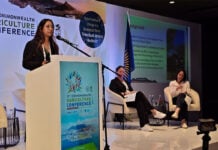
Speakers at the conference, held in Cape Town from 1 to 5 November 2026 and hosted by Agri-Expo, voiced concerns about the growing pressures facing farmers worldwide. Delegates were also made aware of the call for ‘one agricultural future’.
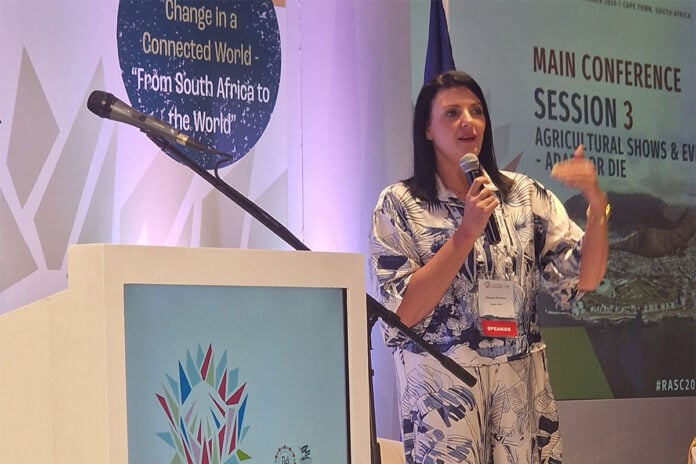
Speaking during a session on the future of agricultural shows, Elmarie Prinsloo, CEO of the Bloem Show and the Showgrounds Development Trust in Bloemfontein, said disease outbreaks had fundamentally changed how livestock events are planned and managed.
“For the first time, it wasn’t the weather, war, or the economy that was keeping animals away from shows. It was a virus,” Prinsloo said.
She said FMD outbreaks highlighted just how vulnerable agricultural events can be to animal health threats. Livestock shows, breed societies, auction organisers, veterinarians, and government authorities had been forced to work together to develop protocols that would allow events to continue while limiting disease risks.
Her comments resonated with delegates from across the Commonwealth, many of whom are facing similar challenges.
Speaking to Farmer’s Weekly, Aled Rhys Jones, CEO of the Royal Welsh Agricultural Society, said biosecurity had become a major concern for show organisers globally.
“In our instance, with the Royal Welsh Show, we’ve had to deal with the prevalence of bluetongue in the UK recently, avian flu being another one, equine flu, and years ago obviously we had the FMD outbreak back in 2001,” Rhys Jones said.
“One of the key challenges is communicating the new regimes. If there’s more testing or more guidance, we need to make sure we communicate that with exhibitors while retaining quality livestock exhibitions, because they’re so vitally important to promote what we do and drive excellence in the farming industry.”
Also speaking to Farmer’s Weekly on the sidelines of the conference, Simon Orpwood, a UK farmer and honorary press secretary and liaison officer of the Royal Agricultural Society of the Commonwealth, said biosecurity concerns had directly affected livestock exhibitions in England.
“We had our local show this year in England. We had to cancel [the attendance of] sheep because of bluetongue, and I can see this is going to become more of a problem,” Orpwood said.
Delegates agreed that agricultural shows are operating in an increasingly complex biosecurity environment.
Biosecurity becomes the biggest show in town
Prinsloo said the impact of FMD on South African agricultural shows had been unprecedented.
“Agricultural shows were closed down for the first six months of this year. No shows for cattle, sheep, goats, or pigs anywhere in our country. The breeders lost their shop window. And for us, shows lost their core attraction,” she said.
According to Prinsloo, the industry’s response was built on cooperation rather than individual events developing separate rules.
“Our biggest adaptation wasn’t disinfecting; it was to choose to cooperate,” she said.
Prinsloo explained that organisers of major events established the South African Show Association and developed a single national protocol for livestock exhibitions.
“The idea was we should get one protocol, and we should sign it off, and then also incorporate all the smaller shows in our country so that every breeder and farmer knows that there is only one rule, whichever show they take their animals to.”
The new requirements dramatically increased the compliance burden on exhibitors.
“For the protocol where there were normally three requirements for livestock to attend a show, and this has become eight requirements,” Prinsloo said.
Those measures include compulsory vaccinations and booster shots, quarantine periods before shows, veterinary sign-off, traceability requirements, and detailed documentation.
“Vaccination, obviously, is compulsory. But animals [cattle and other cloven-hoofed livestock] also need a booster 21 days before being transported to any of the shows,” she said.
Prinsloo said traceability had become a key focus area and predicted that digital systems would play a greater role in future livestock exhibitions.
“I think a digital animal health passport is something that we will start implementing in future,” she said.
She warned that biosecurity requirements were likely to become more demanding as climate change, global trade, and animal disease pressures continue to evolve.
“It will get harder. Climate change will lead to viruses mutating. Global trade will become more difficult. And there will be more animal movement restrictions in future,” Prinsloo warned.
She concluded by advising Commonwealth delegates to adapt and change.
“We can’t stop viruses from changing, but we can ensure that we change faster,” Prinsloo said.