
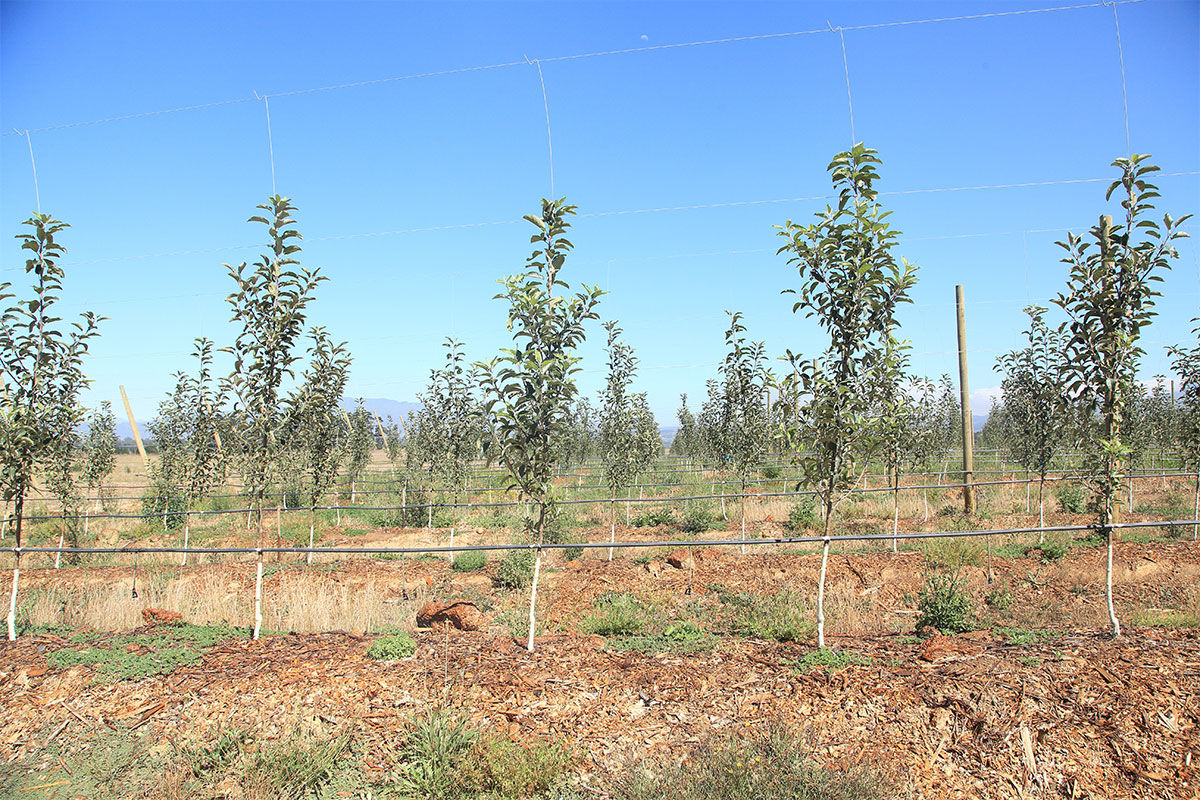
“Water is life. Without water, we cannot grow our trees or produce fruit,” said Nitasha Baijnath-Pillay, manager of resource management and sustainability at Hortgro, during the opening of the webinar.
She noted that a dedicated industry water response strategy is currently being developed and will soon be released to guide the sector through increasing climate uncertainty. The strategy is expected to provide a coordinated framework to improve water-use planning, strengthen resilience to drought and flooding, and align industry actions with long-term sustainability goals.
From disaster to risk management
Jody Wentzel, subprogramme manager for disaster risk reduction at the Western Cape Department of Agriculture, said the Western Cape has shifted from reactive disaster response to proactive risk management.
“Increasing climate variability is already placing pressure on water availability across production regions, and water scarcity and extreme weather events are no longer occasional shocks, but part of a ‘new norm’ requiring long-term planning and better data to make informed decisions before disasters strike,” she said.
This shift includes collaborative risk assessments involving farmers, water user associations and government, as well as a stronger understanding of localised river systems and targeted funding for drought relief and flood mitigation.
The province has also invested in tools such as the Cape Farm Mapper, which has drawn interest from other provinces, along with drone surveys and aerial data collection to support planning and climate adaptation.
Water use efficiency
Ceres producer Steven Versfeld, chair of the Titus River Water User Association, highlighted the importance of organised water governance at local level.
“Water user associations help manage surface and groundwater resources while also protecting farmers’ water rights. Voluntary membership, however, remains a challenge and can limit progress as it is costly to run a water user association.”
He also criticised auditing programmes that focus too narrowly on water-use efficiency metrics.
“It does not help to use as little water as possible if the outcome is fruit that is undesirable to the market. Instead of looking at water use per kilogram of fruit, the focus should be on the economics – water use per rand earned,” he said.
Alien clearing and rehabilitation
A major focus of the discussion was the impact of invasive alien plants on water security. Anton Reinecke, managing director of Ceres Fruit Processors Ltd, said clearing infested land could significantly improve water availability.
He cited estimates according to which the removal of alien vegetation from 6ha can release enough water to sustain one hectare of apple production.
Reinecke’s Skoonveld programme, operating in the Ceres Mountain Fynbos Nature Reserve, has already brought about half of a 7 000ha area under management through collaboration between industry, government and local stakeholders.
He said the programme’s success was founded on strong organisational structure, municipal and industry collaboration, long-term funding commitments, and ongoing maintenance to prevent reinfestation.
“A once-off effort won’t work. You must protect the gains you’ve made,” he said.
Act now
Versfeld, who has been involved in alien clearing for more than 15 years, emphasised the urgency of early intervention.
“Delaying intervention increases long-term costs and risks. Invasive plants not only consume water but also worsen flooding, damage infrastructure, and disrupt river systems and soil stability,” he said.
He added that ignoring a single invasive tree can have major consequences. “If you leave one pine tree, in 20 years you will have a major infestation. It may seem expensive to remove one tree now, but it saves enormous costs later.”
Wentzel stressed that restoration must accompany clearing efforts. “Restoring indigenous vegetation helps stabilise riverbanks and improves groundwater recharge,” she said.
She concluded by emphasising the importance of relationships in building resilience. “It’s not just about policy and strategy. It’s about understanding farmers’ realities and building trust. That’s what makes solutions work.”