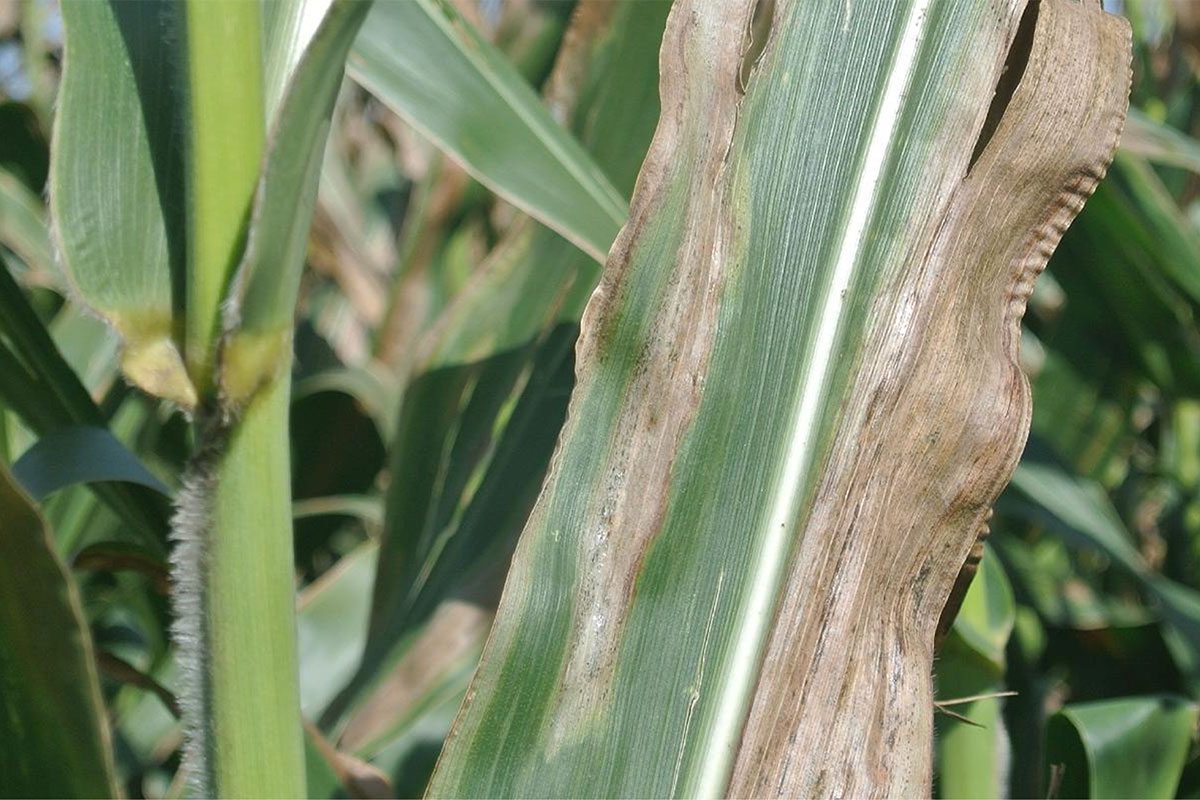
Initially detected in 2024 in the Free State, North West, Gauteng, and Eastern Cape, Goss’s wilt has since been confirmed in Limpopo, Mpumalanga, the Northern Cape, and the Western Cape. KwaZulu-Natal remains the only province with no recorded cases.
While the wider footprint has raised concern, industry leaders say the situation should be approached with caution rather than alarm.
“Grain SA and its members are alert and watchful, but not alarmed,” Mike Ellis, Grain SA’s manager for research coordination and the NAMPO Academy, told Farmer’s Weekly.
According to him, the expanded distribution does not necessarily reflect a sudden escalation of the disease but may instead indicate that it has been present for longer than initially understood.
“The results [of the survey] suggest Goss’s wilt may have been established earlier but went largely undetected due to symptom overlap with other stresses and diseases,” he explained.
Despite its spread, there is currently little indication of significant production losses.
“To date, most producers are not reporting measurable yield losses directly attributable to Goss’s wilt,” Ellis said, adding that observed cases are typically isolated to specific fields rather than widespread across regions.
Instead, the main impact has been a shift in management practices, with farmers placing greater emphasis on crop rotation, residue management, and limiting plant injury as part of preventative disease control.
No chemical solution available
Goss’s wilt, caused by the bacterium Clavibacter michiganensis subsp. nebraskensis, is difficult to control, with no effective chemical treatments available.
In a media statement released on 8 April, the Department of Agriculture (DoA) emphasised that management depends on integrated cultural practices, including resistant hybrid varieties, crop rotation, and strict equipment hygiene.
However, Ellis noted that cultivar-based solutions remain limited in South Africa.
“Currently, no maize hybrids are officially registered in South Africa as resistant or tolerant to Goss’s wilt,” he said, although research is under way to evaluate local and international germplasm.
Equipment movement a key concern
Authorities have identified contaminated agricultural equipment as a primary pathway for long-distance spread of the disease.
Harvesters, planters, and tillage implements can carry infected plant material between fields and provinces if not properly cleaned.
While commercial producers are generally familiar with biosecurity principles, Ellis cautioned that implementation is not always straightforward.
“Equipment sanitation is feasible in theory, but in practice it can be challenging, particularly during peak planting or harvesting periods, or where contractors operate across multiple farms,” he explained.
As a result, Grain SA is promoting a risk-based approach, encouraging farmers to prioritise cleaning equipment when moving between known infected and non-infected areas.
Movement controls and compliance challenges
Goss’s wilt is regulated under the Agricultural Pests Act (No. 36 of 1983), with controls aimed at limiting the movement of host material and contaminated equipment.
However, Ellis said the main challenges relate to logistics rather than regulation. “There are no blanket movement bans on grain, and producers are able to continue normal marketing activities. The challenges arise mainly around coordination, particularly for contractors and shared equipment moving between farms and provinces.”
In response to the disease, Grain SA is coordinating a national research platform involving government, research institutions, and industry partners.
The initiative focuses on surveillance, diagnostics, pathogen characterisation, and cultivar evaluation, as well as ensuring that research findings are translated into practical on-farm guidance.
“The focus is on early detection, improved diagnostics, and practical management, rather than reactive control measures,” Ellis said.
The DoA has similarly prioritised strengthening diagnostic capacity, developing region-specific guidelines and identifying suitable hybrids for local conditions.
Biosecurity remains critical
Government and industry stakeholders emphasise that preventing further spread will depend heavily on farmer awareness and adherence to biosecurity practices.
The DoA has urged producers to minimise the movement of contaminated plant material and ensure equipment is properly cleaned before being moved between fields.
It has also warned that illegal importation of agricultural products or used equipment poses an additional risk of introducing new pests and diseases into the country.
A disease to manage, not panic over
For now, experts view Goss’s wilt as a manageable risk, although vigilance is still required.
“Disease pressure remains generally low, and there is no evidence of a rapid spike in incidence or severity,” Ellis said.
“Grain SA’s focus is therefore on understanding distribution and risk, rather than responding to a crisis scenario.”
As the next planting season approaches, South African producers are encouraged to strengthen preventative practices and remain vigilant for symptoms.