
Speaking to Farmer’s Weekly, Dr David Gerber, founder and CEO of vaccine importer Dunevax Biotech, said the company expects vaccine ordering to open as soon as government confirms the allocation for the private sector.
Although no date has yet been announced, preparations for the rollout are already under way, allowing farmers and veterinarians to complete the necessary administrative requirements in advance.
Gerber said this will help ensure that producers are ready to place orders as soon as sales open. Completing the registration in advance is intended to minimise delays, particularly as demand is expected to be high during the initial phase of the rollout. Farmers are encouraged to complete the registration process well before vaccination begins, particularly if vaccinations are likely to take place in areas with limited mobile connectivity.
Farmers will be required to register, create a user profile, and complete the farmer authorisation process via the Buffalo Analytics digital platform before they can participate in the programme.
Dr David Pretorius, veterinarian and Buffalo Analytics developer, confirmed that the authorisation process is already available through the platform, enabling producers to complete the required paperwork before ordering opens.
The registration process is closely linked to South Africa’s FMD control measures, which require animals to be individually identifiable, subject to limited exceptions. Producers are therefore encouraged to ensure their livestock identification records are up to date before ordering vaccines.
Pretorius noted that electronic radio-frequency identification can simplify compliance, record-keeping, and traceability for producers who choose to use it.
Once private sales commence, veterinary practices will initially be subject to purchasing limits intended to prevent stockpiling while vaccine supplies remain constrained. Current planning assumes that vaccine consignments will become available on a monthly basis, with practices encouraged to order only enough for about four weeks at a time.
Provision has also been made for practices with larger client bases to apply for increased allocations where justified.
Digital verification forms part of rollout
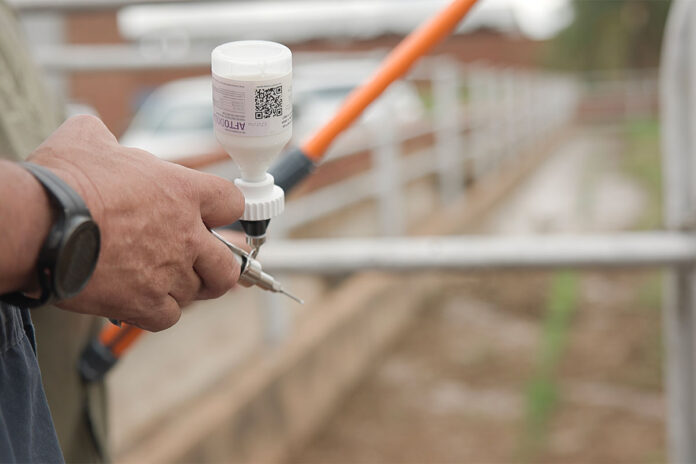
The vaccination process will also include digital verification measures. Every vaccine dose will carry a unique QR code that must be scanned on the farm where the vaccine is administered. This links each vaccine batch to the vaccinated animals and forms part of the required post-vaccination reporting process.
Training materials and user support are also now available to veterinarians ahead of the anticipated arrival of the first private vaccine consignments, which are currently expected to be ready for dispatch from early August, subject to confirmation of vaccine availability.