
Showcasing natural products
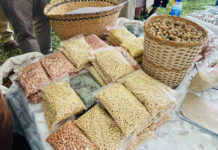
Over its three-day run, the Johannesburg Good Life Show attracted 209 exhibitors, 46 sponsors and 11 media partners. The show brought together businesses showcasing products aimed at consumers seeking healthier and more sustainable alternatives. It was centred largely on natural ingredients, teas, honey and beeswax products, natural skincare products, plant-based flours, kombucha and olive oils.
According to Heidi Warricker, events director at Live Events Africa, which organised the show, the event reflected growing global demand for healthy, ethical and traceable food and lifestyle products.
“What makes this event so exciting is not only its scale, but its significance. We are seeing advances in agriculture, plant-based innovations, responsible sourcing, wellness technologies and conscious consumerism,” Warricker said.
The show’s exhibitors are vetted through an application and verification process to ensure they align with its sustainability-focused pillars. These encompass plant-based, natural and organic products, wellness and clean beauty, green hospitality and sustainable living.
Applicants are also required to provide relevant industry credentials, such as organic certification, and demonstrate compliance with the organiser‘s environmental and operational standards, Warricker explained.

Business-to-business opportunities
According to Warricker, the expanded Hosted Buyer and Match-Making programmes aim to bring together buyers, exhibitors, distributors, retailers and investors. The programmes provided exhibitors with opportunities to showcase their products to potential buyers and explore new business-to-business opportunities, with some exhibitors reporting potential leads from the show.
First-time exhibitor and owner of Mokka Chocolates and Confectionery, Mokashane Mokoena, said she had already generated business leads when Farmer’s Weekly spoke to her on the opening day of the Johannesburg show. Based in Helderkruin, Roodepoort, on the West Rand, Mokoena started her business in 2023 and currently operates it from her home.
“I am glad to be here at the Good Life Show because I have already met at least two people who will point me in the right direction for supplying and distributing my goods to the hospitality and the retail space in South Africa,” Mokoena said.
Using the Belgian Barry Callebaut chocolate as a base, Mokka Chocolates and Confectionery makes handcrafted chocolate bars, truffles and pralines. Mokoena said her products have an assortment of distinct flavours, due to her use of indigenous fruits and berries as ingredients.
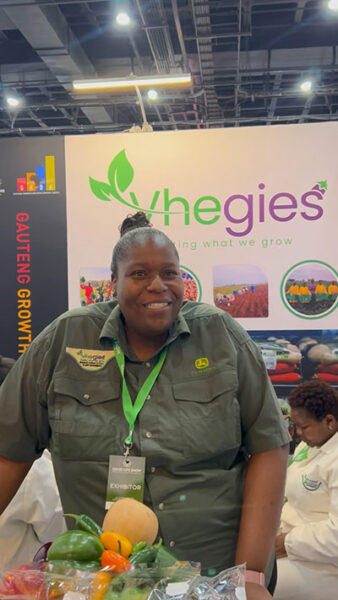
Vhegies CEO Litshani Sophy Musabeni was another first-time exhibitor at the Good Life Show. Although the Vhegies journey dates to 2017, Musabeni said the business only started operating in 2020, after the acquisition of a 14ha plot in Mapleton, Boksburg, Gauteng.
The business has since expanded its operations to four more farms, with one farm in Meyerton, Midvaal, and three in Mutele Village, Musina, Limpopo. It produces and sells fresh and processed spinach, green beans, cabbage, broccoli and cauliflower across South Africa and the rest of the Southern African Development Community region.
“It’s our first time here and people are just loving our vegetables, and I did not expect that I would sell [a lot],” Musabeni said.
Tackling socio-economic issues
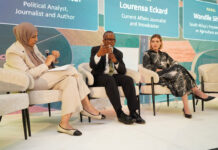
Off the exhibition floor, the Africa Food, Wellness and Lifestyle Trade Summit 2026 ran alongside the Good Life Show, providing a platform for discussions on socio-economic issues, ranging from resilient African food systems to personal wellness.
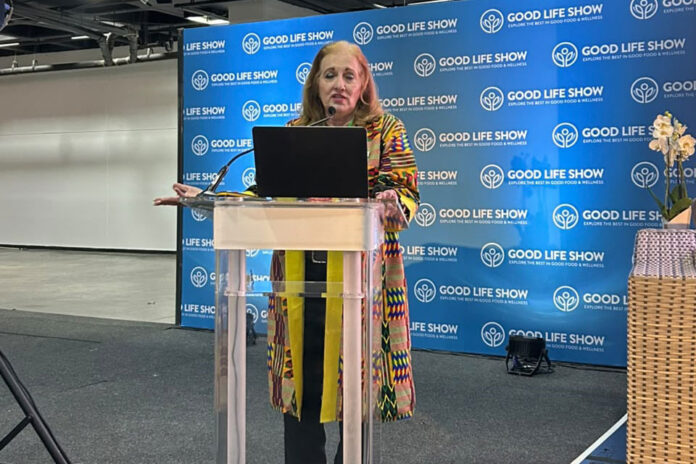
Delivering a presentation titled ‘Building resilient in African food systems’, AgriCulture Gauteng CEO, Dr Darlene Louw, argued for a broader definition of resilience in food systems and explained how the interventions aimed at mitigating against food security risks are measured.
Louw proposed that resilience investments should ultimately be measured against three outcomes, namely, whether nutritious diets become more affordable; whether food systems suffer smaller losses during shocks; and whether gains for producers are broadly shared and sustainable.
She argued that measuring these outcomes with credible data would help direct scarce investment towards interventions that deliver tangible socio-economic benefits.
Alternative organic certification
Also on the Africa Food, Wellness and Lifestyle Trade Summit 2026 platform, South African Organic Sector Organisation (SAOSO) chairperson, Bakhusele Mathupha, spoke on ‘Growing the organic sector and agroecology in South Africa’.
Mathupha said subsistence and small-scale farmers struggled to meet the often complex and unaffordable organic certification requirements, which acted as a barrier to accessing formal organic food markets.
“I want us to be honest about what third-party certification requires of a farmer. It asks for their money and time, and has a set of rules and language that is only understood by a few,” Mathupha said.
As an alternative to third-party certification, Mathupha advocated the Participatory Guarantee System (PGS), a second-party organic certification process administered by Participatory Guarantee Systems South Africa, a non-profit organisation, in partnership with SAOSO.
Mathupha explained that the PGS model is built around a community of practice that brings together local farmers who wish to transition into organic production. The model supports farmers’ progression into the organic value chain through localised peer learning, self-regulation and peer review, aligned with the organic certification roadmap. It begins with a group of farmers collectively deciding to participate in the process and forming a PGS network of their own.
A learning opportunity
Representing the Gauteng Growth and Development Agency (GGDA), one of the Good Life Show’s partners, Sipho Marala, group executive for trade, investment and regulatory enablement, offered advice to exhibitors and buyers alike.
Marala said the success of the Good Life Show will ultimately be tested by how buyers and producers managed their respective expectations after deals had been struck. He advised buyers to clearly explain their product specifications and that they should be open to a phased approach in their purchasing plans, especially when dealing with producers with limited capacities.