
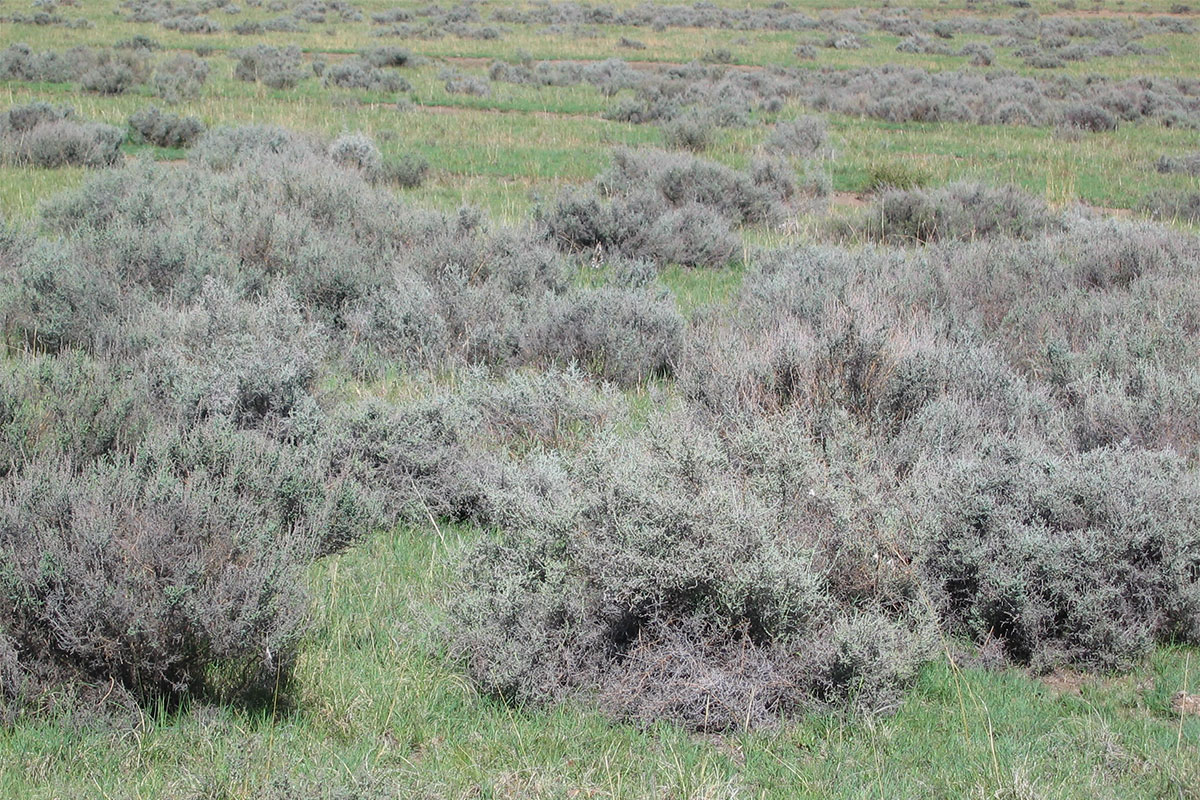
Indigenous bush encroachment has for long been regarded as one of South Africa’s serious environmental problems, along with soil erosion, deforestation and deteriorating fresh water resources.
Not to be confused with alien invaders, these trees and shrubs are mainly a problem in the savannah regions – South Africa’s biggest biome, comprising 30% of the farmlands in the 500mm/year plus rainfall belt. Here the trees and woody shrubs, which are normally scattered, compete aggressively with grass grazing when the ecosystem is disturbed and then proliferate, sometimes forming dense thickets. The trees and shrubs have wide and deep root systems playing in their favour.
Savannahs are characterised by the coexistence of grasses and trees (or shrubs) and are the transitional biome between grasslands and forests. The degree of woody cover in these systems largely boils down to how variation in rainfall and fire affect the competition between grasses and tree seedlings, according to a report by the Department of Forestry, Fisheries, and Tourism, titled ‘Towards a policy on indigenous bush encroachment’.
Encroachment can become so severe that cattle farms become unprofitable, losing up to 70% of their grazing value. However, when the bush is cleared the grass cover can return quite dramatically. While bush encroachment has only become clear over the past 50 years or so, the problem started centuries ago when browsing game animals were gradually replaced by farm animals which are mainly grazers. Later the problem was worsened when artificial water points were made, farms fenced off, and wild fires were controlled. Together with injudicious veld management this all led to reduced grass cover and unchecked bush thickening.
Now it is thought that the problem is increasing exponentially, as shown by aerial photos. Over 40 species are listed as bush encroachers and new species are being added. The problem is not caused by species, but is rather a change in balance of the types of plants occurring in ecosystems. In other words, a change in the composition of the veld.
Some species respond to the drivers of bush encroachment more prolifically than others and may be identified as the ‘chief culprits’ in a particular area. However, the same species can also be benign and useful at their natural densities, says the report.
Prolonged, high grazing pressure reduces the growth of the grass layer and reduces fuel loads, thereby suppressing fire. In addition, active suppression of ‘runaway’ bush fires to protect property also plays a role. As encroachment progresses, there may be a tipping point as tree canopy cover increases over 45 to 50%, above which fires rarely occur. The fires need fuel to burn.
However, trials in the Kruger National Park have shown that high intensity burns have not had the desired effect on bush encroachment. Elephants and giraffe could help, but obviously not on grazing farms. Goats have helped control bush in some deep rural areas, but they are not the answer where the situation is already bad.
Bush encroachment is also influenced by the amount of rainfall in the wet season and the length of the dry season. Rainfall above about 650mm/year supports closed canopy cover while a longer dry season reduces the rate of canopy closure and increases fire frequency. Soil characteristics may dictate the vulnerability of landscapes to encroachment, since these influence the dynamics between grasses and trees, and the combination of low soil nutrients and high rainfall may favour bush encroachment.
Higher atmospheric carbon dioxide also promotes bush encroachment. CO2 has direct and indirect effects on plant growth. Plants use less water as CO2 increases, so for the same rainfall, plants should grow more or have longer growing seasons. And, plants capture more carbon by photosynthesis than before.
Glasshouse studies on savannah trees have shown striking responses of some of our most common tree species which are contributing to large-scale woody thickening. Seedlings produce much larger root systems, packed with starch reserves, and even produce larger thorns and more chemical defences as CO2 increases.
Trees establish as seedlings more readily, survive fire and browsing as saplings, and grow far more readily than in the past. The addition of more CO2 simply helps C3 plants (woody species in savannah ecosystems) to grow faster and outcompete C4 species (grasses in savannah ecosystems).