According to Yvette van der Merwe, CEO of SA Wine Industry Information and Systems and president of the International Organisation of Vine and Wine (OIV), South African wine stock levels are estimated to have increased from 470 million litres last year to 598 million litres this year, leaving the industry at levels similar to those last seen during the COVID-19 pandemic.
In 2020 and 2021, producers struggled to work through 621 million litres and 611 million litres, respectively.
Speaking at a Vinpro regional information day in Stellenbosch this week, she said industry benchmarks typically suggest stock levels equivalent to about six months of sales, although this varies by segment. Current levels exceed that range, placing pressure on pricing and storage capacity.
“We saw some imports last year after stock levels had fallen to about 338 million litres at the end of 2024. I don’t want to use the word surplus, but the current stock level is perhaps 220 million litres too much,” Van der Merwe said.
Next move
The industry must now decide whether to work through the surplus gradually over several seasons or opt for faster correction.
“This is a question every role player should ask themselves. Your business model differs from your neighbour’s, it differs between regions, and this is where you must make that decision,” Van der Merwe said.
“Yes, we can see the high stock levels through for the next two to four years, but there is a cost involved in storing that stock.”
She noted that modelling scenarios indicate persistent stock pressure could weigh on prices, particularly in bulk wine markets.
Previous modelling from the Bureau for Food and Agricultural Policy indicates that under a baseline scenario, with stock levels around 220 million litres, prices are expected to soften moderately. However, if stock levels increase to around 450 million litres, bulk wine prices could decline by as much as 20%.
Current stock levels are now estimated at almost 600 million litres.
Van der Merwe said the industry therefore faces a trade-off between a slower, more gradual correction and a sharper adjustment that would have immediate financial consequences.
“The reality will likely sit somewhere between these scenarios, but the direction of travel depends on how quickly we address the imbalance,” she explained.
Trade-offs
Van der Merwe said the industry faces increasingly difficult trade-offs as production, market demand, and vineyard structure move further out of balance.
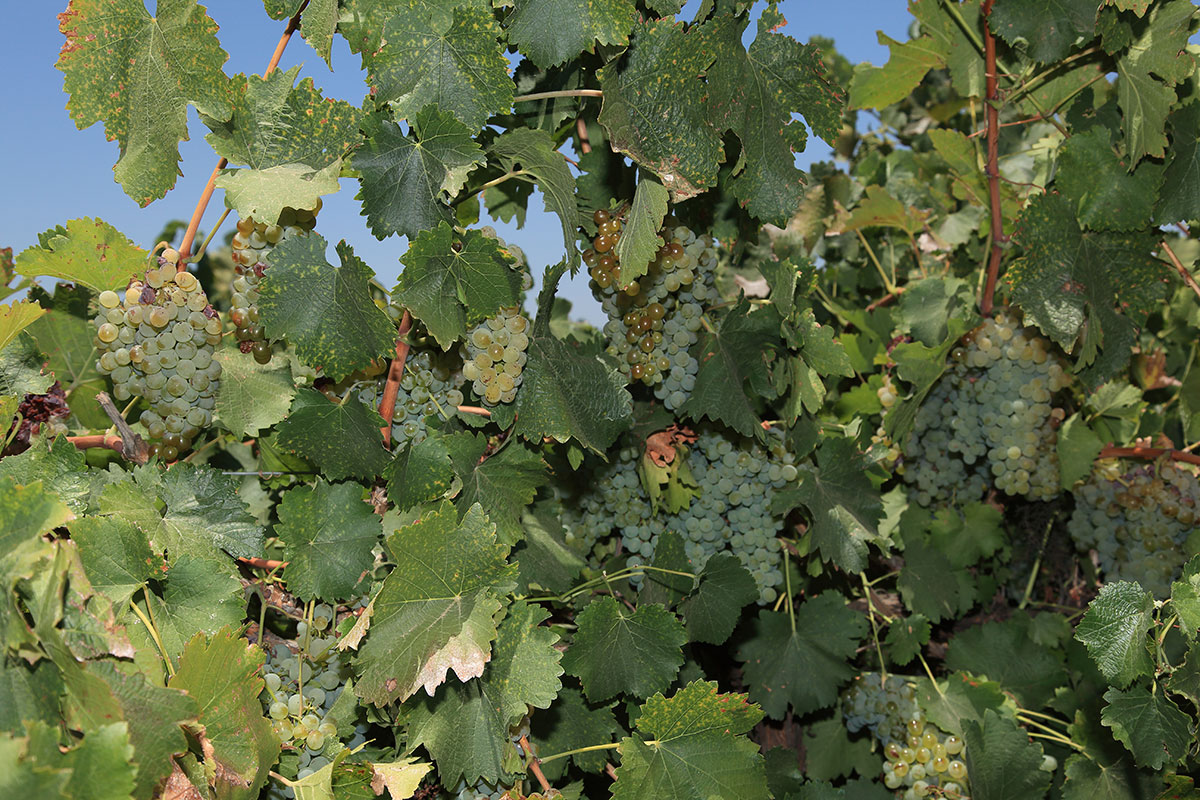
South Africa’s area under production has declined from a peak of about 102 000ha in 2006 to roughly 86 500ha today. Despite this, production has remained relatively stable thanks to improved plant material and production practices, and it is expected to increase by about 7% this year to about 1,1 billion litres.
“The question we have to ask ourselves now is whether we actually need 86 500ha,” Van der Merwe said.
Producers would need to align production more closely with market reality, rethink strategies beyond volume growth, and place greater emphasis on value creation.
Tighter cost control and stronger collaboration across the value chain would also be essential as the industry adjusts to global oversupply and changing consumption patterns.
Global market
South Africa is not facing these challenges alone, with similar trends playing out in other major wine-producing countries.
In Europe, the US, Australia, and Argentina, producers are grappling with oversupply, vineyard removals, and weak growth in demand.
Van der Merwe highlighted that Bordeaux in France has received approval to permanently uproot 8 000ha, while California in the US has removed more than 16 200ha in response to between 100 000t and 400 000t of grapes going unharvested or without buyers.
Meanwhile, Australia is experiencing a large red wine glut, with stock estimated at about two billion litres, while Argentina is also seeing growing inventory levels.
“Globally, we are operating in a market where supply is not the problem, demand is,” she said.
According to the OIV, global production remains below long-term averages, but consumption continues to lag in many traditional markets.
Van der Merwe said the combined pressures of rising stocks, shifting demand, and global oversupply mean the industry can no longer rely on historical production and planting patterns.
“The direction we take now will determine whether we stabilise the system or continue carrying structural imbalances for years to come,” she said.
She urged producers to treat the current period as a structural adjustment rather than a cyclical downturn, warning that decisions made in the next production cycles will shape the industry’s trajectory well into the next decade.