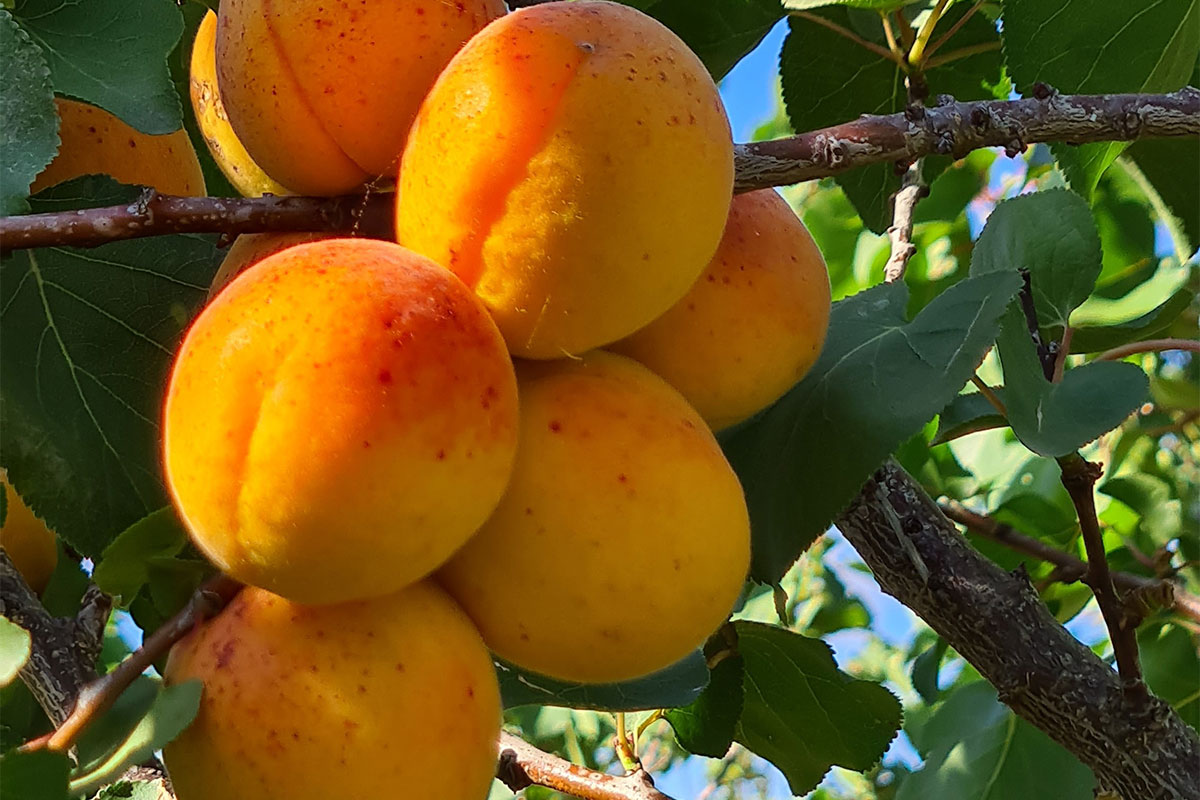
“The Bulida apricot season started early and was finished by the end of November 2025. The growing and harvesting periods were shorter because of hot and dry conditions, which resulted in smaller fruit, although the quality was good,” Jordaan told Farmer’s Weekly, adding that this led to a 20% decrease in Bulida intake volumes.
He said that the peach harvest, which ran from January to March 2026, was also under weather-related pressure.
“It was dry, with smaller fruit but good quality. [In rainy weather], peaches tend to drop, so when it did rain in February, farmers had to act quickly, as [harvesting] becomes more complicated after the rain.”
Final figures for cling peaches showed a 6% decrease in volumes compared with the previous season, according to Jordaan.
Meanwhile, the Bon Chrétien pear harvest ended 12% lower than the 2024/25 season, marking the lowest production in five years. This was driven by smaller fruit sizes and significant hail damage in the Koue Bokkeveld and Ceres areas on 8 February.
Langeberg foods’ shareholder model affects intake
In a Canning Fruit Producers’ Association press release, Jordaan noted that the decline in intake was exacerbated by Langeberg Foods only taking in fruit from its producer shareholders, which influenced total peach volumes used for canning and purées.
“This was Langeberg Foods’ first season after taking over the Ashton factory from Tiger Brands. All indications are that the new team has a strong desire to make a success of the business and is faring relatively well,” he explained.
Jordaan said farmers had to buy shares in the Ashton factory, which gave them delivery rights to supply fruit to the factory, while those who did not buy shares had to find other buyers.
“Those who [bought shares] received delivery rights, while those who did not were unable to deliver their fruit [to the Ashton factory], and a lot of it went to the fresh market,” he said.
“As a producer, you want a certain offtake price, which is important for farm income. The [remaining] fruit went to the informal market, but that route is neither stable nor a long-term option.”
Cannery consolidation adds new dynamics to industry
Another major development during the season was Premier Foods’ acquisition of the Rhodes Food Group, including its fruit cannery in Tulbagh.
“Premier Foods will probably look at where [Rhodes Food Group’s] services can be made more efficient and then consolidate it within the larger group. We hope this will strengthen and support the industry and provide an outlet for our product,” Jordaan said.
“[Premier Foods] also has a corporate responsibility; it is important to remember that canners, producers, and communities are reliant on one another.”
He noted that internationally, the market is coming off a high carryover stock situation from the 2024/25 season. Although stock levels have declined this season, canning fruit markets remain under pressure. With global markets still subdued, canners showed limited appetite for cling peaches.
In addition, the large US-based canner Del Monte closed earlier this year, reflecting ongoing shifts in global canning capacity.
“South Africa exports a lot of pears to the US, so if there are fewer suppliers there, it presents more of an opportunity for us to supply that market,” Jordaan said.