
The suspected African swine fever (ASF) outbreak, first identified in the Grogro informal settlement near Sherwood, Gqeberha, has already resulted in multiple pig deaths across several areas of Nelson Mandela Bay.
According to Dr Cebisa Mnqeta, chief director of veterinary services in the Eastern Cape Department of Agriculture (the department), samples were first collected from a pig carcass in Sherwood on 12 May and submitted for laboratory testing.
“On 19 May, two reports were received of dead pigs in KwaNobuhle township and Despatch [near Uitenhage], and our officials were dispatched to collect samples,” she told Farmer’s Weekly.
At the time of writing, Nelson Mandela Bay remained the only municipality in the province to officially report pig mortalities linked to the suspected outbreak.
Reported mortalities are as follows:
- Sherwood: five pigs
- KwaNobuhle: 13 pigs
- Despatch: 50 pigs
Free-roaming pigs pose disease risks
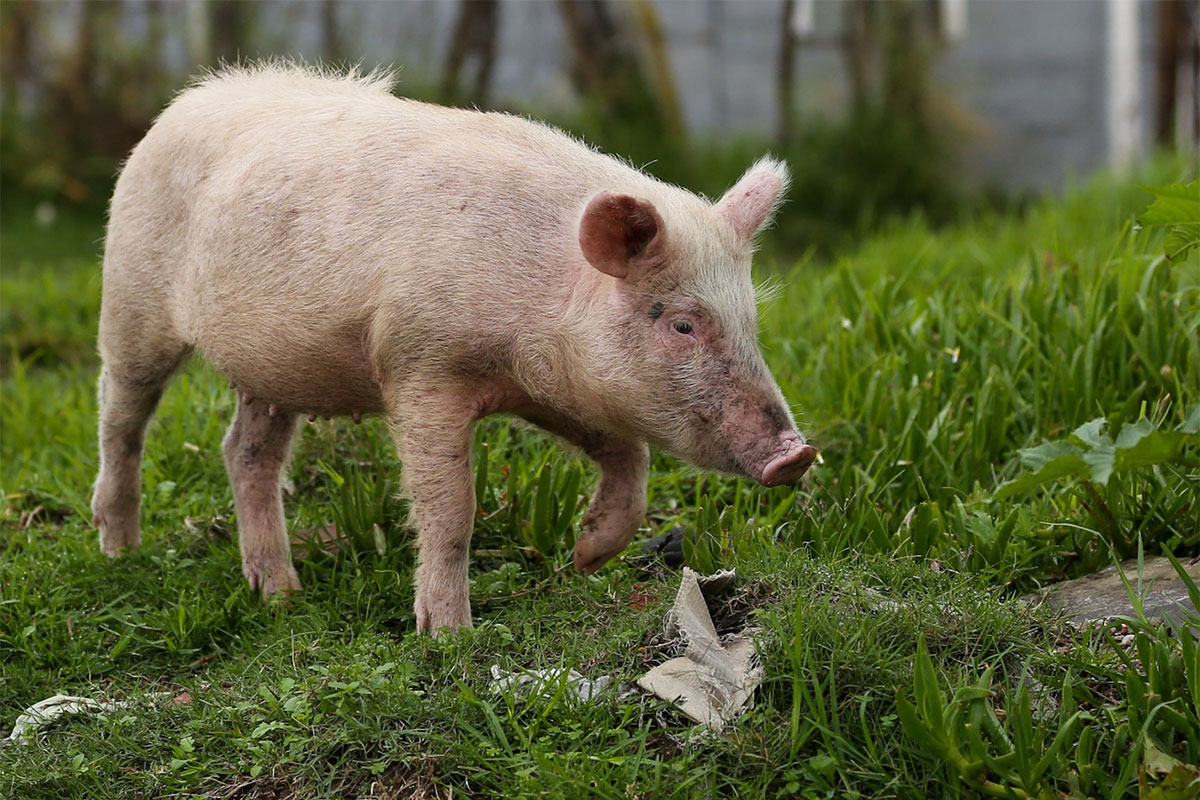
Mnqeta said free-roaming pigs pose a significant risk as they can contract ASF from infected warthogs and soft ticks and then transmit the disease to domestic pig populations.
She added that free-roaming animals in urban areas also pose a road safety risk and can spread other diseases.
Prof Mary-Louise Penrith, extraordinary professor in the Department of Veterinary Tropical Diseases at the University of Pretoria, cautioned against overstating the public health implications of ASF.
“ASF is not a zoonosis,” she explained, adding that the disease does not infect humans, pets, or other livestock.
Instead, she argued that concerns should focus on poor carcass management, weak municipal systems, and informal slaughter practices.
“There are definitely areas in which management can be improved at municipal level,” Penrith said, noting that some municipalities have struggled to safely remove and dispose of carcasses.
Carcasses left in communities attract flies and scavengers and create environmental hazards. Residents quoted in earlier media reports described carcasses lying in public spaces for several days, with dogs sniffing, licking and scavenging near decomposing animals.
A one health challenge
Although ASF poses no direct threat to human health, Penrith said outbreaks should still be viewed through a “broader One Health lens”.
“ASF is definitely a One Health challenge, despite it not being zoonotic,” she said.
Beyond the impact on poor households that rely on pigs for income or food security, carcasses left in open areas or dumped into water sources create environmental and animal health risks.
Penrith warned against careless disposal practices, including dumping carcasses in stagnant water or burying them in areas with high water tables, where contamination risks may increase.
She also said informal slaughter practices are a concern. “Informal slaughter is obviously not a good idea, as there is no meat inspection,” she said, warning that poor hygiene and unregulated slaughter systems can contribute to diseases such as neurocysticercosis, associated with the pork tapeworm Taenia solium.
Biosecurity and containment
“To reduce transmission risks, municipalities and communities need to implement stronger biosecurity controls. Pigs must be kept in pigsties,” Penrith said.
She added that the movement of infected meat and meat products should be avoided, pig movements between farms should be restricted during outbreaks, and waste food should be boiled before being fed to pigs.
The Eastern Cape veterinary services said the province remains adequately resourced to respond to outbreaks, with 25 state veterinary areas staffed by one or two state veterinarians and supported by animal health technicians in local municipalities.
Mnqeta added that the department is strengthening its capacity through the appointment of eight additional state veterinarians and 25 animal health technicians, expected to start work on 1 June 2026.
While the current ASF outbreak has reignited concerns over biosecurity, Penrith urged a balanced approach that recognises the realities facing poor households that rely on pigs as a source of income.
She added that sustainable disease management depends on practical, affordable, and culturally acceptable interventions developed in partnership with animal owners.