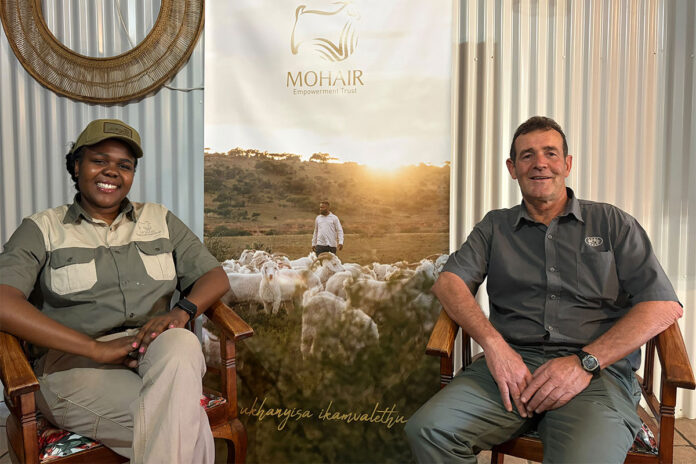
This was one of the key messages to emerge from predation management training hosted by the Mohair Empowerment Trust on 30 September for farmers in Robert Sobukwe Town (formerly Graaff-Reinet) in the Eastern Cape.
The training focused on identifying problem animals, understanding the causes of livestock losses, and using appropriate management methods while maintaining a healthy balance with the natural environment.
Speaking to Farmer’s Weekly at the training event, Willem Goosen, manager of communal marketing development and infrastructure at the National Wool Growers’ Association, explained that the predation threat differs depending on where farmers operate. For example, farms bordering towns and villages can face significant losses caused by stray dogs.
“Our biggest problem is often farms that border towns. Stray dogs from nearby villages can be a major threat because they are frequently left to roam and often run in packs. They may attack five or 10 goats, even though they might only eat one,” he said.
Goosen added that for new-era farmers, identifying the predator responsible for livestock losses should be the first step before deciding on a control method.
Farmers should monitor where attacks occur, what animals are being targeted, and when the attacks are taking place. Keeping records of livestock losses can help farmers identify recurring problem areas and make more informed management decisions.
Protect kids to grow the herd
Predation becomes particularly important during kidding season, when young animals are at their most vulnerable.
Goosen said protecting kids is directly linked to a farmer’s ability to grow their herd.
“If we want our farmers to grow, we need lambs, goat kids, and young goats to reach the weaning stage. Without these young animals, we won’t have enough replacements when we sell around 25% of our herds each year,” he said.
He added that every surviving kid contributes to future herd growth, particularly where farmers are still building their livestock numbers.
This means additional attention should be given to areas where young animals are kept, particularly during periods of high predation pressure.
Target problem animals
Goosen added that farmers should avoid indiscriminate predator control, aiming instead to identify and target animals that are repeatedly causing livestock losses.
For new-era farmers, this approach can help ensure that limited resources are directed towards the areas where they are most needed.
Where professional services are used, farmers should make sure that the individuals or companies involved are appropriately accredited and operate within the relevant laws and regulations.
Don’t remove everything
Predation management does not mean eliminating every predator or wild animal from a farming environment.
Goosen said farmers need to consider the role of natural prey in maintaining an ecological balance.
“Farmers need to consider the environment on their farms. We don’t have to destroy everything. Smaller prey species, such as mice and rabbits, form part of the natural food chain for jackals, while dassies are natural prey for caracals,” he said.
Build predation management into the farming plan
Predation management should form part of a farmer’s wider livestock management and business plan.
Keeping records of losses, identifying vulnerable periods, protecting young animals, working with neighbouring farmers, and maintaining the natural environment can all contribute to a more sustainable approach, according to Goosen.
He said the ultimate objective is to help new-era farmers increase their herd numbers and progress towards commercial production.
“Effective management of predation will help these farmers grow their herds and become bigger commercial farmers in the long term,” he said.