

Latest articles

Dating tusks to curb ivory trade
Scientists may have discovered a way to foil illegal trade in ivory by using radiocarbon levels to age tusks.
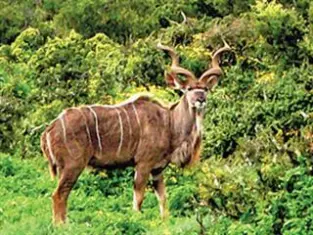
Record hunted kudu horns
Farmers can help in a research project on kudu populations in the Eastern Cape.
‘Farmer scientists’ needed
Here’s a chance to help farmers and policymakers address the problem of livestock predation, say Graham Kerley and Craig Tambling of the
Centre for African Conservation Ecology.
One man’s hunt for the cereal killers
In a study by researcher Dr Paul Williams, chemical imaging has been shown to be a fast, effective means of detecting fungus-infected maize.
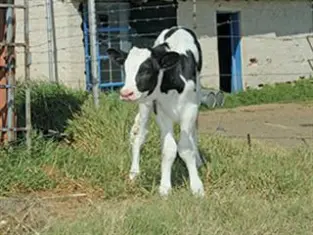
Small-calf syndrome gene isolated
In a breakthrough, New Zealand researchers have identified a gene that will allow them to breed out small-calf syndrome, which mainly affects Holstein-Friesian crossbreeds.
New research exposes distiller’s dried grains with solubles (DDGS) myth
Producers who feed pigs with saturated fats to undo the fat-softening effect of a diet that includes distiller’s dried grains with solubles (DDGS) are wasting their time and money, according to new research.

Netting flies boosts milk yields
The use of treated mosquito nets in cow sheds has more than doubled the milk yields of small-scale farmers in Kenya. Robyn Joubert reports.

Feedlot & cropland in one
Researchers in Argentina believe they have found the ideal stocking rate for an ecological feedlot system, which allows for optimal land use. In winter, the land is used as a feedlot and in summer for crop cultivation.

Palmiet wetland conservation
It’s not too late to restore damaged palmiet wetlands, says Alanna Rebelo of Stellenbosch University’s Department of Conservation and Entomology. Roelof Bezuidenhout spoke to her about the value of
these remarkable wetlands.

Safer food with cold plasma technology
Ionised gases are being used to kill food pathogens on packaged food. This method could bypass current heat treatment and chemical sanitising methods.

Protection against potato scab
Plants of the brassica family can act as natural biofumigants when chopped up and worked into the soil, says plant pathologist Dr Reinette Gouws of the Agriculture Research Council.

Precision farming – a global perspective
Precision agriculture (PA) allows farmers to operate more efficiently and become better decision-makers. Australian Tim Neale and Sharon Clay from the US took part in a PA conference in Potchefstroom. Annelie Coleman compiled this report.

Bumblebees: should SA put them to work?
The use of bees as crop pollinators is well-known, but a group of scientists warns against confusing the European bumblebee with the South African carpenter bee.

Bumblebees fly to the rescue
Bumblebees have been used worldwide since the mid-80s to deliver pollen to flowers. Now they’ve become ‘flying doctors’. Robyn Joubert reports.

Are nutraceuticals a viable alternative to AGPs in swine?
Due to underdeveloped gut microflora and immature immune systems piglets are highly susceptible to pathogenic infections which result in poor performance. To withstand these pathogens, a protective gut microflora and an optimised non-specific immune system are crucial. Feed expert Dr Thomas Volker explains why.

Breath of air in irrigation water restores soil and improves yields
Activated oxygen water treatment trials in North West have shown
positive results in wheat and maize yields. Annelie Coleman reports.
Gene marker helps solve horn dilemma in Merino sheep
Australian research has shown the possibility of eliminating the horn gene in Merino sheep.

Pruning for maximum benefit in litchi trees
Research conducted by HortResearch SA’s Dr Steve Oosthuyse shows that timely pruning of litchi trees can produce a rich flush and yield a greater harvest.

Planting in crop residue, the Argentinian way
Co-operation between South African and Argentinian agricultural organisations has led to a series of multi-year trials in selected South African localities to compare Argentinian direct planting technology and conventional systems with those used in South Africa. Pietman Botha reviews the first year of the trials, which were launched in 2011.
Coming soon: hot weather lettuce production
‘Switching off’ a gene that slows germination in high temperatures will allow farmers to grow lettuce all year round.