Latest articles
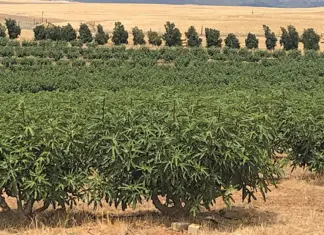
New system shows benefits of deep root irrigation
A locally developed irrigation system designed to transport water directly to plants’ roots and thus eliminate evaporation has achieved outstanding success in trials.

Latest trends in greenhouse technology
The designs and purposes of greenhouses have come a long way. Lloyd Phillips speaks to Shaul Rabin about the greenhouse technologies currently available, and what the future holds.

Accessing Africa’s food markets: Insights from three experts
Agriculture employs 70% of the workforce in Africa and constitutes 30% of total GDP. Yet the continent relies heavily on imports and food aid. Lindi Botha spoke to three leaders |
in the African agriculture sector to explain this anomaly.

New fruit-sorting technology helps curb food waste
In 2018, Compac Sorting Equipment, part of TOMRA Food, launched its Field Research Unit, which can be deployed on lands to research the fresh produce industry’s most challenging issues. James Flocchini, Compac’s regional director for South Africa and Asia, spoke to Denene Erasmus about how the Field Research Unit will be used to develop solutions for the citrus industry specifically and how the technology can ultimately help limit food waste.
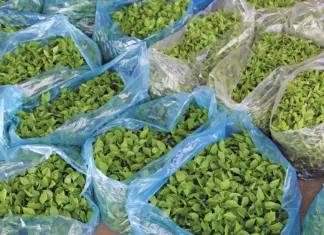
Improving tunnel production using even less water
Ezigro Seedlings in Mpumalanga grows a wide range of seedlings all year round, thanks to resource-efficient tunnel production in an ideal climate. The tunnels provide another advantage: they allow for rapid adaptation to a changing market. Lindi Botha spoke to CEO Anthony Baird.

City rooftops: the next frontier for farming
You don’t have to have green fingers to grow lush vegetables and herbs. But you do have to have a head for heights if you want to join the brigade of farmers transforming their lives and Johannesburg’s inner-city rooftops with their hydroponic gardens.

Saving our land: the importance of wetlands
A wetland, whether smaller than a hectare or covering a vast area, is a sign of a healthy ecosystem. We urgently need to conserve them.
Climate change: it’s happening faster than you think
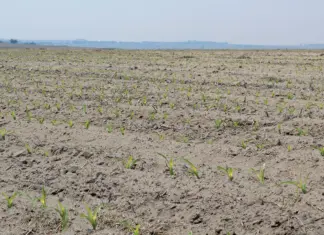
The average temperature increase in Southern Africa due to climate change is taking place at twice the global rate. The resulting lower rainfall figures and increase in the number of heatwaves will see agricultural landscapes shifting and veld fires growing in frequency. All of this will demand careful planning.

Dutch company’s success in turning food waste into feed
A Dutch company that produces animal feed from food waste says this is the only way in which agriculture can remain sustainable. Gerhard Uys spoke to Karel van der Velden from Nijsen/Granico.

Sappi goes green with bio-based products
According to Sappi CEO Steve Binnie, the group’s latest financial results show that it is ready to capitalise on market moves away from plastic to natural fibre and paper-based packaging. Sappi Biotech executive vice-president Louis Kruyshaar outlines the company’s plans to Lloyd Phillips.

Learning from Israel’s water woes
During a recent tour to farms and the AgriTech Israel exhibition in Israel, it was revealed that despite the large volumes of water used during irrigation, South Africa could learn from that country about managing water infrastructure.
Prepare to sell much more fruit and veg online
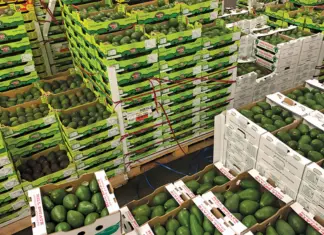
The marketplace for fresh fruit and vegetables is becoming increasingly globalised and interconnected. This affects the way that fresh produce is transported from its origin to its destination. The Fruit Logistica Trend Report 2018 looks at ways in which the supply chain must evolve to meet these challenges. Walton Golightly summarises the report’s findings.

Use nitrogen efficiently to save cash and the environment
Nitrogen may be an essential element in crop production, but its inefficient use wastes farmers’ money as well as contributing to potentially deadly pollution of the environment. Dr Alan Manson, a soil scientist with the KwaZulu-Natal Department of Agriculture and Rural Development, explains this subject further.

A masterclass in irrigation efficiency by Israel
The improvements that Israeli companies have made to drip irrigation have seen them emerge as world leaders in irrigation efficiency. Inventors from all parts of the world take inspiration from them to offer an entire spectrum of innovations that help farmers farm better.
Rethinking sustainable development
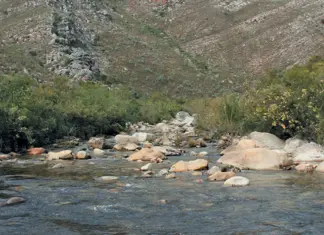
Growing awareness of the interconnectedness between water, energy and food security is resulting in a more holistic way of measuring sustainability, says Dr Nadine Methner from the African Climate and Development Initiative at the University of Cape Town.
Drone technology maximises macadamia production
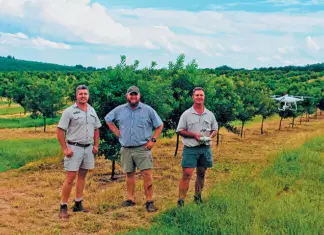
Drone technology, combined with satellite images and soil samples, provides macadamia farmers with more precise orchard health data than ever before. Gerhard Uys spoke to Martin Taljaard and Jaco Prinsloo about how they’re helping producers cut input costs and increase profits.

Groundwater conservation: a long-term investment
Groundwater resource conservation should be the most important aspect of any irrigation farming concern in South Africa, say geohydrology consultant JL van Vuuren and drilling contractor Marnus Nel. A lack of proper management of these resources poses a serious threat to the future of the irrigation industry.
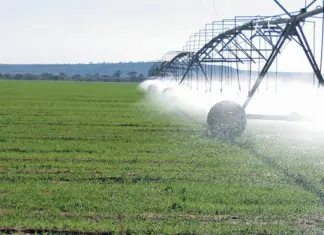
Factors that influence the adoption of smart agriculture in SA
Smart technology is a hot topic these days – and notably so in agriculture, where there are many uses, from drones and remote water monitoring, to soil analysis, animal tracking, irrigation control and more.

Termites and grazers: a complex, subtle relationship
After a number of farmers near Middelburg in the Eastern Cape expressed concern about increasing termite activity, James Hagan, an MSc student in ecology, conducted a study on the effects of livestock grazing on termites.

Do you know how healthy your ‘soil skin’ is?
The crucial link between soil health and optimal, sustainable crop yield is well established. Dr Neil Miles, a soil scientist with the South African Sugarcane Research Institute, explores this subject, focusing in particular on the upper surface of the soil.